 ultimate-guide
Motocross Track Etiquette for New Families: A Complete Guide
Table of Contents
- Understanding Motocross Track Etiquette for New Families
- Essential Motocross Track Flags Meaning and Communication
- Core Riding Rules: Holding Your Line and Avoiding Cross-Jumping
- Passing Etiquette and Collision Avoidance on the Track
- Motocross Pit Area Etiquette and Staging Area Behavior
- Motocross Riding Gear Checklist and Safety Preparation
- Beginner Motocross Tips for Parents: First Time at the Track
- Building Rider Awareness and Skill Limits
- Frequently Asked Questions
Last Updated: July 8, 2026
Understanding Motocross Track Etiquette for New Families
Bringing your family to a motocross track for the first time can feel overwhelming. This guide covers motocross track etiquette for new families, the unwritten rules and written regulations that keep everyone safe and make the experience enjoyable for riders of all skill levels.
Riders who understand track etiquette stay safer, progress faster, and don't get banned from their local tracks. Families who learn the rules beforehand spend less time stressed and more time enjoying the sport.
Why Track Etiquette Matters for Your Family's Safety
Track etiquette prevents collisions that cause serious injuries or death. When riders hold their lines predictably, slower riders know where faster riders will be. A rider traveling 40 mph covers 60 feet in one second, there's no time to react to unexpected moves. The unwritten rules of motocross create predictability in an inherently dangerous sport.
Teach your rider that track etiquette is non-negotiable. This isn't about winning; it's about going home safely. Riders who prioritize safety over ego get faster, not slower.
Vet Tracks vs. Pro Tracks: Different Rules for Different Riders
A vet track is designed for older riders (typically 35+), beginners, and riders returning after time off. The pace is slower, the atmosphere is relaxed, and the rules are forgiving. Pro tracks cater to competitive, faster riders with bigger jumps and more intense racing.
Your first family track day should be at a vet track or beginner-focused facility. This gives your rider time to learn basic etiquette without pressure to keep up with experienced racers.
Essential Motocross Track Flags Meaning and Communication
Flag signals are how track officials communicate with riders. Every flag color means something specific, and ignoring them can result in penalties, ejection, or worse.
Reading Flag Signals from Track Officials
When you arrive at the track, ask where the flag stations are located. Show your rider photos or videos of what each flag looks like in motion. During practice laps, have your rider focus on spotting officials and understanding each flag's meaning. Most tracks also display flag signals on a board near the timing stand.
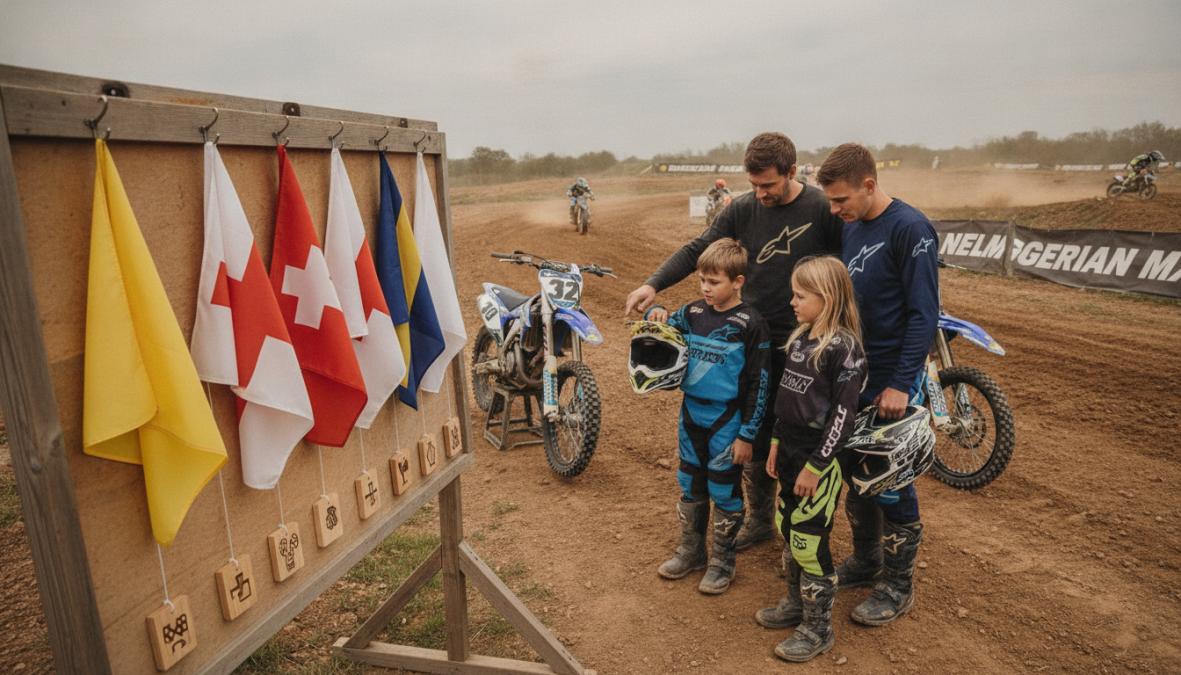
What Each Flag Color Tells You
Yellow Flag: Caution. Slow down and stay alert. Do not pass other riders.
Red Flag: Stop immediately. The track is shut down. Exit in an orderly fashion.
White Flag: One lap remaining in the session.
Checkered Flag: Session over. Exit safely.
Black Flag: You're disqualified or being pulled from the track. Report to the timing stand immediately.
Blue Flag: A faster rider is approaching from behind and wants to pass. Move to the inside and let them by safely.
Ignoring flags results in penalties, fines, or being banned from future events.
Core Riding Rules: Holding Your Line and Avoiding Cross-Jumping
The most important rule in motocross is holding your line. This single concept prevents most collisions and is the foundation of track etiquette.
How to Hold Your Line Predictably
Holding your line means riding the same path through every corner and straightaway, lap after lap. A motocross line has three parts: entry (where you brake and set up), apex (the tightest part), and exit (where you accelerate).
Beginners often change their line based on perceived speed, which is dangerous because faster riders can't predict where you'll be. Teach your rider to pick one line and stick with it. Mark the entry point, apex, and exit point with landmarks. Smooth throttle control is key, roll on gradually as you exit the corner, not wide open.
Why Cross-Jumping Is Dangerous and Prohibited
Cross-jumping is when a rider jumps from an unexpected angle, landing on another rider's line or in the middle of the track. It's explicitly prohibited at nearly every facility because landing spots become unpredictable.
Make it clear to your rider: approach every jump straight. Land on the downside where you're supposed to land. If you're not ready for a jump, skip it. Cross-jumping results in flagging, fines, or bans.
Managing Speed Differentials Between Skill Levels
A slow rider who holds their line and rides smoothly is much safer than a fast rider who's erratic. When a faster rider approaches from behind, your rider should hold their line and let them pass. Do not swerve, speed up, or brake suddenly.
When your rider wants to pass a slower rider, do it smoothly and predictably. Set up the pass in advance, signal your intention clearly, and execute in one smooth motion.
Passing Etiquette and Collision Avoidance on the Track
Passing is exciting but also where most collisions happen. Understanding the unwritten rules keeps your rider safe and respected.
The Unwritten Rules of Passing Faster and Slower Riders
When passing, don't surprise the rider in front. Approach from their outside line and make your presence known. The best place to pass is on a straightaway or on the exit of a corner. Never attempt a pass on the entry of a corner or in the middle of a jump.
When passing, do it decisively. Don't half-pass and fall back. If you're being passed, do not block the faster rider. Hold your line and let them find a way around you safely.
When passing a significantly slower rider, give them plenty of space. They might not see you coming, so make sure they know you're there before attempting the pass.
Safe Entry and Exit Techniques
Wait for the official's signal before entering the track. If riders are already on the track, enter at slower speed and gradually build racing speed once clear. When exiting, slow down smoothly and predictably. Ride a straight line to the exit and continue into the pit lane at safe speed.
Stopping on the Track: When and How
If your bike breaks down, slow down smoothly and move to the side away from the racing line. Turn off your engine and wait for an official. Do not attempt repairs while others are racing.
If you crash, get up quickly and move away from the racing line. Pick up your bike if you can and move it to the side. Never stand in the middle of the track. Flag down an official and explain the situation.
Motocross Pit Area Etiquette and Staging Area Behavior
The pit area is busy and dangerous. Your job as a parent is to keep your family safe and out of the way.
Parent-Specific Logistics in the Pit Lane
Establish a compact base camp for your gear and tools. Keep your young rider in sight at all times, pit areas are not playgrounds. Respect other riders' space and equipment. Don't touch someone else's bike or gear without permission. Keep noise and distractions minimal. Follow all posted pit area rules.
Communicating with Track Operators and Officials
When you arrive, introduce yourself to the track operator or head official. Ask about the day's schedule, special rules, and where to set up. If you have questions about etiquette or rules, ask an official. If your rider gets flagged, ask for clarification about what happened. If you witness dangerous riding, report it to an official rather than confronting the other rider.
Motocross Riding Gear Checklist and Safety Preparation
Proper safety gear is non-negotiable. A crash at 30 mph can cause serious injuries or death without proper equipment.
What Your Beginner Rider Must Wear
Helmet: A full-face motocross helmet meeting DOT or ECE standards. Invest in quality and replace after hard crashes.
Goggles: Protect eyes from roost and debris. Choose different tints for different lighting.
Jersey and Pants: Motocross-specific abrasion-resistant materials protect your skin.
Gloves: Protect hands and improve grip. Look for reinforced palms and knuckle protection.
Boots: Support your foot while shifting and protect if pinned under the bike.
Chest Protector: Shields ribs, chest, and collarbone from impacts.
Neck Brace: Reduces risk of neck injuries, especially important for young riders.
Knee and Elbow Pads: Protect joints if you crash.
Your rider should wear all gear every single time they ride, even in practice. No exceptions.
Pre-Track Day Gear Inspection
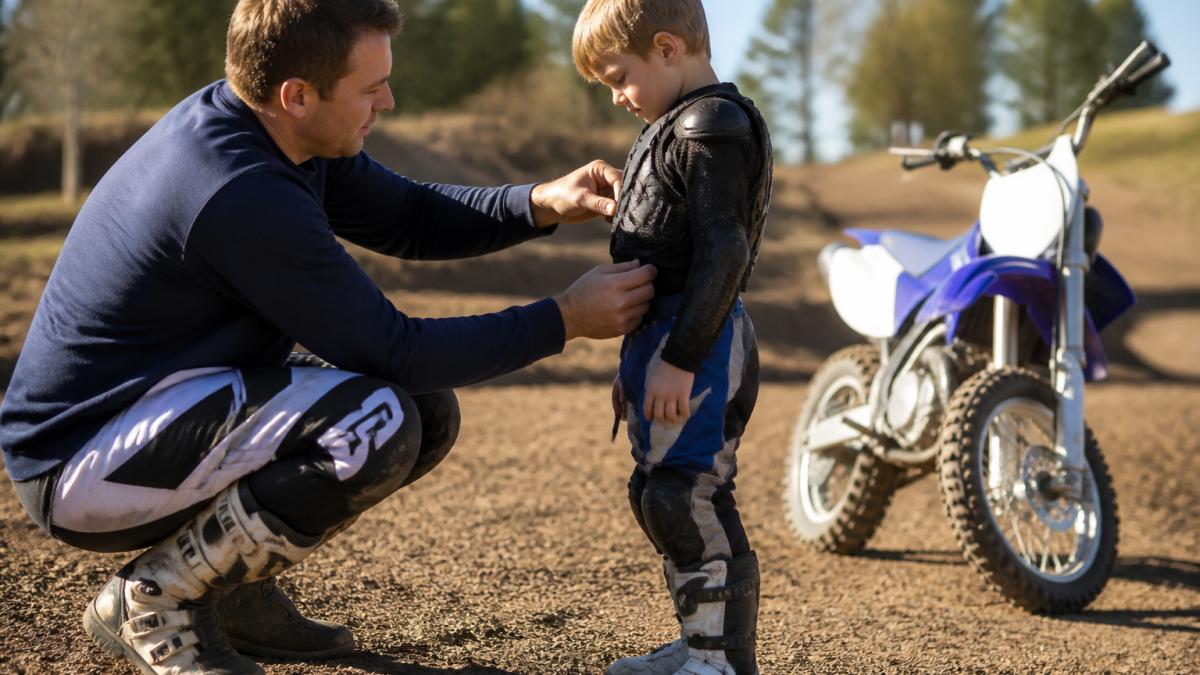
Before leaving for the track, inspect all gear for rips, tears, or damage. Check that the helmet hasn't been damaged in a previous crash, replace it if it has. Ensure all gear fits properly. Pack extra goggles in clear and tinted sets. Bring a small first aid kit, extra water, and snacks.
Beginner Motocross Tips for Parents: First Time at the Track
Your family's first track day sets the tone for how your rider will approach the sport.
What to Bring and How to Prepare
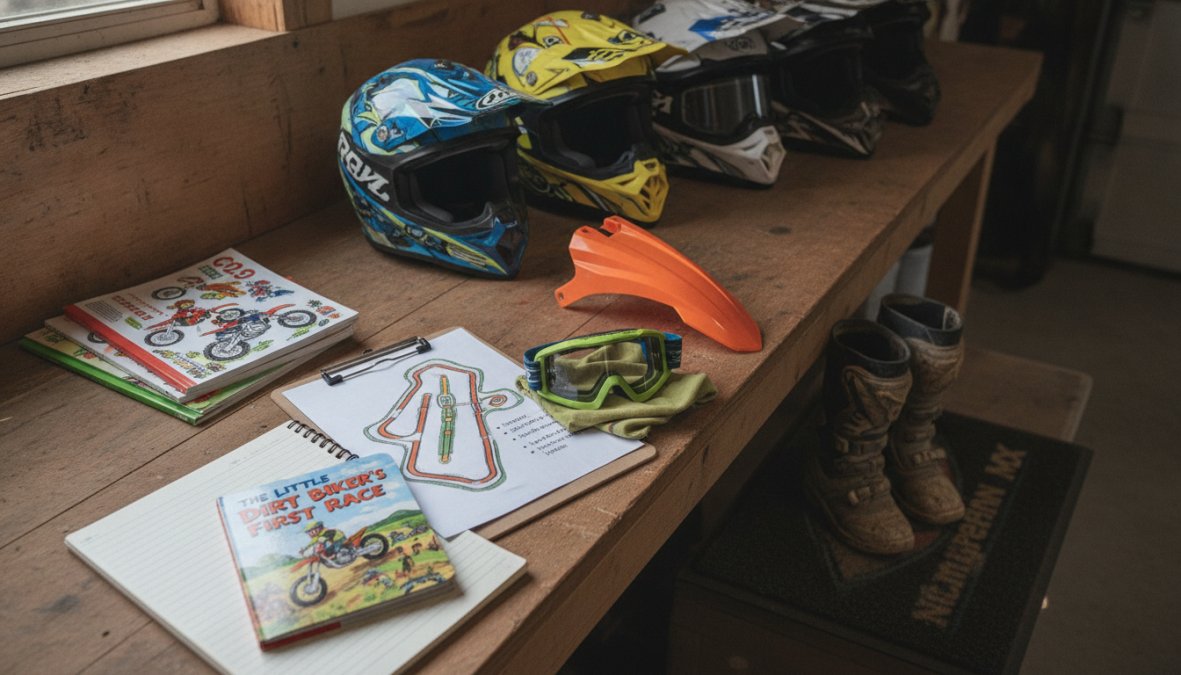
Arrive at least two hours early to set up, get your bike checked, and acclimate to the environment. Bring a checklist: helmet, goggles, jersey, pants, gloves, boots, chest protector, neck brace, knee pads, elbow pads, bike tools, spare parts, first aid kit, water, snacks, sunscreen, and a chair. Bring bike maintenance items: oil, spark plugs, air filter, chain lube, and basic tools. Bring entertainment for between sessions. Most importantly, bring a positive attitude, your rider will feed off your energy.
Post-Ride Debriefing and Skill Development
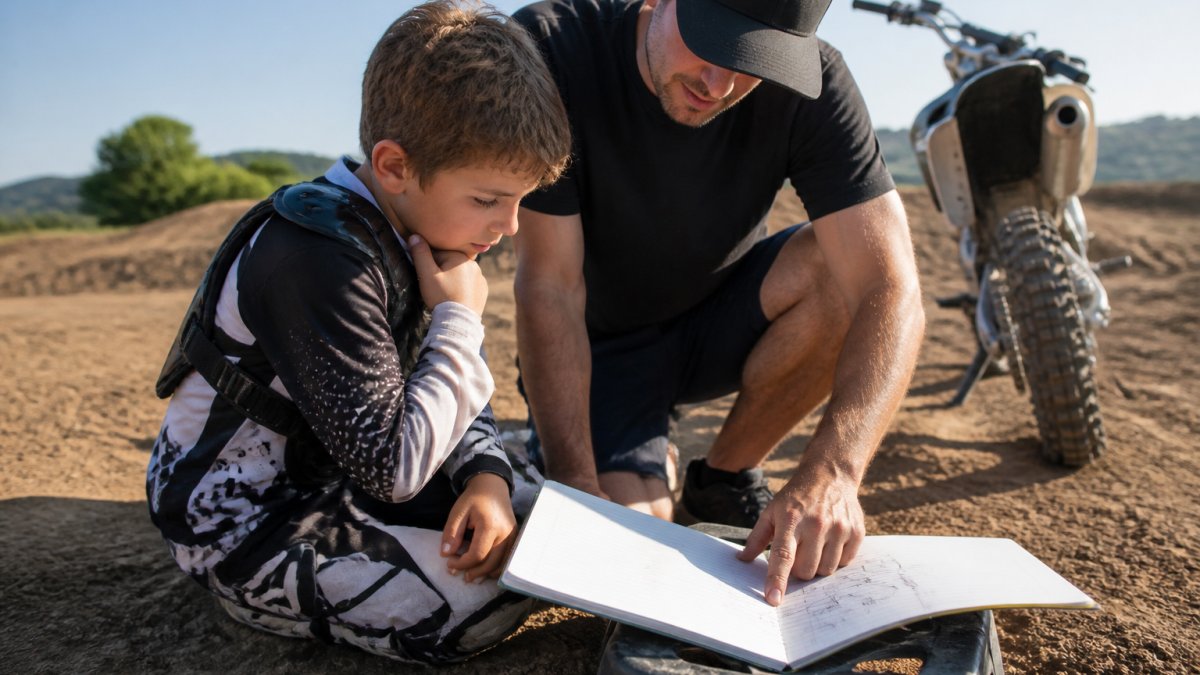
After your rider's session, give them time to cool down before analysis. Ask open-ended questions: "How did that feel?" "What was the hardest part?" Listen without interrupting.
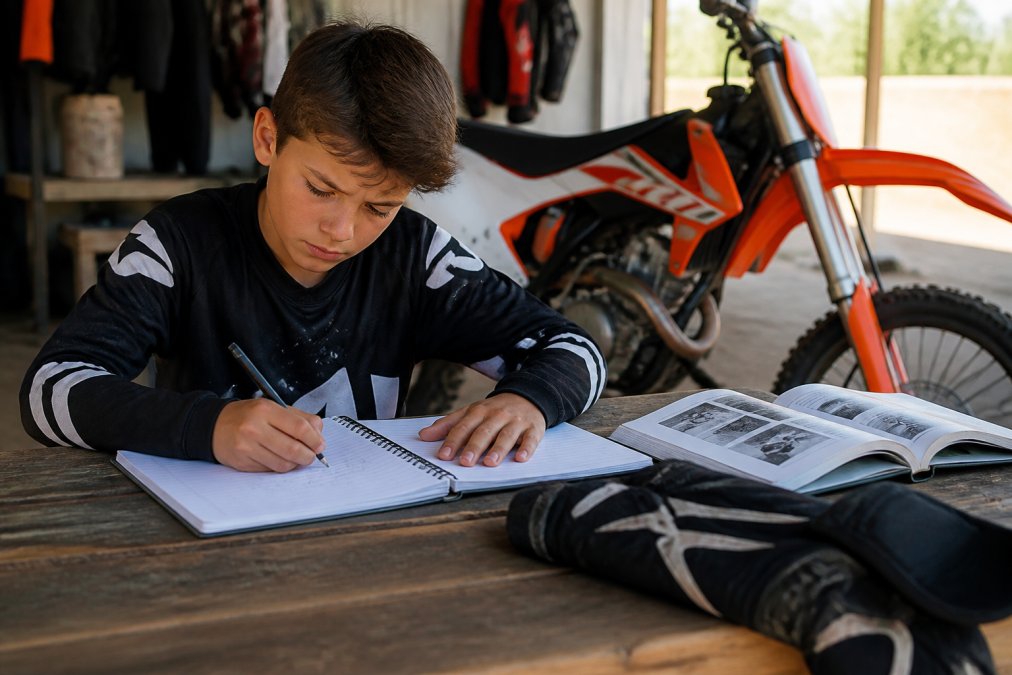
Once they've decompressed, discuss one or two specific areas for improvement. Celebrate small wins. Take notes on what your rider struggles with so you can work on it during the week.
Building Rider Awareness and Skill Limits
The most dangerous riders are those who don't know their limits. A rider who pushes beyond their ability is unpredictable and likely to crash.
Teaching Throttle Control and Line Choice
Throttle control is the foundation of smooth, predictable riding. Teach your rider to roll on the throttle gradually, not snap it open. On corner exits, start with 25% throttle, then gradually increase. In corner entries, roll off smoothly, not brake hard.
The correct line through a corner is usually the widest line: enter wide, cut to the apex, exit wide. This allows smooth acceleration and maintains momentum. Beginners often take tight inside lines because they're nervous, which actually makes corners slower and more dangerous.
Navigating Doubles, Triples, and Advanced Features
Doubles and triples require committing completely to the jump. A half-committed jump results in a crash. Approach with enough speed to clear the first landing, then land on the second jump and accelerate off it.
Your rider should practice smaller jumps first, then progress to larger ones. Don't push your rider to jump something they're not ready for. Style tricks should come much later, after mastering the basics.
Teaching your family motocross track etiquette is an investment in safety, respect, and long-term enjoyment of the sport. When your rider understands the rules and follows them consistently, they'll progress faster, stay safer, and become a respected member of the motocross community. Start with the fundamentals, be patient with the learning process, and celebrate every milestone along the way.
| Etiquette Topic | Key Principle | Why It Matters |
|---|---|---|
| Holding Your Line | Ride the same path every lap | Prevents collisions and makes you predictable |
| Cross-Jumping | Never approach jumps at angles | Keeps your landing spot predictable |
| Passing | Signal your intention and execute smoothly | Prevents surprise moves that cause crashes |
| Flag Signals | Respond immediately to all flags | Keeps the track safe for everyone |
| Speed Differentials | Maintain your line when faster riders pass | Allows safe passing without surprises |
| Pit Area Behavior | Keep your setup compact and stay aware | Prevents injuries in busy environments |
| Throttle Control | Roll on smoothly, don't snap it open | Keeps your bike stable and predictable |
| Gear Inspection | Check all equipment before every session | Ensures maximum protection in a crash |
Frequently Asked Questions
What are the unwritten rules of motocross track etiquette for new families?
Core unwritten rules include holding your line predictably to prevent collisions, never cross-jumping (cutting across jumps), respecting faster riders by yielding when safe, and following all flag signals from track officials. Beginners should ride within their skill limits and avoid sudden throttle changes. Always communicate with track operators before entering and respect the staging area. These practices protect your family and all riders on the track.
What do the different motocross track flags mean?
Yellow flags warn of hazards ahead; red flags signal immediate danger or stopped riders and require slowing down. White flags indicate one lap remaining. Checkered flags mark the finish line. Black flags mean a rider must exit the track immediately for rule violations. Green flags indicate the track is clear and safe to proceed. Understanding these flag signals from track officials is essential for rider awareness and collision avoidance on the track.
How should parents prepare for their child's first time at a motocross track day?
Start by ensuring your beginner rider has proper safety gear: helmet, goggles, jersey, pants, gloves, boots, and protective pads. Arrive early to walk the track, understand the layout, and locate the pit lane and staging area. Review pit area etiquette and flag meanings with your child. Pack water, snacks, first aid supplies, and a notebook for post-ride debriefing. Watch experienced riders to observe proper line choice and throttle control. Connect with track operators to understand any track-specific rules before your child enters.
What's the difference between vet and pro track etiquette at motocross facilities?
Vet tracks are designed for older, experienced riders and may have stricter speed and skill requirements, while beginner or family tracks accommodate newer riders. Vet tracks often enforce more aggressive passing rules and expect higher rider awareness. Pro tracks demand advanced riding technique and collision avoidance skills. New families should confirm which track type suits their child's skill level before attending and ask track operators about specific etiquette differences to ensure a safe, positive experience.
This article was written using GrandRanker