 ultimate-guide
Motocross Track Training in Alabama: 2026 Guide
Table of Contents
- What Motocross Track Training in Alabama Actually Looks Like
- Youth Motocross Coaching Alabama Families Can Rely On
- Practice Days, Gate Fees and Facility Comparisons
- Safety Gear and Track Etiquette Every New Rider Needs
- Motocross Training Journals for Kids: Tracking Skill Development
- Home Motocross Training Drills for Between Practice Days
- Conclusion
- Frequently Asked Questions
Last Updated: September 10, 2026
What Motocross Track Training in Alabama Actually Looks Like
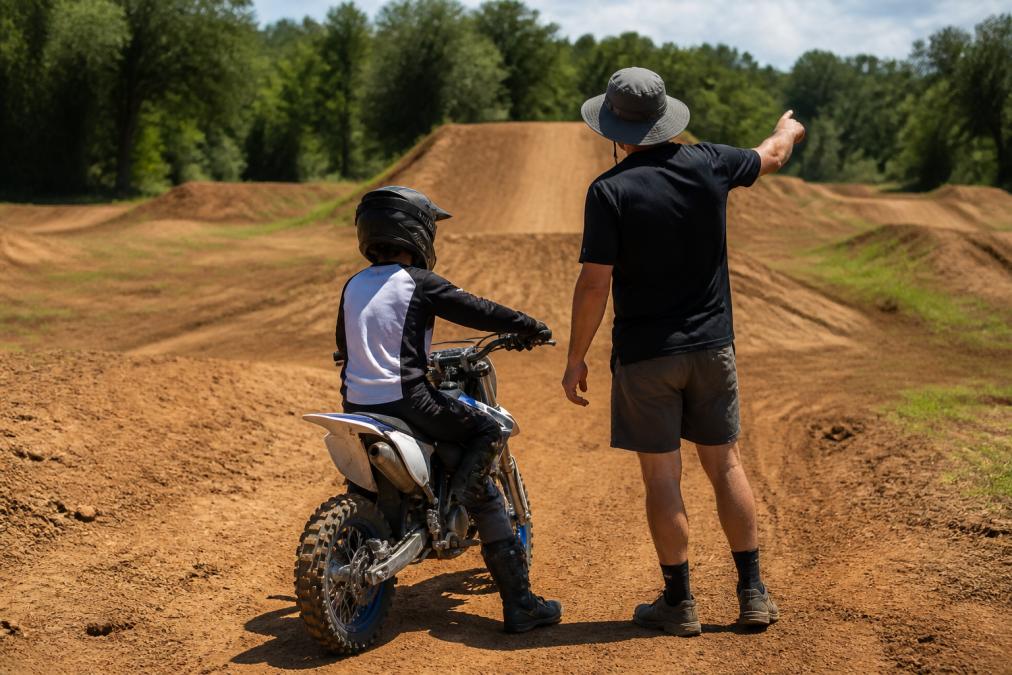
Motocross track training in Alabama is structured, coached riding time on a closed course, and it looks nothing like the open practice most families picture. A typical session runs 60 to 90 minutes and breaks into three parts: a warm-up lap to read the track, a skill block focused on one technique, and free riding to apply it (americanmotorcyclist.com).
Parents can find a track. They cannot find a clear picture of what happens once their kid gets there.
Here is the honest version. Coaching at most facilities follows a progression rather than a random set of laps:
- Body positioning and balance on the pegs, elbows up, eyes forward
- Throttle control at low speed before any speed work begins
- Cornering through ruts, berms, and flat turns
- Jumping introduced only after the rider can hold a line consistently
A common mistake is signing a young rider up for race-style practice before they can corner without dabbing a foot. That builds bad habits that take months to undo.
Youth Motocross Coaching Alabama Families Can Rely On
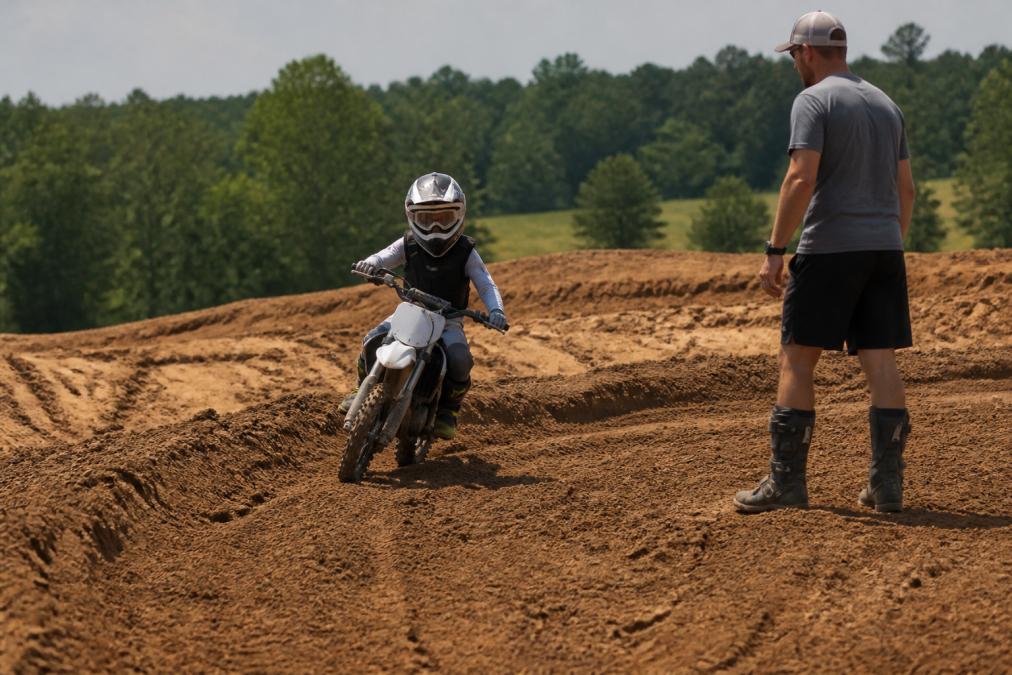
Youth motocross coaching in Alabama works best when it is age-banded, and the reason is simple: a five-year-old on a 50cc and a ten-year-old on an 85cc need completely different instruction. Grouping them together wastes everyone's session.
Look for programs that separate riders by skill, not just age. Beginner groups should stay on a pee-wee track or a flattened section of the main course until basic control is automatic.
What most guides miss is how much of good coaching happens off the bike. Track walks, line selection talks, and post-session debriefs are where riders actually absorb riding technique. A coach who only shouts from the fence is not teaching.
Practice Days, Gate Fees and Facility Comparisons
Practice days are usually split by bike size and skill level, and that split matters more than the day of the week you choose. Most facilities run alternating sessions so 50cc riders are never on track with full-size bikes. A common pattern is 20-minute motos grouped by class, with a short intermission between groups so the track can be watered and the next class can stage.
Gate fees are typically charged per rider, with a separate charge for spectators at some facilities. Membership requirements vary widely. Some tracks are open to the public on practice days, while others require an annual membership before you can ride at all. Camping and RV hookups are common at larger facilities, often with electrical and water connections available for a nightly fee.
| Facility Type | Typical Access | Best For | Watch For |
|---|---|---|---|
| Public practice track | Per-rider gate fee | Casual riders, first visits | Crowded sessions, minimal coaching |
| Membership track | Annual fee plus gate fee | Families who ride weekly | Upfront cost before you know if it fits |
| Training facility | Program fee | Riders working a curriculum | Limited open practice time |
| Private rental | Flat booking fee | One-on-one coaching, small groups | Highest cost per hour |
What a Structured Training Session Actually Includes
This is the gap most track listings leave open. A practice day and a training session are not the same product, and the difference shows up in the schedule:
- Track walk. The coach and riders walk the course before engines start, pointing out line choices, ruts, and jump faces. This is where most of the learning happens for beginners.
- Warm-up laps. Two to three laps at moderate pace to read traction and check for changes since the last session.
- Skill block. One technique per session, cornering entry, body position over jumps, or braking bumps, drilled in a designated section, not the full track.
- Applied laps. Riders run full laps with the coach watching from a fixed point, then receive feedback at the gate.
- Debrief. A short sit-down after the session to review what worked and set one goal for next time.
If a facility cannot describe its session structure in those terms, it is selling open practice, not coaching.
Seasonal Track Conditions
Weather drives track quality more than any other variable, and the same facility can ride completely differently in July versus January. A few patterns worth knowing before you load up:
- Wet or recently watered tracks hold traction in ruts and berms but can turn slick on hard-packed sections and jump faces. This is often the best time for cornering practice.
- Dry, dusty summer afternoons expose braking bumps and square-edge chop. Traction is lower, and visibility behind other riders drops. Morning sessions are usually the better call.
- Frozen or thawing ground in winter can make ruts unpredictable and hard on suspension. Many facilities reduce hours or close entirely during freeze-thaw cycles.
Call ahead before your first visit. Operating hours shift with the season, and a track that is prepped and watered on Saturday may be dry and dusty by Sunday afternoon. Ask specifically whether the track was watered that morning and whether any sections are closed for maintenance.
Safety Gear and Track Etiquette Every New Rider Needs
Safety gear is not optional at any legitimate facility, and the minimum standard is consistent: a certified helmet, goggles, gloves, boots, long sleeves, and long pants. Most tracks require a chest protector for riders under eighteen, and some mandate neck braces for youth classes (americanmotorcyclist.com). Helmets should carry a current certification sticker, and a helmet that has taken a hard impact should be replaced rather than reused (nhtsa.gov).
How Tracks Actually Enforce Safety
Gear rules are only half the system. The other half is the flagging and staging protocol that every rider is expected to understand before their first lap:
- Yellow flag, caution, no jumping, hold your line and reduce speed.
- Red flag, stop immediately and proceed slowly to the staging area or a marshal.
- Green flag, track is clear, normal riding resumes.
- Checkered flag, session is over, exit at the designated gate.
Staging is the other mechanism beginners overlook. Riders are typically called to the gate by class, and the gate marshal controls when the group is released. Riding up to the gate out of order, or rolling onto the track before the marshal waves you through, is one of the fastest ways to get pulled from a session.
Track Etiquette That Prevents Incidents
Track etiquette is the part nobody explains to beginners, and it causes more incidents than speed does.
- Hold your line. Do not swerve to let a faster rider by.
- Raise your hand before you slow or exit the track.
- Never stop on the racing line after a jump landing.
- Enter the track only at the designated gate, and look both ways first.
- If you go down, stay low and get off the racing line before you try to restart the bike.
- Faster riders are responsible for passing safely, but slower riders should still be predictable.
First-Time Rider Checklist
For parents bringing a young rider to a track for the first time, a short pre-ride routine prevents most of the problems that end a session early:
- Confirm the facility's minimum age and bike-size rules before you arrive.
- Verify the helmet fits snugly and the chin strap is tight.
- Check tire pressure, chain tension, and brake function in the parking area, not at the gate.
- Walk the staging area with your rider and point out the entry and exit gates.
- Watch one full session from the fence before your rider goes out, so they see how the flagging works.
- Agree on a meeting spot in case you get separated from your rider during the session.
A rider who understands the flags, the staging order, and the exit gate before their first lap is safer and gets more useful coaching time out of the session.
Motocross Training Journals for Kids: Tracking Skill Development
A motocross training journal turns scattered practice days into visible progress, and that visibility is what keeps young riders motivated between sessions. Writing down what went well and what felt hard forces a rider to think about their riding instead of just doing laps.
For kids ages three to nine, the value is bigger than the sport. Tracking goals builds confidence, responsibility, and perseverance, the same traits that show up in schoolwork and in how they handle a bad race.
The Nelmgerian MX Training Journal is built for exactly this. Riders log practice dates, track conditions, skills worked on, and goals for next time, with space to note how the bike felt and what to adjust. It pairs naturally with the brand's storybooks and activity books, so a rainy day still keeps a kid connected to dirt bikes.
Home Motocross Training Drills for Between Practice Days
Home motocross training drills keep skills sharp when you cannot get to a track, and the best ones need no bike at all. Balance, body positioning, and throttle control can all be trained in a driveway or backyard.
Try these three:
- Balance drill. Stand on one foot on a wobble board or a folded towel for 30 seconds per side. This mimics the instability of a bike on a rutted surface.
- Body positioning drill. Set the bike on a stand, feet on the pegs, and practice moving from seated to standing and forward to back without upsetting the bike.
- Throttle control drill. On a bicycle, practice starting from a dead stop with the slowest possible pedal stroke. Smooth input is the same skill on a dirt bike.
Twenty minutes, three times a week, is enough. Consistency beats intensity here, and short sessions keep young riders from losing interest.
Conclusion
Finding quality motocross track training in Alabama is only half the work. The other half is what happens between practice days, when a young rider either keeps building skills or drifts away from the sport until the next gate drop.
Our training journals give riders a place to track goals and progress, our storybooks and learn-to-read books keep kids engaged with motocross off the bike, and our activity and coloring books turn a rainy afternoon into screen-free time with Ryder, Pepper, and Wheelie.
Get started with Nelmgerian MX and give your young rider the tools to build confidence on and off the track.
Frequently Asked Questions
What are the best motocross tracks for beginners in Alabama?
The best beginner tracks in Alabama feature wide, prepped track layouts with dedicated pee-wee areas, soft sandy loam soil and separate practice days for youth riders. Look for facilities that offer structured motocross training sessions, beginner-only practice hours and coaching for new riders. A track with gentle jumps, manageable cornering sections and visible track maintenance schedules will help young riders build confidence without feeling overwhelmed by advanced riders on the same course.
How do I find professional motocross coaching in Alabama?
Start by asking at your local riding facility about youth motocross coaching Alabama programs. Many tracks host group clinics and private coaching sessions on designated practice days. Look for coaches with experience teaching beginner riders, a structured curriculum covering body positioning, throttle control and cornering, and a focus on skill development rather than just racing. You can also check riding school schedules posted at track facilities or ask other motocross families for recommendations in your area.
What safety gear is required for youth motocross training?
At minimum, young riders need a properly fitted helmet, goggles, gloves, long sleeves, long pants, and sturdy boots. Many tracks also require chest protection and knee guards for practice days. Check with your specific riding facility for their safety gear requirements before your first visit. Well-fitting gear matters more than expensive gear for beginner riders, since loose or oversized equipment can interfere with riding technique and body positioning during training sessions.
What is the difference between open practice and structured motocross training?
Open practice lets riders use the track freely during set hours, while structured motocross training involves a coach guiding riders through specific drills, riding technique work and skill development exercises. Open practice builds seat time and familiarity with track layout, but structured sessions with a coach typically accelerate improvement in cornering, jumping and throttle control. Many families combine both: structured coaching during the week and open practice days on weekends for fun and fitness.