 ultimate-guide
Motocross Training Facility for Families: The Complete Guide
Table of Contents
- What to Look for in a Motocross Training Facility for Families
- Family-Friendly Motocross Tracks Across the US
- Beginner Motocross Training for Kids and Adults
- Motocross Safety Gear for Youth and Training Essentials
- Cost of Motocross Training Camps and Programs
- How to Choose the Right Motocross Training Facility for Your Family
- Beyond the Track: Building Confidence and Knowledge Year-Round
- Frequently Asked Questions
Motocross Training Facility for Families: The Complete Guide
Last Updated: July 29, 2026
Finding the right motocross training facility for families requires understanding what separates a genuine learning environment from a track that simply rents bikes. A quality facility combines professional coaching, safety infrastructure, and amenities designed for multi-generational riders. This guide covers everything you need to evaluate a motocross training facility, from program structure to hidden costs to the questions that separate mediocre facilities from ones that produce riders who love the sport.
What to Look for in a Motocross Training Facility for Families
Not all motocross training facilities are built the same. The difference between a cash-grab operation and genuine development comes down to three things: coaching quality, facility design, and how seriously they take family logistics.
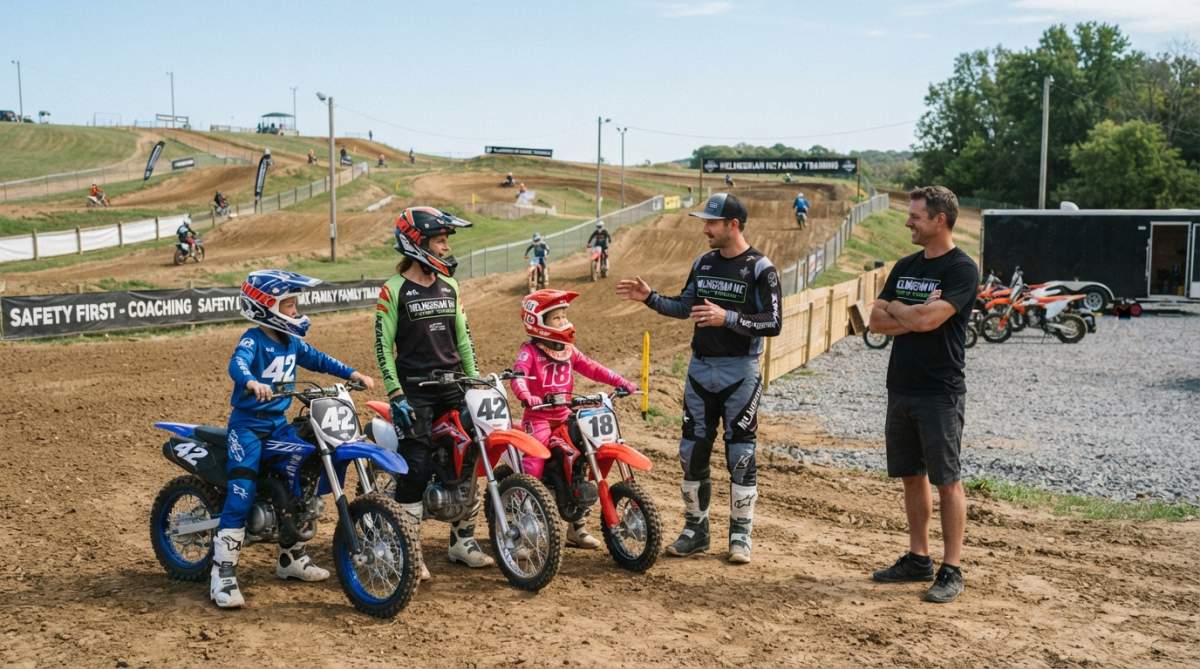
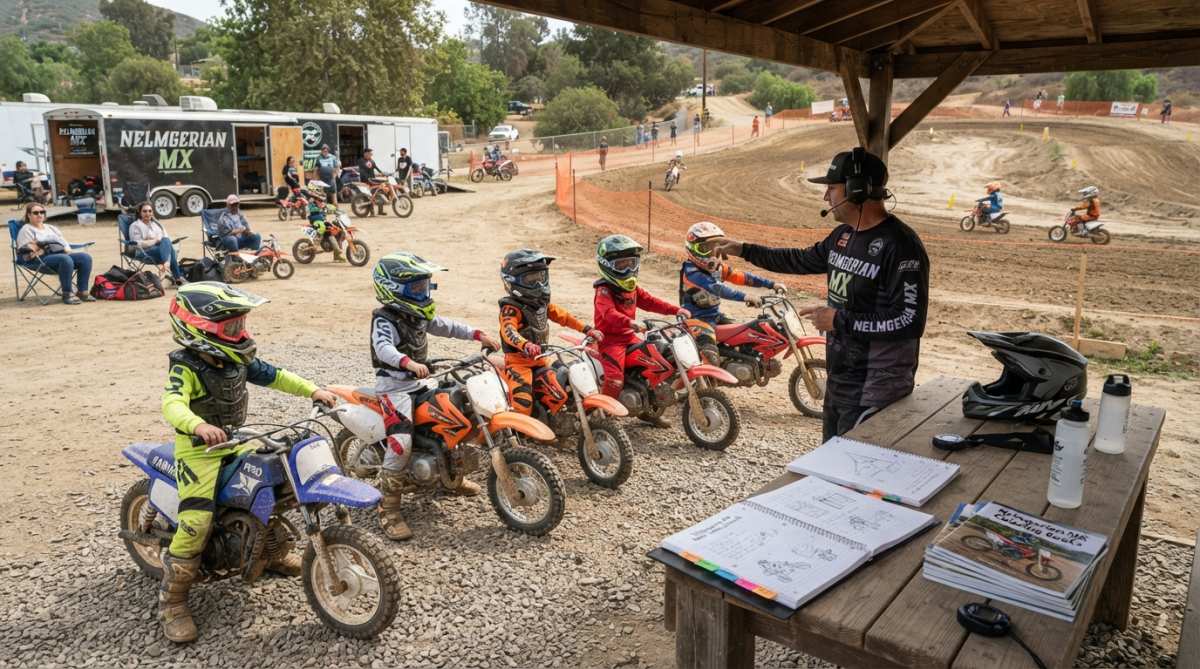
Start by examining the coaching structure. Quality facilities have coaches with verifiable racing backgrounds who can diagnose problems and explain solutions clearly. Ask about coach-to-rider ratios, 1:4 or better is ideal. One coach managing eight kids means nobody gets meaningful feedback.
Second, examine the track layout. A family-focused facility should have multiple sections: beginner areas with smaller jumps, intermediate zones, and advanced sections. This lets riders of different levels train simultaneously without waiting or feeling pressured.
Third, look at practical support. Facilities with on-site maintenance, bike rental options, and bunk rooms indicate the operation understands what families actually need. If you're driving four hours, you're not doing it for one afternoon.
Full-Time and Summer Programs
Full-time programs run 5-7 days per week for 2-8 weeks. Summer camps compress this into school breaks. The difference between quality and mediocre programs shows in the curriculum. A structured program should have clear progression: Week 1 covers body positioning and throttle control, Week 2 adds cornering, Week 3 introduces jumps. Ask to see the written curriculum before enrolling.
Summer camps often include group meals and social activities. Kids who bond with other young riders develop peer community around the sport and stay more motivated. Cost varies based on program length and amenities. All-inclusive programs with housing and meals cost more but eliminate logistics headaches.
Private Track Access and Facility Amenities
Private track access is a game-changer. When you have the track to yourself, your kids get exponentially more saddle time. Look for facilities offering both group training and private sessions for scheduling flexibility.
Facility amenities directly impact comfort. Bunk rooms eliminate hotel costs. On-site cafés keep meal expenses reasonable. Swimming pools or recreation areas occupy non-riding family members. Laundry service prevents running out of clean clothes. Bike maintenance areas with available tools keep training on schedule.
Family-Friendly Motocross Tracks Across the US
The United States has dozens of motocross training facilities, but only a fraction are genuinely family-focused. The best ones cluster around regions with strong motocross culture: Southern California, Arizona, Texas, Florida, and the Midwest.
What Makes a Track Family-Focused
A family-focused motocross track prioritizes safety infrastructure with proper medical staff on-site, regular track maintenance, and coaching staff trained in age-appropriate instruction. The track layout matters: beginner sections should have wide turns and moderate jumps; intermediate areas introduce tighter cornering; advanced sections challenge experienced riders without intimidating newcomers.
Atmosphere is harder to quantify but easy to feel. Are coaches encouraging? Do families look relaxed? Do kids want to return? A good facility feels like a community, not a transaction.
Facility Amenities That Matter for Families
Bunk rooms eliminate daily commutes and maximize training time. A functional café keeps meal costs reasonable. Laundry facilities let families extend stays without running out of clean clothes. Bike rental programs remove equipment transport problems. A pool or recreation area keeps non-riding family members occupied.
Beginner Motocross Training for Kids and Adults
The best facilities serve everyone from absolute beginners to advanced riders through age and skill-appropriate programs.
Age-Appropriate Programs and Skill Levels
A five-year-old on a 50cc needs completely different instruction than a twelve-year-old on an 85cc or an adult on a 250cc. Quality facilities structure programs by age and skill level, not just bike size.
Beginner programs for young children (4-7) focus on comfort and basic control with short sessions (30-45 minutes). Intermediate programs (8-12) introduce technique like proper braking and jump approaches. Advanced youth and adult programs focus on racing technique and strategy.
Assess skill level honestly, not by age. A twelve-year-old beginner should train with other beginners, not age peers who've been riding for years.
One-on-One Coaching vs. Group Sessions
Group sessions (3-6 riders with one coach) build community and cost less. Kids learn from watching peers and develop social engagement. One-on-one coaching costs more but delivers personalized feedback for specific weaknesses or competitive preparation.
The ideal structure combines both: 2-3 group sessions weekly for community and cost efficiency, plus one monthly one-on-one session for personalized assessment.
Motocross Safety Gear for Youth and Training Essentials
A motocross training facility for families should provide clear guidance on safety gear. This isn't optional.
Safety Protocols at Quality Training Facilities
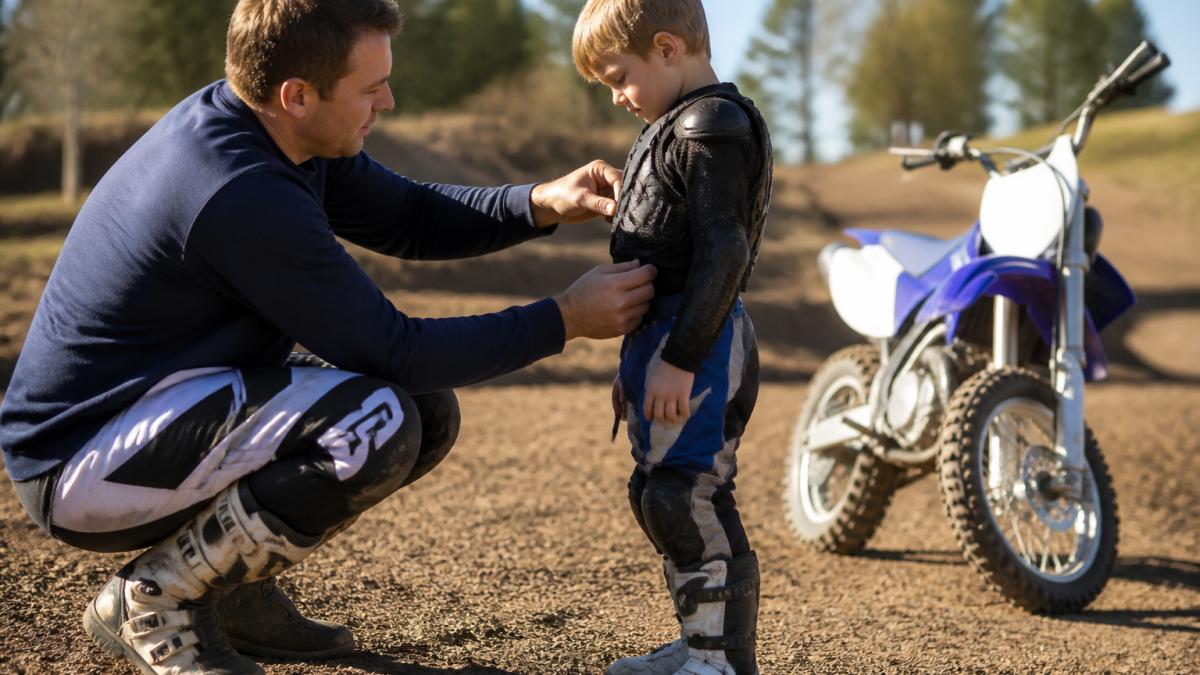
Quality facilities mandate full safety gear: helmet, goggles, chest protector, gloves, boots, and jersey. Some provide rental gear, helpful if you're traveling without equipment.
Beyond gear, protocols matter. A good facility has medical staff on-site, clear injury procedures, documented emergency protocols, regular track maintenance, and coaching staff trained in age-appropriate safety. Ask about the facility's safety record and how they've responded to incidents. Transparent facilities are more trustworthy than ones that deflect.
Coaching should emphasize progressive skill development. Kids shouldn't attempt advanced jumps before they're ready.
| Safety Element | What to Look For | Why It Matters |
|---|---|---|
| On-site medical staff | Paramedics or EMTs present during all sessions | Immediate response reduces injury severity |
| Helmet requirements | Full-face helmets mandatory, no exceptions | Protects against head/face trauma |
| Track maintenance | Regular grooming, hazard removal | Prevents crashes from track conditions |
| Coaching certification | Coaches trained in youth instruction | Age-appropriate teaching prevents overextension |
| Gear rental program | Available helmets, chest protectors, boots | Eliminates excuse for inadequate protection |
| Emergency protocols | Written procedures, staff training | Organized response saves lives |
Cost of Motocross Training Camps and Programs
Understanding the full cost structure prevents surprises and helps you budget realistically.
Budgeting for Your Family's Motocross Journey
Training costs break into several categories: coaching fees, facility access, equipment, travel, and lodging.
Group sessions typically run $40-80 per hour per rider. One-on-one coaching ranges from $75-150+ per hour. A weekly group session costs $160-320 monthly; one monthly one-on-one session adds $75-150.
Facility access fees run $20-50 per day for open track time. Some facilities charge membership fees ($100-300 monthly) for unlimited access.
A basic safety gear set (helmet, goggles, chest protector, gloves, boots) runs $300-600. Dirt bikes range from $1,500 for used 50cc models to $5,000+ for newer 250cc machines. Rental programs eliminate this cost if traveling.
Travel and lodging compound quickly. A 500-mile trip with hotel stays and meals easily adds $1,500+ per week. On-site lodging at facilities offering bunk rooms ($50-100 per night per family) reduces this significantly.
Realistic monthly budget for local families: $300-600. For families traveling: $1,000-2,500+
Equipment Transport and Rental Logistics
Transporting bikes and gear across distances is logistically complex. A single dirt bike with stand takes up roughly 4' x 2' x 3' of space and weighs 150-250 pounds. Two bikes require a trailer. Four bikes require a larger trailer or truck cargo carrier.
Rental programs solve this. Quality facilities maintain fleets of well-maintained bikes in multiple sizes. Rental costs typically run $50-100 per day per bike. For a family renting one or two bikes for a week-long camp, you're looking at $350-700 in bike rental, less than transporting your own bikes plus fuel.
Before booking, confirm their rental fleet. Ask about bike sizes available, maintenance schedules, what's included, damage policies, and advance reservations.
How to Choose the Right Motocross Training Facility for Your Family
Choosing a facility is personal. But the evaluation process is the same.
Assessing Your Family's Skill Level and Goals
Before comparing facilities, clarify what you want to achieve. Are you looking for recreational riding where kids learn for fun? Then flexible scheduling, good coaching, and reasonable costs matter most. Are you developing a competitive rider? Then coaching quality, track design, and advanced training access become critical. Are you introducing beginners? Then beginner-focused instruction and safety emphasis matter most. Are you managing multiple skill levels? Then facility design and scheduling flexibility are essential.
Write down your family's primary goal, then evaluate facilities against that specific goal.
Questions to Ask Before Enrolling
On Coaching:
- What are coaches' racing backgrounds and certifications?
- What's the coach-to-rider ratio during group sessions?
- How do you structure progression?
- Can we observe a session before enrolling?
On Track Design:
- Do you have separate beginner, intermediate, and advanced sections?
- Can multiple skill levels train simultaneously?
- How often is the track maintained?
- What happens if weather disrupts training?
On Safety:
- Is medical staff on-site during all sessions?
- What's your safety record?
- What's your helmet and gear policy?
- Do you offer rental gear?
On Logistics:
- Do you offer bike rentals? What sizes and condition?
- Do you have on-site lodging? What's the cost?
- Is there food service?
- Do you have laundry facilities?
- What's the cancellation/refund policy?
On Cost:
- What's included in your quoted price?
- Are there hidden fees?
- Do you offer discounts for multiple family members?
- What's your payment schedule?
Listen to how they answer. Transparent, detailed, patient facilities are usually better than ones that rush you or deflect.
Beyond the Track: Building Confidence and Knowledge Year-Round
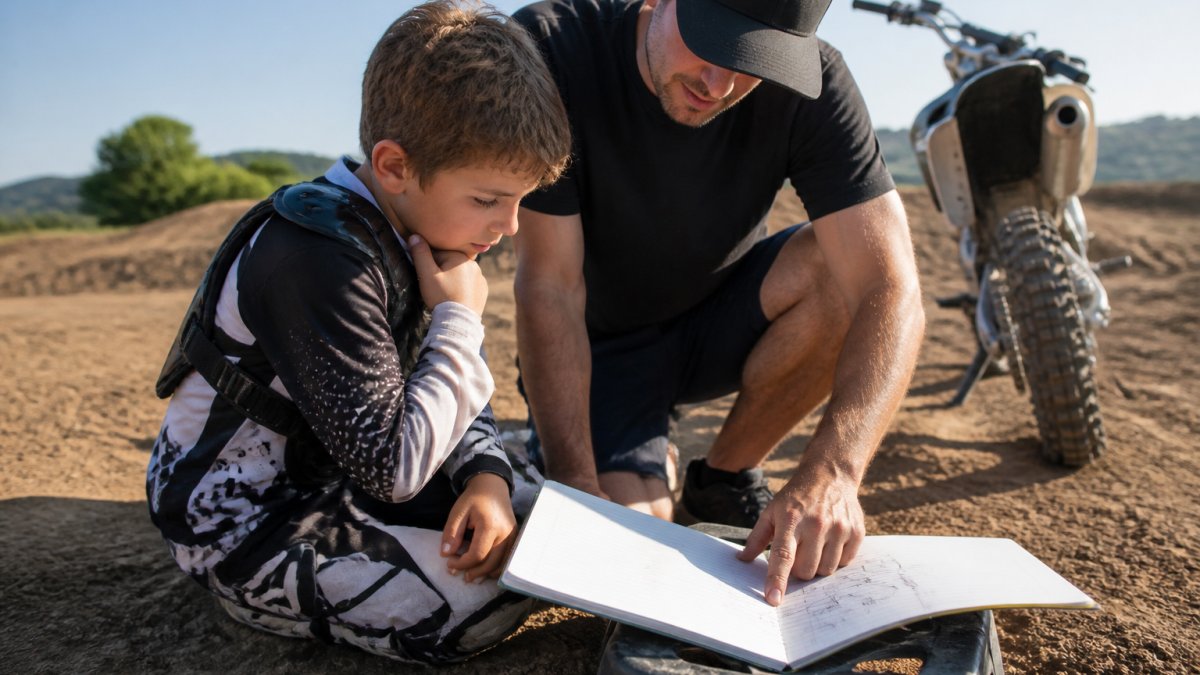
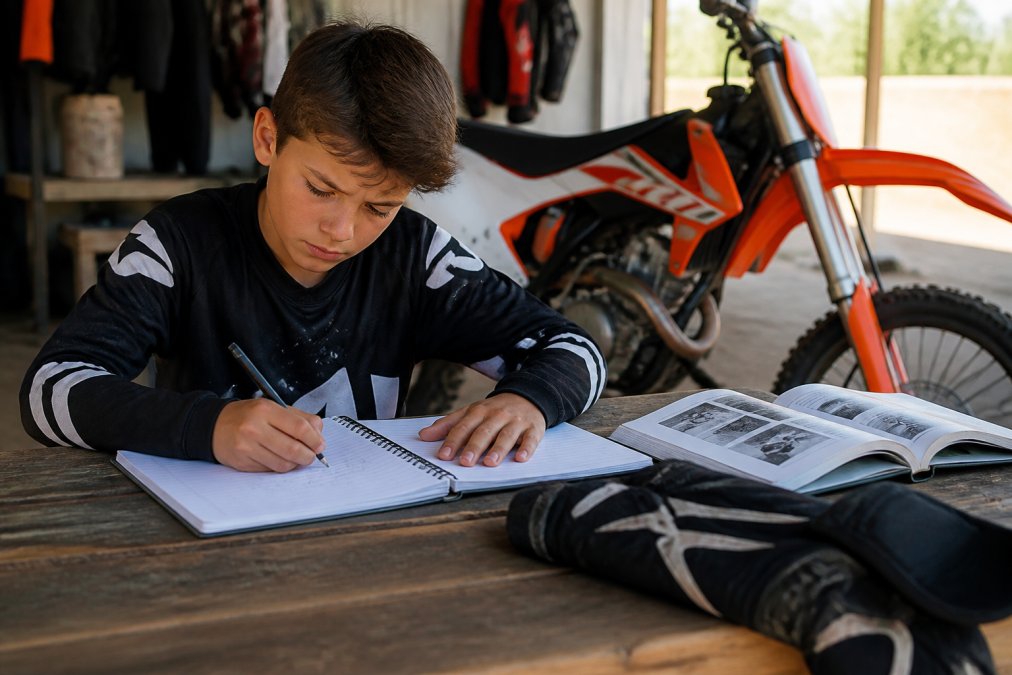
The best motocross training happens year-round. Educational materials, training journals, and videos help young riders process what they've learned and visualize improvement. Brands like Nelmgerian MX create rider training journals and storybooks designed to keep young riders connected to the sport and build confidence between sessions.
A quality training journal helps riders track progress, set goals, and reflect on performance. This metacognitive practice accelerates learning. Peer communities matter too, facilities that foster connections between families create accountability and motivation. Kids push themselves harder when part of a community of peers.
The seasonal rhythm of training also matters. Many families do intensive summer training, lighter sessions during school year, and focus on skill-building drills in winter. This rhythm prevents burnout and keeps the sport fun.
Choosing a motocross training facility for families is ultimately about finding a place that understands your family's unique combination of goals, skill levels, and logistics. The right facility removes barriers, equipment transport, scheduling complexity, cost surprises, so your family can focus on learning, improving, and enjoying the sport together. Start by clarifying what you want to achieve, then evaluate facilities against that specific goal. Ask hard questions about coaching quality, track design, and logistics. Visit in person if possible. The best facility for another family might not be best for yours.
At Nelmgerian MX, we're expanding our private track in Crossville, Alabama specifically to offer this complete family experience: professional coaching, thoughtful facility design, and hospitality that makes training trips something families look forward to. Whether you're using our resources to build confidence year-round or planning to visit our track, the goal is the same: developing young riders who love the sport and have the skills to succeed both on and off the bike.
Frequently Asked Questions
What age can kids start motocross training at a facility?
Most beginner motocross training programs accept children as young as 5-7 years old on 50cc bikes, though some facilities offer programs for younger riders on smaller displacement bikes. Beginner motocross training for kids and adults varies by facility, so check age requirements when researching options. Skill development starts with age-appropriate instruction, proper safety gear, and bikes matched to the rider's size and experience level.
How much does a typical motocross training camp cost for families?
The cost of motocross training camps varies widely based on program length, facility location, and included amenities. Pricing depends on whether you choose summer camps, full-time programs, or one-on-one coaching sessions. For current pricing and package details, contact the facility directly or visit their website. Many facilities offer bundle discounts when families enroll multiple riders or commit to longer programs.
What motocross safety gear for youth is required at training facilities?
Quality training facilities require full protective equipment including a DOT-approved helmet, goggles, chest protector, gloves, boots, and jersey. Motocross safety gear for youth should fit properly and meet current safety standards. Facilities typically provide guidance on gear selection and may offer rental options. Ask about specific safety protocols and whether the facility supplies gear or requires you to bring your own before enrolling.
Do family-friendly motocross tracks offer lodging and amenities?
Many family-friendly motocross tracks US locations feature amenities like bunk rooms, cafes, pools, and spectator areas to support multi-day visits. These facilities are designed for families to train and stay together. When evaluating options, ask about on-site lodging, meal services, and recreational facilities. Some tracks offer package deals that include accommodation, track time, and coaching to simplify family planning and logistics.
This article was written using GrandRanker