 how-to
Tips for Teaching Kids Motorcycle Balance
Table of Contents
- Why Motorcycle Balance Matters for Young Riders
- Setting Up the Bike: Seat Height and Ground Contact
- Motorcycle Balance Drills for Kids That Build Confidence
- Teaching Your Child Proper Gaze Direction and Body Position
- How to Teach a Child to Use a Throttle Safely
- Safety Gear for Young Motocross Riders
- Managing Fear and Building Long-Term Confidence
- Conclusion
Last Updated: August 22, 2026
Why Motorcycle Balance Matters for Young Riders
Balance is the foundation of everything your child will do on a motorcycle. Without it, steering feels unstable, acceleration becomes unpredictable, and confidence crumbles. Young riders who develop strong balance mechanics advance faster through complex skills, handle terrain changes with less anxiety, and build the muscle memory that makes advanced techniques feel natural later.
Balance on a motorcycle works differently than on a bicycle. A motorcycle's weight, engine vibration, and throttle response create new variables. Your child must learn to distribute weight across the seat, use their core to stay centered, and trust the bike's geometry. The good news: balance is teachable. It's not a talent some kids are born with and others aren't. It's a skill that develops through structured practice, proper setup, and consistent encouragement.
Setting Up the Bike: Seat Height and Ground Contact
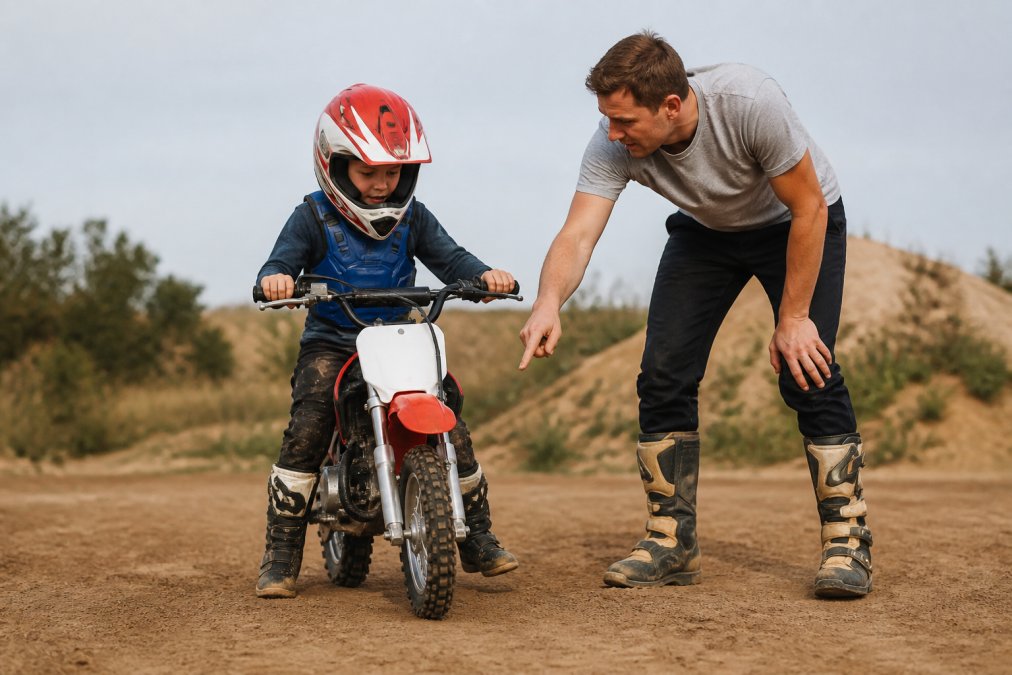
Proper seat height is non-negotiable for teaching kids motorcycle balance. When your child sits on the bike, both feet should touch the ground flat, with a slight bend in the knees. This flat-footed contact gives them confidence and a quick escape route if they lose balance.
Many parents set the seat too high, thinking it looks more "grown-up" or that their child will grow into it. A seat that's too high forces your child onto their tiptoes, destabilizing their center of gravity and making them grip the handlebars tighter out of fear. Tension in the upper body transfers down, making smooth throttle control impossible.
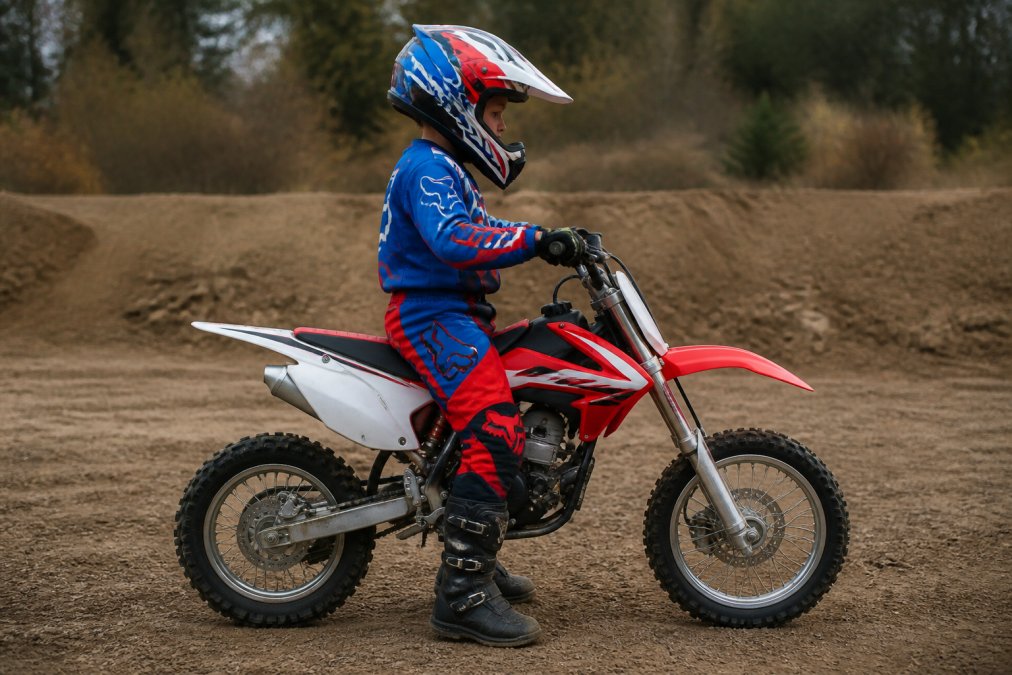
Check seat height regularly as your child grows. Every few months, have them sit on the bike in riding position and verify that both feet still make solid contact with the ground. Beyond seat height, handlebars should be within comfortable reach without stretching, and elbows should have a slight bend when gripping the bars.
Ground contact isn't just about confidence, it's about control. When your child's feet can touch the ground, they have an emergency brake. If they lose balance or the bike starts to tip, they can quickly put a foot down and stabilize themselves.
Motorcycle Balance Drills for Kids That Build Confidence
Structured drills are the fastest way to build balance skills. Rather than just riding around, specific exercises target the exact mechanics your child needs.
The Walking Drill is the starting point. Have your child sit on the bike (engine off) and walk it forward using their feet, similar to a scooting motion on a balance bike. This teaches weight distribution and how the bike responds to small shifts. Do this for 5-10 minutes.
The Gliding Drill comes next. In a safe, flat area with no obstacles, have your child push off with their feet to gain momentum, then tuck their feet up onto the pegs and coast for as long as possible. This teaches them to find their center of gravity and trust the bike's stability. Start with short glides (10-15 feet) and gradually extend.
The Slow-Speed Circle Drill builds steering control and balance together. Have your child ride in slow, wide circles at a walking pace, keeping the bike upright without using their feet. This teaches subtle weight shifts and how to use the handlebars to maintain balance without overcorrecting. Start with circles 20-30 feet in diameter.
The Incline Drill develops core strength and weight management on terrain. Find a gentle slope and have your child ride up and down slowly. Riding uphill forces them to shift their weight forward and engage their core. Riding downhill teaches them to lean back slightly and control speed.
Teaching Your Child Proper Gaze Direction and Body Position
Where your child looks directly determines how they ride. Most young riders stare down at the front wheel or the ground immediately ahead. Teach your child to look where they're going, not at the bike. Their eyes should be 10-15 feet ahead on the path or track (peer-reviewed research). This gives their brain time to process what's coming and make smooth adjustments.
Body position follows gaze direction. When your child looks ahead, their shoulders naturally relax and their upper body stays centered. Teach your child to sit upright with a slight forward lean from the hips, not the shoulders. Their weight should be distributed evenly across the seat, with elbows slightly bent and away from their body.
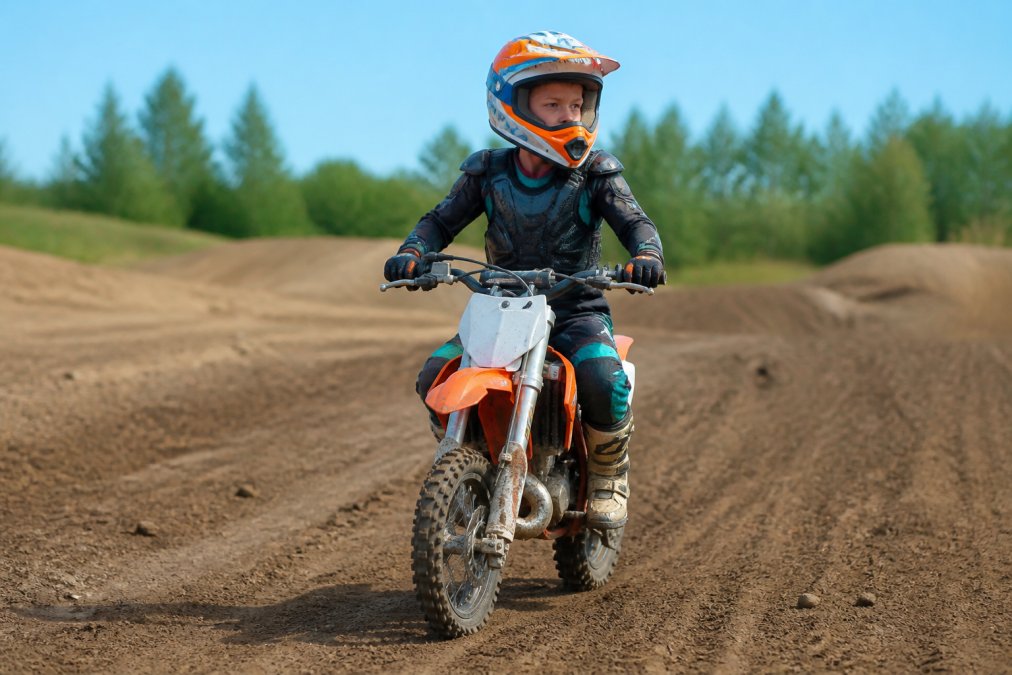
Handlebar grip pressure matters too. Many young riders grip hard because they're nervous. A tight grip transfers tension through the arms and shoulders, making steering feel stiff and jerky. Teach your child to hold the bars with just enough pressure to control the bike, a light, confident grip rather than a death grip.
How to Teach a Child to Use a Throttle Safely
Throttle control is where balance and confidence come together. Start with the engine off. Have your child practice rolling the throttle grip with their wrist while stationary, feeling how it responds. Show them the difference between a smooth, gradual roll and a jerky, sudden twist.
When you introduce engine-on riding, use a flat, obstacle-free area. Have your child practice gentle acceleration in a straight line, focusing on smooth throttle application rather than speed. Teach your child to use their whole wrist, not just their fingers. Finger-only throttle control is twitchy and unpredictable.
Common mistake: children often chop the throttle (suddenly release it) when they get nervous. This can cause the rear wheel to lock up or the bike to pitch forward. Teach your child to gradually roll off the throttle, not snap it shut. Throttle control improves dramatically once balance becomes automatic.
Safety Gear for Young Motocross Riders
Proper safety gear isn't optional, it's essential. Your child should wear full protective equipment every time they ride, even for slow practice sessions.
Helmets are the most critical piece. Choose a helmet specifically designed for motocross, not a street bike helmet. A motocross helmet has a larger visor to shield from roost, better ventilation, and a chin bar that protects the lower face (the CDC). Make sure the helmet fits snugly without being uncomfortable. Replace helmets after any significant impact, even if there's no visible damage (nhtsa.gov).
Goggles protect the eyes from dirt, dust, and branches. Clear lenses work for bright days; amber or rose-tinted lenses help in overcast conditions.
Chest and back protection absorbs impact and prevents rib and spine injuries. Many young riders wear chest protectors that are lightweight and breathable.
Arm and leg protection includes padded sleeves, elbow guards, knee guards, and shin guards. Young riders should wear all of these. Motocross pants have built-in knee protection; pair them with separate knee guards for extra padding. Boots should be motocross-specific with ankle support and reinforced soles.
Gloves protect hands and improve grip. Choose gloves designed for motocross with padded palms and reinforced knuckles.
A complete gear setup protects your child and builds confidence.
Managing Fear and Building Long-Term Confidence
Fear is normal. Every child feels it, and the ones who succeed are the ones who learn to manage it rather than let it control them.
Start by acknowledging your child's fear instead of dismissing it. Saying "don't be scared" doesn't help. Instead, say "I know you're nervous, and that's okay. Let's take it slow and build up." This validates their feelings while keeping them moving forward.
Positive reinforcement matters more than you think. Notice and praise specific improvements: "You looked ahead that whole run, that's exactly what we've been working on." Praise effort and progress, not just outcomes.
Break progress into small steps. Instead of saying "you're going to ride the whole track today," set a smaller goal: "let's ride to that marker and stop." Once they achieve that, celebrate it. Then set the next small goal.
Let your child rest when they need to. Fatigue makes fear worse and increases the chance of mistakes. If you notice your child getting tired or frustrated, end the session on a positive note.
Your own body language matters. Children pick up on parental anxiety instantly. If you're tense or worried, your child will be too. Stay calm, encouraging, and confident.
Progress through teaching kids motorcycle balance isn't always linear. Some days your child will nail skills they struggled with yesterday. Other days they'll regress. That's normal development, not failure. Stay patient and keep showing up.
At Nelmgerian MX, we've created rider training journals specifically designed to track this kind of progress. Documenting small wins, new drills mastered, longer glides achieved, and smoother throttle control gives your child something tangible to look back on and reinforces how far they've come.
Teaching your child to develop strong motorcycle balance takes time, but the payoff is worth it. A child who masters balance early gains confidence that carries into every other aspect of riding and life. They progress faster, stay safer, and enjoy the sport more.
Start with proper bike setup, move through balance drills, and layer in throttle control once balance becomes automatic. Keep sessions short, celebrate progress, and stay patient. Consider using tools like Nelmgerian MX's rider training journals to document your child's development and keep them engaged with the sport between rides. The combination of hands-on practice and thoughtful reflection accelerates progress and builds the mental toughness that separates casual riders from committed ones.
Frequently Asked Questions
At what age can a child start learning motorcycle balance?
Most children can begin developing balance skills on small motorcycles (50cc) between ages 5 and 7, though readiness depends on individual maturity and coordination. Starting with proper seat height setup ensures flat-footed ground contact, which builds confidence. Younger riders benefit from shorter practice sessions and environments free from distractions. Always prioritize safety gear and helmet fit before your child's first ride.
What are the best motorcycle balance drills for kids?
Effective drills include walking the bike forward with feet on the ground to build steering awareness, practicing weight shifts while stationary, and scooting with both feet for momentum control. Gradually introduce gliding by lifting feet slightly as speed increases. Use pump tracks or gentle inclines to teach center of gravity management. Repeat drills in short sessions to maintain focus and prevent frustration.
How do I help my child overcome fear when learning to ride?
Start in familiar, low-pressure environments like empty parking lots or private tracks. Use positive reinforcement and celebrate small wins. Your own body language matters, stay calm and encouraging rather than anxious. Break skills into smaller steps so progress feels achievable. Allow your child to set the pace and never force progression. Building confidence takes patience, but consistent practice with encouragement accelerates trust in their abilities.
What safety gear do young motocross riders need?
Essential safety gear includes a properly fitted helmet (DOT-certified), protective goggles, jersey, pants, gloves, and boots. Helmet fit is critical, it should sit level on the head with no more than one finger's width of space at the forehead. Protective gear reduces injury risk significantly. Ensure all equipment fits properly for your child's size and age, and replace gear as they grow to maintain protection.
This article was written using GrandRanker