 ultimate-guide
What Age Should Kids Start Motocross? A Parent's Guide
Table of Contents
- The Right Age to Start Motocross: What Parents Need to Know
- How to Start Motocross Racing for Kids: A Step-by-Step Approach
- Youth Motocross Safety Gear Requirements: What You Must Have
- Best Beginner Dirt Bike for 5 Year Old: Sizes and Features
- The Importance of Professional Training and Supervised Practice
- Recreational Riding vs. Racing: Setting the Right Expectations
- Beyond the Track: Preventing Burnout and Building Confidence
- Conclusion
- Frequently Asked Questions
Last Updated: September 23, 2026
The Right Age to Start Motocross: What Parents Need to Know
Most kids start motocross between ages 5 and 7, though some children handle a 50cc bike as early as 3 or 4 with heavy parental supervision. The real answer depends far less on the birthday than on physical coordination, emotional maturity, and whether your child can follow safety instructions consistently. This guide from Nelmgerian MX breaks down readiness signs, bike sizes, gear requirements, and the step-by-step path from first ride to first race.
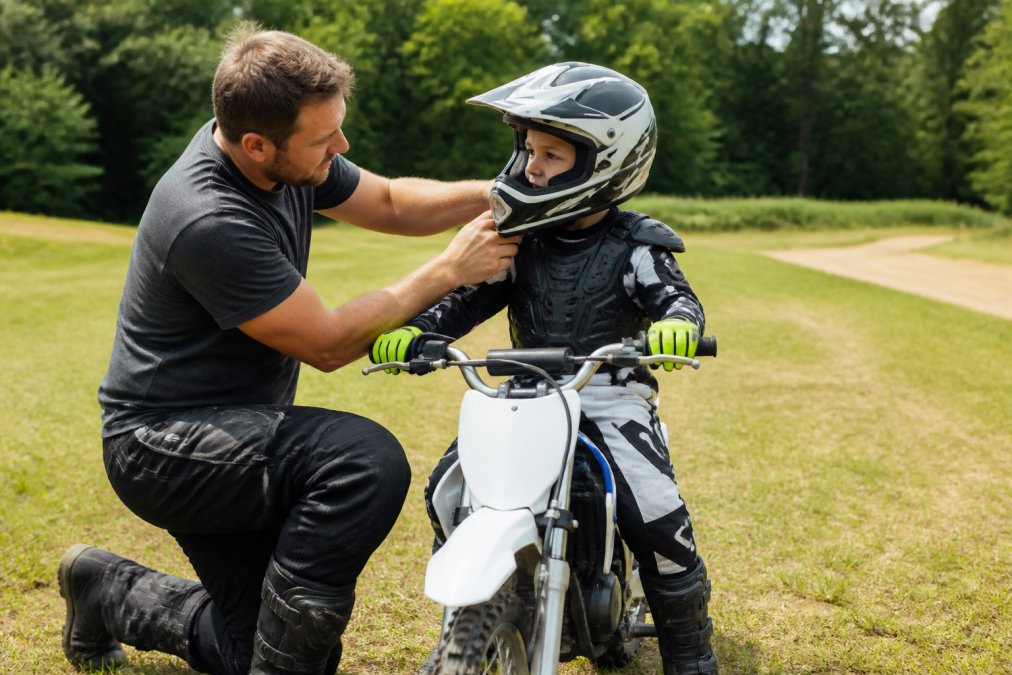
Motocross is one of the few sports where a five-year-old and a nine-year-old can share the same track on different machines.
Physical and Mental Readiness Indicators
A child is ready for motocross when they can balance a bicycle without training wheels, grip and release a throttle deliberately, and stop when told the first time. Those three abilities matter more than age.
Watch for these signs before buying a bike:
- Rides a pedal bike confidently, including standing on the pegs
- Understands "stop" and "slow down" as immediate commands, not suggestions
- Can pick up a dropped bike or ask for help instead of panicking
- Handles frustration without a meltdown when something is hard
- Shows interest in the machine itself, not just the idea of going fast
Age-by-Age Breakdown: From 3 to 9 Years Old
Three-year-olds can ride electric balance bikes and push bikes built for motocross, but a gas-powered dirt bike at this age demands constant parental control, usually a throttle limiter and a tether kill switch.
| Age | Typical Bike Class | Focus |
|---|---|---|
| 3-4 | Electric balance bike | Balance, comfort with two wheels |
| 5-6 | 50cc | Throttle control, braking, supervised practice |
| 7-8 | 50cc to 65cc | Clutch basics, riding posture, flat track drills |
| 8-9 | 65cc to 85cc | Skill progression, beginner racing classes |
How to Start Motocross Racing for Kids: A Step-by-Step Approach
Learning how to start motocross racing kids can enjoy is a gradual process, not a single purchase. Most families spend months on fundamentals before a child ever lines up at a gate.
Introducing Your Child to Dirt Bikes
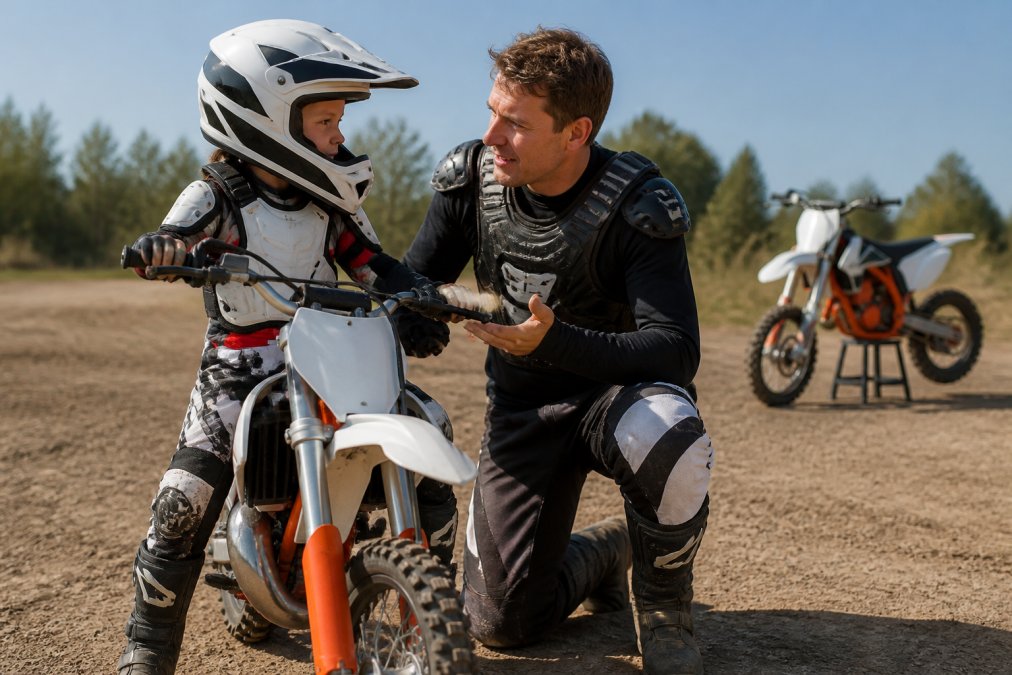
Start with the bike off. Let your child sit on it, work the controls, and get comfortable with the weight and height. Then move to a flat, grassy area with the engine running in neutral.
From First Ride to First Race
The path from first ride to first race typically runs through supervised practice, a beginner clinic, and a local youth racing class. USA Motocross and similar sanctioning bodies offer entry-level classes for young riders, and most tracks require a racing license or membership before competition.
Youth Motocross Safety Gear Requirements: What You Must Have
Youth motocross safety gear requirements are not optional, and the essential list is shorter than most parents expect: a certified full-face helmet, goggles, chest protector, gloves, long sleeves and pants, and motocross boots.
- Helmet: DOT and Snell certified, sized correctly, replaced after any hard impact
- Goggles: Sealed against dust, worn over the helmet strap
- Chest protector: Protects the sternum and ribs from handlebar and roost impacts
- Boots: Motocross-specific, with ankle support and a shin plate
- Gloves and riding gear: Long sleeves and pants, no exposed skin
Best Beginner Dirt Bike for 5 Year Old: Sizes and Features
The best beginner dirt bike for a 5 year old is a 50cc model with an adjustable throttle limiter, a tether kill switch, and a seat height your child can touch with both feet flat. Electric start and automatic clutch remove two distractions while they learn throttle control.
Understanding cc Classes: 50cc, 65cc, and 85cc
Engine displacement, measured in cc, defines the youth racing ladder. A 50cc bike suits beginners, 65cc marks the jump to clutch operation and real racing, and 85cc is where skill progression accelerates and physical stamina starts to matter.
| Class | Typical Rider Age | Key Change | Watch For |
|---|---|---|---|
| 50cc | 4-6 | Automatic clutch, throttle limiter | Riders outgrow power before size |
| 65cc | 7-9 | Manual clutch, real suspension | Big jump in power-to-weight |
| 85cc | 9-12 | Full-size chassis, taller seat | Stamina and strength become limiting |
Buying Used vs. New: The Budget-Friendly Entry Path
Most families do not need a new bike for a first rider. Kids outgrow 50cc machines in a season or two, so a well-maintained used bike often makes more sense than a new one that will be resold within a year.
When shopping used, check these items in person:
Nelmgerian MX Training Journal →
- Frame and forks: Look for cracks, bends, or fresh paint hiding damage
- Wheels and spokes: Spin each wheel; wobble means a bent rim or bad bearings
- Chain and sprockets: Worn teeth or a stretched chain signal neglect
- Compression: A 2-stroke that kicks over too easily may need a top-end rebuild
- Leaks: Check under the engine and around the fork seals
The Importance of Professional Training and Supervised Practice
Professional training shortens the learning curve and reduces injury risk more than any single piece of gear. A coach teaches riding posture, braking technique, and beginner drills that parents, however experienced, often miss.
Recreational Riding vs. Racing: Setting the Right Expectations
Recreational riding and racing ask different things of a child. Recreational riding is about fun, fitness, and family time. Racing adds competition, travel, cost, and pressure, and not every young rider wants it.
Beyond the Track: Preventing Burnout and Building Confidence
Psychological burnout is the quiet reason many young riders quit by age ten. The fix is simple in theory: keep practice fun, celebrate effort over results, and give kids ownership of their progress. In practice, it takes deliberate choices about how often they ride, how they measure success, and how much of the sport belongs to them rather than to a parent's expectations.
Signs of Burnout Before It Becomes Quitting
Burnout rarely shows up as a single dramatic moment. It builds through small signals that are easy to dismiss:
- Reluctance to load up for practice that used to be exciting
- Excuses about being tired, sore, or "not feeling it" on ride days
- Fixation on results and visible frustration after a bad moto
- Dropping other activities they used to enjoy to make room for riding
- Talking about the sport in terms of obligation rather than fun
The Fun-First Framework
A workable balance for most families is roughly 70 percent free riding, 20 percent structured practice, and 10 percent competition during the early years. Free riding is where kids fall in love with the sport; structured practice is where they improve; racing is where they test it. Flip those proportions too early and the fun disappears before the skill arrives.
Injury Prevention and Conditioning for Young Riders
Injury prevention and conditioning deserve the same attention as bike setup. Off-bike work on balance, core strength, and flexibility keeps young riders safer and riding longer. The most common youth motocross injuries are not catastrophic crashes but overuse and fatigue-related strains: wrist and forearm fatigue from gripping too hard, lower back strain from poor posture, and knee tweaks from landing stiff-legged.
A short pre-ride warm-up goes a long way:
- Arm circles and wrist rolls to loosen forearms before gripping the bars
- Bodyweight squats and lunges to activate the legs for standing on the pegs
- Planks and bird-dogs for core stability that protects the lower back
- Hip and ankle mobility drills so landings absorb force through the joints, not the spine
Conclusion
Deciding when kids start motocross comes down to readiness, not a birthday. Start with the right size bike, the right gear, and supervised practice, and let skill progression set the pace. Nelmgerian MX helps families keep young riders learning between practice days with children's books, activity resources, and rider training journals built around the sport they love. Consistent safety habits begin with selecting the proper protective gear for kids to ensure every session on the track remains as secure as it is enjoyable.
Frequently Asked Questions
Is 12 too late to start motocross?
No, 12 is not too late. Many successful riders begin in their early teens. The key is to start with a bike that matches their size and skill level, such as an 85cc or 125cc 4-stroke, and focus on proper training. Youth motocross classes often have divisions for older beginners, so your child can progress at their own pace.
What safety gear is mandatory for youth motocross?
At minimum, a DOT-approved full-face helmet, goggles, chest protector, gloves, long pants, and motocross boots are required. Many tracks also require knee and elbow guards. Always check with your local track for specific youth motocross safety gear requirements, as they can vary.
What cc should a 7 year old ride?
Most 7-year-olds ride a 50cc or 65cc dirt bike, depending on their size and experience. A 50cc is ideal for beginners, while a 65cc suits those with some riding time. Consider a 4-stroke for smoother power delivery, which helps young riders build confidence.
How do I know if my child has the physical coordination for motocross?
Look for basic balance on a bicycle without training wheels, the ability to follow simple instructions, and enough strength to pick up a lightweight bike. If your child can ride a pedal bike confidently, they likely have the coordination to start on a small dirt bike with training and supervision.