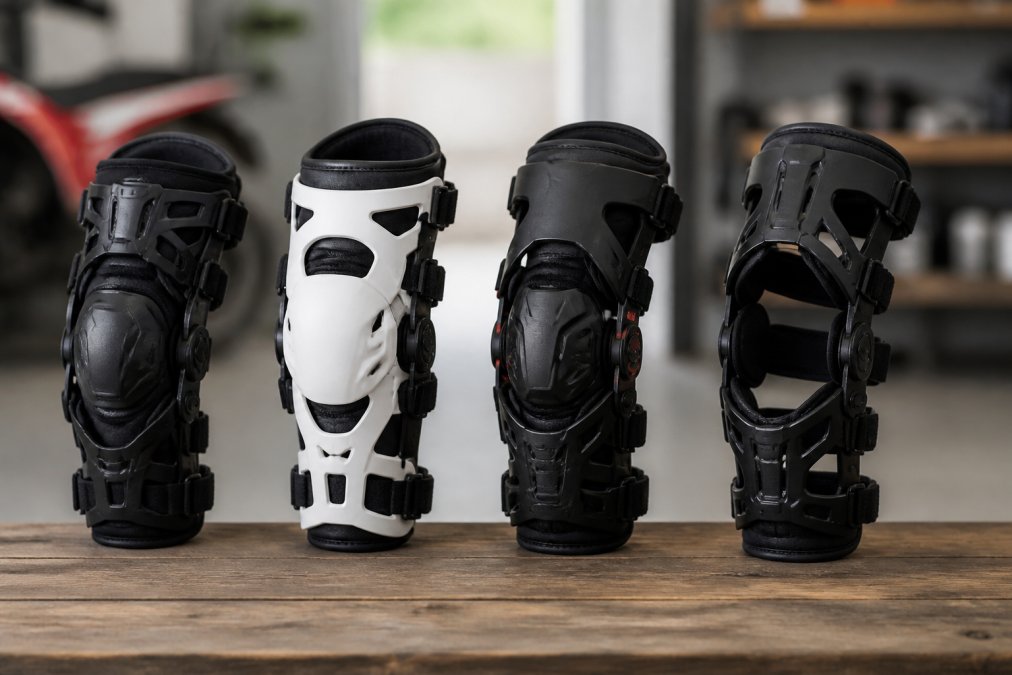
 blog
blog
Youth Motocross Knee Brace Brands Compared
Table of Contents
- Why Young Motocross Riders Need Knee Protection
- Knee Pads vs Knee Braces for Kids: What's the Difference?
- Top Youth Motocross Knee Brace Brands Compared
- Key Features to Look For in a Youth Brace
- Youth Motocross Knee Brace Sizing Guide
- How to Fit a Youth Motocross Knee Brace
- Protecting Your Investment and Your Rider
- Frequently Asked Questions
Last Updated: September 5, 2026
A youth motocross knee brace is a protective device designed to shield a young rider's knee from hyperextension, impact, and rotational forces during off-road riding. When parents start comparing youth motocross knee brace brands, they quickly discover that the market splits into two very different categories: basic impact pads and true medical-grade braces. This guide from Nelmgerian MX breaks down what actually matters for riders aged 3-9, which brands lead the pack, and how to avoid the most common fitting mistakes.
Most parents assume any knee protection is better than none, but that's not always true. The wrong gear can migrate during a crash, leaving the joint exposed at the exact moment it needs support. Below, we'll show you exactly how to match protection level to your child's riding stage, which features justify the higher price tags, and how a proper fit changes everything.
Why Young Motocross Riders Need Knee Protection
Youth motocross riders face unique injury risks that adult riders outgrow. Their bones are still developing, their ligament structures are more elastic, and their coordination is still maturing. The forces involved in a simple tip-over on a 50cc bike can produce the same hyperextension mechanisms that injure adult riders on full-size machines.
Many parents delay knee protection because their child "isn't going fast yet." Speed isn't the primary danger. The most common injury scenarios happen at low speed: a foot slips off a peg, the bike falls sideways, and the leg twists underneath. A young rider's knee absorbs rotational forces that the ankle and hip cannot redirect.
Pediatric sports medicine guidance consistently points to ligament sprains and growth plate injuries as the most frequent motocross-related knee issues in young riders (PubMed). The American Academy of Pediatrics Council on Sports Medicine has documented that early-season injuries in youth motorsports often involve the lower extremities simply because protective gear focuses on the head, chest, and back while leaving knees under-protected.
Knee Pads vs Knee Braces for Kids: What's the Difference?
Knee pads and knee braces serve fundamentally different purposes, and choosing between them depends on your child's riding stage. A knee pad is a foam or soft-shell guard that absorbs impact energy on the front of the knee. A knee brace adds a rigid frame, hinge mechanism, and strap system designed to control joint articulation and prevent hyperextension.
For a child just starting on a 50cc bike in a backyard or beginner track, knee pads often provide sufficient protection. The primary risks are scrapes, bruises, and direct impacts to the kneecap.
The calculus changes once your child starts jumping, riding rutted tracks, or racing competitively. At that point, the risk shifts from blunt impact to ligament strain. A brace's hinge mechanism and medial-lateral support actively resist the twisting motions that tear ligaments. The National Institutes of Health ligament injury research indicates that braces with rigid frames provide measurable protection against the valgus stress that damages the MCL.
Here is a quick breakdown of when each option makes sense:
| Protection Type | Best For | Key Limitation | Typical Use |
|---|---|---|---|
| Knee Pads | Beginners, casual riding | No ligament support | Practice on flat tracks |
| Soft Braces | Intermediate riders | Limited torsional rigidity | Trail riding, small jumps |
| Rigid Braces | Racers, competitive riders | Higher cost, bulkier | Full motocross competition |
Top Youth Motocross Knee Brace Brands Compared
The youth brace market is smaller than the adult market, but several brands have stepped up with purpose-built options rather than scaled-down adult designs. When comparing youth motocross knee brace brands, focus on the frame construction, hinge quality, and sizing range rather than brand popularity alone.
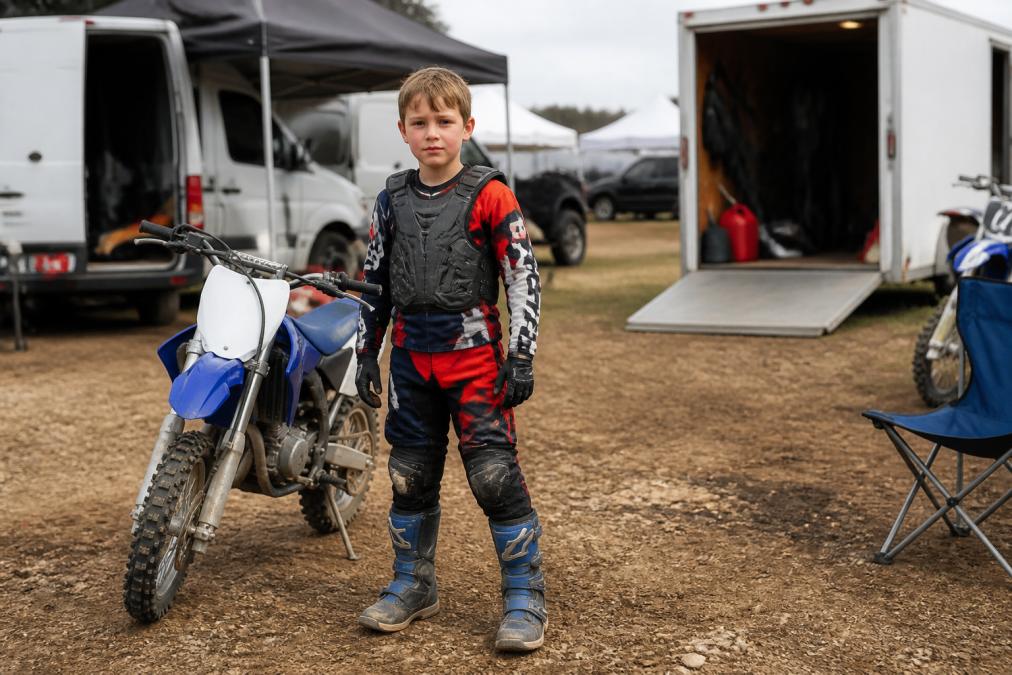
Mobius X8 Youth: Mobius offers a carbon fiber frame option that is remarkably light for its rigidity. The X8 Youth features a mechanical hinge with hyperextension stops and a low-profile design that fits under most riding pants. Parents report that the strap tensioning system stays put during a full moto, which solves the brace migration problem common in youth gear. The tradeoff is price; this is a premium option.
Pod K850 Youth: Pod is known for their adult MX knee braces, and the K850 Youth brings much of that engineering to smaller riders. The frame is a blend of carbon fiber and composite materials, offering strong impact resistance and torsional rigidity. The brace includes a patella cup that stays centered through joint articulation. Sizing starts around a 10-inch knee circumference, so it suits older kids in the 7-9 range more than the youngest riders.
CTI2 Youth Brace by DonJoy: DonJoy comes from the orthopedic world, and it shows in the CTI2 Youth. This brace offers custom-molded fitting options and a hinge system that tracks the knee's natural biomechanical alignment. It is the strongest option for post-injury support, but the medical-grade design means a higher learning curve for fitting and a price that approaches adult models.
Shin Guard Integration: One gap in the youth market is built-in shin guard integration. Most braces stop at the top of the shin, leaving riders to layer separate guards underneath. When comparing brands, check whether the lower strap sits high enough to avoid pressure points against an independent shin guard.
A common mistake is buying a brace based on the brand's adult reputation without checking whether the youth model has actually been redesigned or is just a smaller shell. Look for youth-specific features like a reduced frame stiffness that still allows natural knee movement during a fall.
Key Features to Look For in a Youth Brace
A youth motocross knee brace must balance protection with the reality that a child's knee is still growing. The most important feature is a hinge mechanism that matches the knee's natural axis of rotation. A brace with a poorly aligned hinge will either restrict movement or, worse, force the knee into an unnatural path during a crash.
Hyperextension prevention is the core job of any brace. Look for a stop mechanism that limits how far the knee can straighten. This feature alone prevents the most common ligament injury mechanism in motocross. The stop should be adjustable, because a child's range of motion changes as they grow.
Frame stiffness and material determine how much protection the brace actually offers. Carbon fiber frames provide the best strength-to-weight ratio but cost more. Plastic composite frames are heavier but more affordable. For youth riders, lighter is better; a heavy brace will fatigue a child's legs and encourage them to ride with poor posture.
Patella protection matters more than most parents realize. The kneecap sits exposed at the front of the joint and takes direct impact when a rider's knee hits the handlebar or ground. A brace with a floating patella cup allows the kneecap to move naturally while still shielding it from impact energy.
Breathability and moisture-wicking liners are not luxury features. A child riding a full moto will sweat heavily inside a non-breathable brace, which leads to skin irritation and a reluctance to wear the gear. Look for removable, washable liners that you can replace as they wear out.
Youth Motocross Knee Brace Sizing Guide
A youth motocross knee brace sizing guide starts with one critical measurement: the circumference of the knee at the center of the kneecap. This is not the same as the thigh or calf measurement. Most manufacturers publish a size chart that maps knee circumference to brace size, and following that chart precisely is the difference between a brace that protects and one that shifts.
To measure correctly, have your child stand with their leg straight and their quad muscle relaxed. Wrap a flexible measuring tape around the knee at the midpoint of the kneecap. Record the measurement in inches or centimeters, then compare it against the manufacturer's chart.
Pay attention to the measurement protocols. Some brands ask for the knee circumference while standing, others while seated with the knee bent at 90 degrees. The difference can be significant, and using the wrong protocol will put your child between sizes.
The growth question is real, and it is worth planning for. A child can outgrow a brace within a single season. This is where the long-term cost of a premium brace versus a mid-range option becomes a genuine consideration. Some families buy a less expensive brace for the growth years and invest in a top-tier model once the child's size stabilizes in the early teens.
How to Fit a Youth Motocross Knee Brace
Fitting a youth motocross knee brace correctly takes about ten minutes the first time, and it is worth doing slowly. The process starts with the right base layer. A thin moisture-wicking liner is ideal. Thick padding under the brace will compress during riding and cause the brace to loosen.
Position the brace so the hinge axis sits directly beside the center of the knee joint. The patella cup should sit centered over the kneecap, not above or below it. Once the brace is positioned, tighten the straps in a specific order: start with the strap below the knee, then the one above, and finish with the middle straps. This order prevents the brace from being pulled upward during the first few leg movements.
The fit should be snug but not painful. You should not be able to slide more than one finger between the strap and your child's leg. Ask your child to bend their knee fully and then straighten it. The brace should stay in place through the full range of motion. If it shifts, loosen and reposition rather than simply tightening further.
A common mistake is fitting the brace while the child is standing still and then discovering it shifts during riding. Have your child sit on a small stool or the edge of a table with their legs dangling. Fit the brace in this seated position, which better mimics the knee angle during riding.
Protecting Your Investment and Your Rider
Knee braces are not cheap, and they take real abuse from dirt, sweat, and impacts. A regular cleaning routine extends their life and keeps them functioning correctly. After each ride, wipe down the frame and straps with a damp cloth to remove dirt. Remove the liners and wash them according to the manufacturer's instructions, typically in cold water with mild detergent, and let them air dry completely.
Inspect the hinge mechanism and straps before every ride. Look for cracks in the frame, worn strap buckles, or stretched elastic. A brace that has taken a hard impact should be inspected carefully; some manufacturers recommend replacing a brace after a significant crash, since the frame can develop micro-fractures that are not visible to the naked eye.
As your child grows and their riding progresses, their protection needs will change. A brace that was right for their first season on a 50cc bike may not offer enough support once they move to a 65cc and start hitting bigger jumps. Reassess the brace at the start of each season, not just when it feels tight.
Finally, remember that protection is only part of the equation. A child who understands why they wear their gear is more likely to wear it correctly. At Nelmgerian MX, we believe that building good habits on and off the bike sets up young riders for a lifetime of enjoyment in the sport.
Choosing the right knee protection for a young rider comes down to matching the gear to their current stage, measuring carefully, and prioritizing a proper fit over brand loyalty. Start with the sizing guide above, compare the key features across brands, and invest in quality that will hold up through a season of hard riding. For more resources on developing your young rider's skills and confidence, explore the rider training journals and educational tools from Nelmgerian MX, created by motocross enthusiast Shaun Nelms to keep kids engaged with the sport even when they are not on the track. Get started with Nelmgerian MX and support your child's motocross journey from the ground up.
Frequently Asked Questions
Do youth motocross knee braces prevent ACL injuries?
Youth knee braces provide significant support but cannot guarantee injury prevention. They are designed to control hyperextension and offer medial-lateral stability, which reduces stress on the ACL and MCL. For a growing rider, a brace is one part of a safety system that includes proper technique, conditioning, and knowing when to ride within their limits. Think of it as protective gear that lowers risk, not a shield that eliminates it.
How do I choose the right size knee brace for a child?
Measure your child's leg while they are standing. Use a flexible tape measure to find the circumference of their thigh about 4 inches above the kneecap, and the circumference of their calf about 4 inches below it. Also measure the distance from the mid-thigh to mid-calf across the knee. Compare these numbers to the brand's specific youth motocross knee brace sizing chart, as sizes vary between manufacturers.
What is the difference between knee pads and knee braces for motocross?
Knee pads are primarily for impact protection, using foam or a hard shell to guard against scrapes and knocks. Knee braces add structural support to control joint movement, featuring rigid frames and hinges to limit hyperextension and lateral stress. For competitive youth motocross, a brace offers a higher level of protection for the ligaments. Pads are lighter and cooler but don't provide the same stability against twisting and bending forces.
How often should youth knee braces be replaced?
A youth rider can outgrow their knee braces in a single season due to growth spurts. Check the fit before every ride. Look for the knee joint aligning with the brace's hinge and the straps securing firmly without cutting off circulation. You should also replace braces if you see cracks in the frame, worn-out hinges, or frayed straps, as these compromise the brace's structural integrity and safety.
Frequently Asked Questions
Q: Do youth motocross knee braces prevent ACL injuries?
A: Youth knee braces provide significant support but cannot guarantee injury prevention. They are designed to control hyperextension and offer medial-lateral stability, which reduces stress on the ACL and MCL. For a growing rider, a brace is one part of a safety system that includes proper technique, conditioning, and knowing when to ride within their limits. Think of it as protective gear that lowers risk, not a shield that eliminates it.
Q: How do I choose the right size knee brace for a child?
A: Measure your child's leg while they are standing. Use a flexible tape measure to find the circumference of their thigh about 4 inches above the kneecap, and the circumference of their calf about 4 inches below it. Also measure the distance from the mid-thigh to mid-calf across the knee. Compare these numbers to the brand's specific youth motocross knee brace sizing chart, as sizes vary between manufacturers.
Q: What is the difference between knee pads and knee braces for motocross?
A: Knee pads are primarily for impact protection, using foam or a hard shell to guard against scrapes and knocks. Knee braces add structural support to control joint movement, featuring rigid frames and hinges to limit hyperextension and lateral stress. For competitive youth motocross, a brace offers a higher level of protection for the ligaments. Pads are lighter and cooler but don't provide the same stability against twisting and bending forces.
Q: How often should youth knee braces be replaced?
A: A youth rider can outgrow their knee braces in a single season due to growth spurts. Check the fit before every ride. Look for the knee joint aligning with the brace's hinge and the straps securing firmly without cutting off circulation. You should also replace braces if you see cracks in the frame, worn-out hinges, or frayed straps, as these compromise the brace's structural integrity and safety.