 ultimate-guide
Is a Youth Motocross Neck Brace Necessary? A Safety Guide
Table of Contents
- Understanding Neck Injuries in Youth Motocross
- Motocross Neck Brace Safety Statistics: What the Data Shows
- Is a Youth Motocross Neck Brace Necessary? The Real Answer
- Best Youth Motocross Neck Brace Features and Types
- How to Fit a Youth Neck Brace for Maximum Protection
- Addressing Common Concerns: Range of Motion and Comfort
- Conclusion
Last Updated: August 11, 2026
Understanding Neck Injuries in Youth Motocross
Neck injuries represent one of the most serious risks young motocross riders face. The developing spine of a child aged 5-14 is still forming, with growth plates and cartilage that won't fully ossify until late teens or early twenties. When a child crashes at speed, the forces acting on their cervical spine are substantial.
The most common injuries involve hyperflexion (head snapping forward) and hyperextension (head whipping backward), both damaging vertebrae, discs, and soft tissue. Less common but catastrophic injuries include spinal cord damage resulting in temporary or permanent neurological deficits.
A youth motocross neck brace works by distributing impact energy across a wider surface area rather than concentrating force on a single point. The brace's shell and padding absorb energy while limiting motion in directions where injury is most likely. What makes youth riders particularly vulnerable is their developing musculature, children have weaker neck muscles than adults, meaning they can't stabilize their heads as effectively during a crash. A properly fitted neck brace compensates for this weakness by providing external support.
Motocross Neck Brace Safety Statistics: What the Data Shows
How Neck Braces Reduce Impact Energy
A youth motocross neck brace reduces impact energy through several mechanisms. The shell material, typically rigid plastic or composite, spreads impact across a larger area instead of concentrating force on one vertebra. The padding inside absorbs kinetic energy through compression, slowing force transfer to the spine.
The load path describes how force travels through the brace into the body. A well-designed brace channels impact energy into the shoulders and chest rather than the neck, which is why chest protectors and neck braces work best together as a unified protective system.
Axial compression, force pressing down along the spine's long axis, is one injury mechanism a neck brace helps mitigate. By supporting the head and limiting downward compression, the brace reduces stress on individual vertebrae, particularly important for young riders whose vertebral bodies are still developing and susceptible to compression fractures.
Shell design matters significantly. A brace with a wider base distributes force more effectively than a narrow one. Collarbone clearance, the space between the brace and the collarbone, must be adequate to prevent the brace itself from causing injury during impact.
Long-Term Biomechanical Impact on Developing Spines
Wearing a neck brace during childhood has implications for spinal development extending beyond a single season. Research here is limited, but biomechanical logic suggests properly fitted braces do not harm development. The brace provides support without immobilizing the spine completely; a child can still move their neck in most directions.
Consistency matters more than occasional use. If a child wears a brace every time they ride, they create a consistent protective environment. Occasional use creates uneven loading patterns that may be problematic.
One legitimate concern is muscle atrophy. If a brace does too much work, the child's neck muscles may not develop as strongly. This is why fit is critical, the brace should support the head without completely eliminating the need for the child's own muscles to work.
Proprioception, the body's sense of where it is in space, relies partly on muscle feedback. A brace that's too restrictive might temporarily reduce proprioceptive input, affecting balance and coordination. This argues for proper fit: snug enough to protect, but not so tight that it eliminates normal sensation and movement.
Is a Youth Motocross Neck Brace Necessary? The Real Answer
A youth motocross neck brace is necessary for most young riders, though necessity depends on age, skill level, and riding context. For children under 10, a neck brace should be considered essential. Their neck muscles are still developing, their bones are softer, and their judgment about risk is incomplete.
For riders 10-14, a neck brace remains strongly recommended. By this age, some riders have developed better body control and neck strength, but competitive pressure increases riding speed and complexity. The real question isn't whether braces work, they do reduce injury risk, but whether the specific rider in the specific context needs one.
Age, Skill Level, and Risk Factors
Children under 8 have minimal neck strength and should always wear a neck brace when riding. Between ages 8-11, neck strength is improving but still limited. A child with 2+ years of riding experience and good technique might manage without a brace in low-speed situations, but competitive riding demands one.
Ages 12-14 represent a transition zone. Some riders have developed significant strength and control, but hormonal changes during puberty can temporarily affect coordination and judgment. At this age, braces should be mandatory for racing and strongly recommended for recreational riding.
Skill level matters, but parents often overestimate their child's abilities. Skill doesn't prevent crashes; it only reduces their frequency. Riding environment affects risk significantly, a child riding in a private, controlled facility faces lower risk than one riding on public trails with obstacles and unpredictable terrain.
Regulatory Requirements and Safety Standards
The United States has no federal mandate requiring neck braces for youth motocross riders. However, most organized motocross racing organizations have adopted safety equipment standards. The American Motorcyclist Association (AMA) and local racing sanctioning bodies typically require or strongly recommend neck braces for youth competitors.
CE certification indicates that a neck brace has been tested and meets European safety standards. While the United States doesn't mandate CE certification for motocross gear, it's a useful quality indicator. CE Level 2 certification indicates higher-impact protection and is preferable for youth motocross.
The real regulatory framework is organizational rather than governmental. Racing organizations, training facilities, and insurance providers all have standards that exist because injury data shows they work.
Best Youth Motocross Neck Brace Features and Types
Braces vs. Collars: What Works Best
A neck collar is a simpler device, essentially a padded ring providing some support and reminding the rider to maintain good posture. Collars are lightweight, comfortable, and affordable, appropriate for very young children (under 6) in low-speed situations.
A neck brace is more sophisticated, with a rigid shell, internal padding, and a structure extending from the shoulders up around the neck and jaw. The brace limits motion in multiple directions and distributes impact force across a wider area. For competitive riding or any situation involving significant speed, a neck brace is superior to a collar.
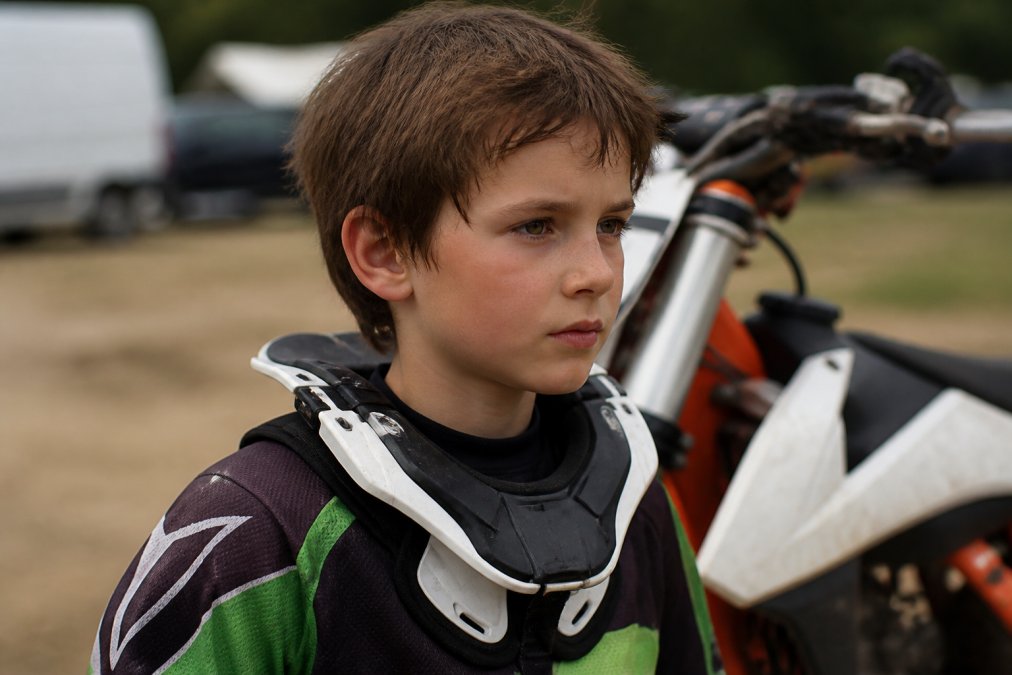
The best youth motocross neck brace has a rigid shell made of durable plastic or composite material, quality padding inside that compresses to absorb energy, and adjustable straps allowing proper fitting to different body types. Look for adequate collarbone clearance, ventilation for comfort, and weight under 2 pounds.
CE Certification and Testing Standards
CE Level 2 certification indicates the brace has been tested with higher impact forces and is the certification level to seek for youth motocross. Testing standards evaluate impact energy absorption, load distribution, and motion restriction.
Be skeptical of braces without any third-party testing or certification. Reputable manufacturers publish their testing results. Age-appropriate sizing is essential, a brace designed for adults won't fit a child properly, and proper sizing is crucial for the brace to function as designed.
How to Fit a Youth Neck Brace for Maximum Protection
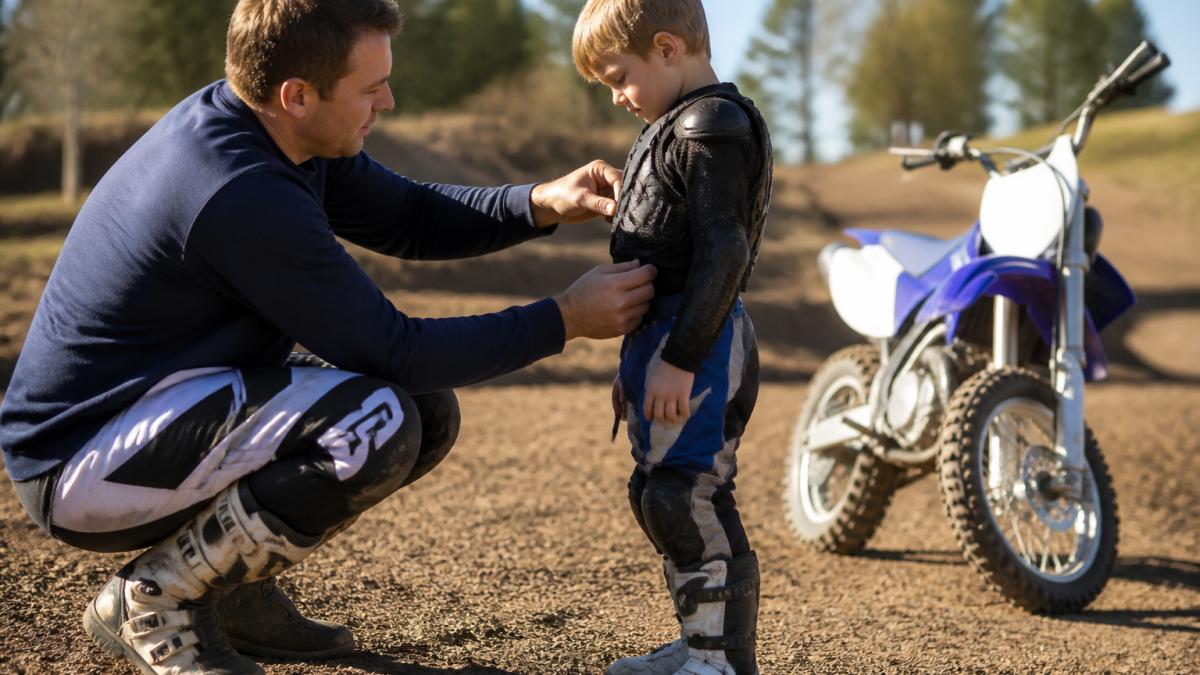
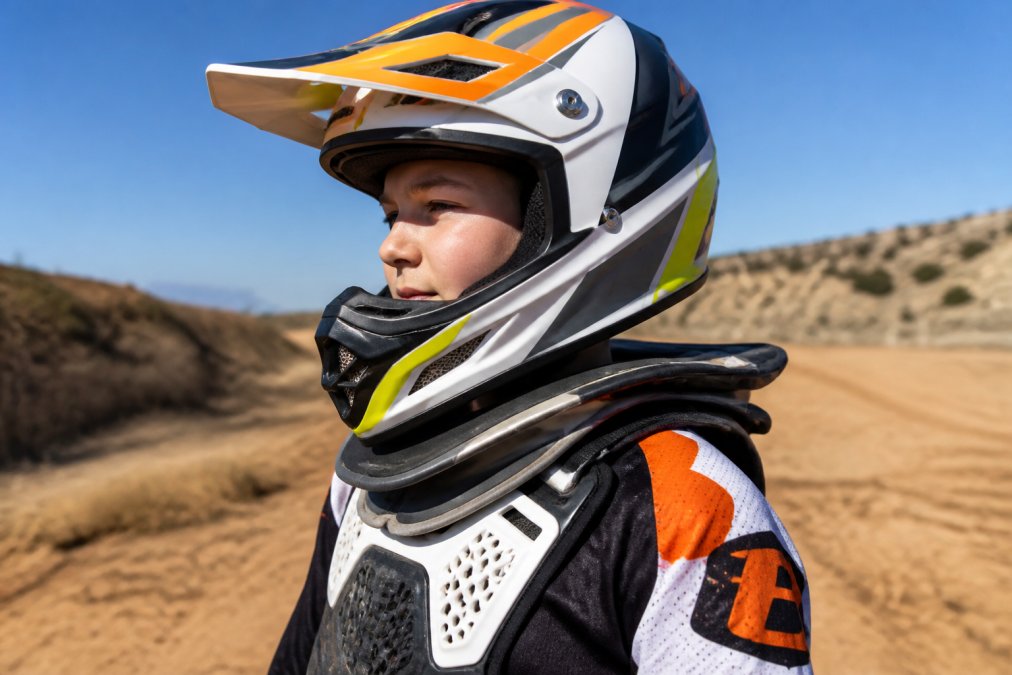
Start by measuring your child's neck circumference at the base of the neck where the brace will sit. Compare this measurement to the manufacturer's sizing chart. When your child puts on the brace while sitting, it should sit primarily on the shoulders, not on the neck itself. There should be a gap between the brace and the collarbone, you should be able to fit a finger between them.
The front of the brace should sit just below the chin without pressing into it or restricting jaw movement. Your child should be able to open their mouth fully and swallow without difficulty. The sides should sit on the shoulders, not on the neck. Adjust the straps snugly but not tight, you should be able to fit one finger between the strap and your child's body.
Fitting by Body Type and Collarbone Clearance
Different children have different body proportions. For children with longer necks, the brace might need positioning slightly lower to ensure proper shoulder support. For children with shorter, stockier builds, a smaller size might work better, but don't size down just because your child is young.
Collarbone clearance is non-negotiable. Before your child ever rides in the brace, verify adequate space and have them move their shoulders and arms through a full range of motion. A common fitting mistake is positioning the brace too high, it should sit on the shoulders with the neck free to move within the brace's structure. Another mistake is over-tightening the straps, which creates discomfort and can restrict blood flow.
Integration with Helmet and Chest Protectors
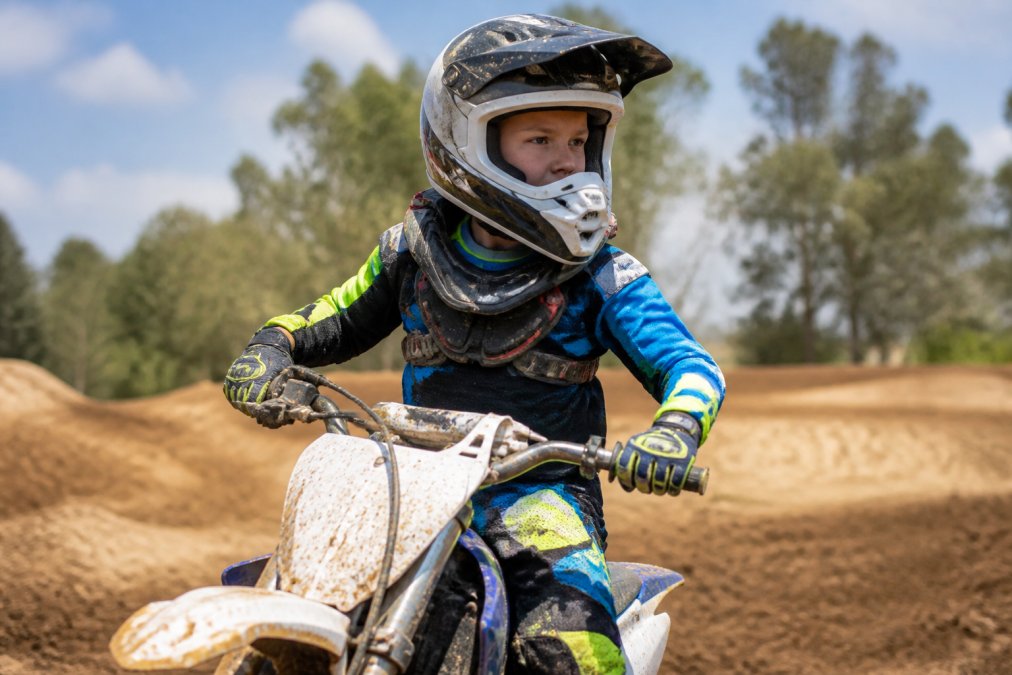
The helmet should sit on the head with the brace underneath, with a small gap between them. The chest protector sits over the torso with its bottom edge overlapping the top edge of the brace, creating a continuous protective surface.
When your child is wearing all three pieces, they should move freely. Have them practice putting on the gear in order: first the brace, then the chest protector, then the helmet. Check that none of the pieces pinch or restrict breathing. Test the fit while your child is in riding position on the bike, as gear sometimes shifts when seated.
Addressing Common Concerns: Range of Motion and Comfort
Do Neck Braces Restrict Rider Movement?
Yes, neck braces restrict some movement intentionally, they limit extreme ranges of motion in directions most likely to cause injury. For most young riders, a properly fitted brace allows normal head movement for looking around and basic riding tasks. The restriction is in extreme directions that aren't part of normal riding anyway.
Some riders report the brace initially feels restrictive, but after a few rides most children adapt. The brain adjusts to the new range of motion, and the brace becomes part of normal riding. A properly fitted youth brace designed for motocross should not affect proprioception or balance.
Many experienced riders report that wearing a brace improves confidence. Knowing they're protected allows them to focus on riding rather than worrying about injury, which can actually improve performance.
Getting Kids Comfortable Wearing Protective Gear
Comfort is the biggest factor determining whether a child will actually wear protective gear. Start by having your child wear the brace for short periods off the bike. Gradually increase the duration.
Explain the purpose in age-appropriate terms. Let your child choose the brace color or style if options are available. Make wearing the brace part of the pre-ride ritual, just like putting on a helmet. Address discomfort seriously, if your child is complaining that the brace hurts, check the fit and adjust the straps. A thin base layer under the brace can reduce chafing and improve comfort.
Praise your child for wearing protective gear. Over time, wearing the brace becomes associated with being a serious rider, which many children take pride in.
The decision to use a youth motocross neck brace is straightforward when you understand the risks and available protection. For children under 14, the protective benefit clearly outweighs any minor inconvenience. The developing spine is vulnerable, and a properly fitted, quality neck brace significantly reduces the risk of serious injury.
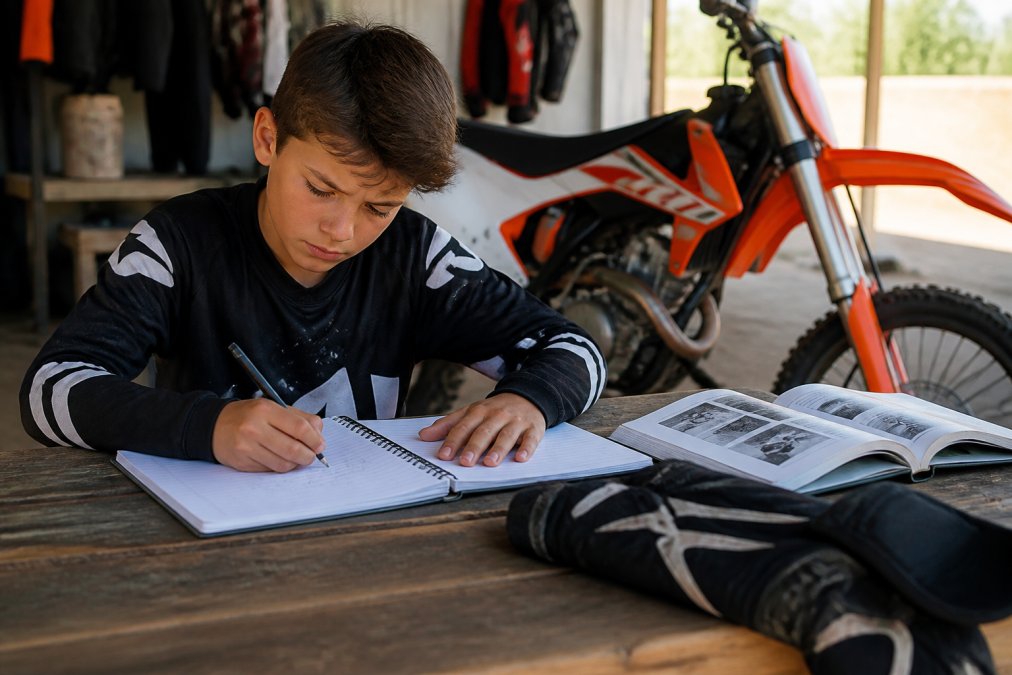
At Nelmgerian MX, we understand that protecting young riders goes beyond just equipment, it's about building confidence and knowledge so they can enjoy the sport safely. Whether through our rider training journals that help young riders develop skills and discipline, or our educational resources that keep kids engaged with motocross culture, we're committed to helping families make informed decisions about their child's safety and growth in the sport.
The best neck brace is the one your child will actually wear. Invest in proper fit, quality construction with CE certification, and take time to help your child adjust to wearing it. Combined with a quality helmet and chest protector, a youth motocross neck brace provides the protection young riders need to stay safe while learning and enjoying the sport they love.
Frequently Asked Questions
Do youth motocross neck braces actually prevent spinal injuries?
Neck braces reduce the force transmitted to the cervical spine during impacts by distributing load across a wider area of the body. They cannot eliminate injury risk entirely, but they significantly lower the severity of hyperflexion and hyperextension trauma, the most common mechanisms in youth motocross crashes. Braces work best when combined with proper helmet fit, body armor, and appropriate riding technique.
What's the best youth motocross neck brace for a 6-year-old beginner?
For young beginners on 50cc bikes, look for a lightweight brace with adjustable sizing to accommodate growth, CE certification for impact testing, and collarbone clearance that doesn't restrict breathing. The best choice depends on your child's body type, riding speed, and track conditions. Fit is more important than brand, a poorly fitted expensive brace offers less protection than a properly sized mid-range option. Visit a local motocross shop for sizing guidance.
How do I properly fit a youth neck brace on my child?
Start by measuring your child's neck circumference and shoulder width according to the manufacturer's sizing chart. Position the brace so the front plate sits snugly against the sternum without restricting breathing, and the back shell supports the base of the skull without tilting the head backward. Ensure at least one finger's width of clearance at the collarbone to prevent chafing. Have your child move their head gently side-to-side and forward-backward to confirm the brace stays in place. Recheck fit every few months as your child grows.
Will a neck brace slow down my child's riding or limit their range of motion?
Quality youth neck braces allow 80-90% of normal cervical spine range of motion, meaning your child can still turn their head, look over their shoulder, and maintain body position on the bike. Modern designs prioritize rider mobility while protecting against axial compression and hyperextension. Some riders report a brief adjustment period, but most adapt within a few riding sessions. The mobility restriction is minimal compared to the protection gained during an impact.
This article was written using GrandRanker