 blog
blog
Affordable Motocross Alternatives to Expensive Public Tracks
Table of Contents
- Why Motocross Track Fees Add Up So Fast
- Cost of Building a Home Motocross Track
- Local Dirt Bike Riding Clubs and Community Access
- Public Land Riding: BLM and Forest Service Options
- Motocross Training Drills for Kids You Can Do at Home
- DIY Track Maintenance on a Budget
- Building Confidence Between Expensive Track Days
- Building a Sustainable Riding Budget
- Frequently Asked Questions
Last Updated: September 19, 2026
Why Motocross Track Fees Add Up So Fast
The cost of riding at a public motocross facility can become prohibitive quickly, which is why many families explore motocross alternatives expensive tracks demand. A single practice day at most commercial tracks runs between $40 and $80 per rider, before factoring in fuel, maintenance, and entry fees for competitions. When families commit to regular training, these expenses stack up fast, especially for parents managing multiple young riders or those working with coaches on a structured schedule.
This is where many families hit a wall. They see their kids thrive on dirt bikes, but the recurring costs of accessing expensive public tracks make consistent practice unsustainable. The gap between what riders need (frequent, affordable practice) and what commercial facilities charge (premium rates for premium access) has created real demand for alternatives to expensive public motocross tracks. Finding creative ways to lower these overhead costs often requires looking beyond traditional venues toward adventure gear alternatives that allow riders to cultivate their skills in more accessible, natural environments.
Parents want their young riders to develop skills and confidence, but they're looking for ways to make the sport accessible without breaking the budget. Understanding where your money goes, and where you can cut costs, is the first step toward building a sustainable practice routine that keeps kids engaged year-round.
Cost of Building a Home Motocross Track
Building a private track on your own property offers the most control and long-term value, but startup costs require realistic planning. A basic home motocross track typically requires between 2 and 5 acres of land, depending on your design goals and the features you want to include.
The construction phase involves several major expenses. Land preparation, clearing, grading, and compacting soil, can run several thousand dollars if you hire equipment and labor. Many families use a Bobcat or similar compact excavator to build berms, jumps, and the riding surface itself. If you own the equipment or have a friend who does, you can significantly reduce costs. Soil composition matters: loamy soil with good drainage is ideal, though you may need to amend what you have.
Once built, maintenance becomes ongoing. A well-designed track with proper drainage requires seasonal upkeep, raking, compacting, and reshaping after heavy rain or extended use. Families who invest time in DIY maintenance keep long-term costs manageable. Those who hire contractors for every repair find costs creeping back toward what they'd pay at public facilities.
The real advantage emerges over time. After the initial investment, a home track offers unlimited practice access. No daily fees, no drive time, no scheduling around facility hours. For serious young riders, this compounds into hundreds of practice hours per year that would otherwise be unaffordable.
Local Dirt Bike Riding Clubs and Community Access
Many regions have informal dirt bike riding clubs and community groups that negotiate group access to private land or share maintenance responsibilities. These clubs often operate on membership models, annual or monthly dues that give members unlimited riding days at a fraction of commercial track rates.
Membership vs. Day-Pass Economics
Understanding when a club membership becomes cheaper than paying per-ride is essential for budget planning. Most commercial motocross tracks charge $40-$80 per day. A club membership typically costs $200-$600 annually, or $20-$50 monthly. The math is straightforward: if you ride more than 5-10 days per year, a membership pays for itself. For families with multiple riders, the savings multiply quickly. A family with two kids riding 20 days per year at a commercial track would spend $1,600-$3,200 annually; the same family in a club paying $300 annually saves $1,300-$2,900 per year.
However, club membership often includes hidden expectations. Many clubs require volunteer hours for track maintenance, equipment sharing, or event setup. Some charge additional fees for special events, coaching sessions, or facility improvements. Before joining, ask about:
- Annual or monthly dues (and whether they increase)
- Required volunteer hours or maintenance participation
- Additional fees for coaching, competitions, or special events
- Whether membership covers all family members or charges per rider
- Cancellation policies and refund terms
- Insurance requirements (see liability section below)
Clubs that maintain multiple properties offer another advantage: variety. Riders access different track layouts, terrain types, and soil conditions without paying extra. This exposure builds adaptability and prevents boredom from riding the same surface repeatedly.
Finding and Vetting Local Clubs
Joining a local dirt bike riding club connects you to experienced riders who understand track maintenance, soil management, and safe riding practices. Club members often share equipment, split costs on improvements, and coordinate practice schedules. Finding these groups takes legwork. Check local motorcycle shops, search online forums dedicated to your region (Reddit's r/Motocross, local Facebook groups, ThumperTalk forums), or ask at smaller regional competitions. Many clubs are word-of-mouth communities that don't advertise heavily.
Once you connect, ask current members about their experience: How responsive is leadership? How often is the track maintained? Do disputes over maintenance or scheduling happen? Do riders feel safe? A well-run club feels invested in the community; a poorly-run one becomes a source of frustration.
Community-run tracks often feel less polished than commercial facilities, but that's part of their appeal. Kids learn to adapt to varied conditions, and parents get involved in the maintenance and management, building investment in the space and reducing overall costs. The trade-off is consistency, a club track may be closed for maintenance or weather when you want to ride, whereas commercial facilities operate on fixed schedules.
Public Land Riding: BLM and Forest Service Options
Federal public lands managed by the Bureau of Land Management (BLM) and U.S. Forest Service offer free or low-cost riding opportunities across much of the country. These aren't manicured motocross tracks, but they provide legitimate terrain for off-road practice and skill development.
Understanding Legal Access and Restrictions
BLM lands are often open to off-road vehicle use unless specifically restricted. Forest Service lands vary by region and season; some areas allow dirt bike riding, others don't. Check with your local BLM field office or Forest Service district to understand what's available near you. Many regions have designated off-road vehicle areas with marked trails and informal riding zones.
Before riding, verify the specific rules for your area:
- Seasonal closures: Many public lands close to off-road use during certain months (often spring, to protect wildlife and prevent erosion). Riding during closures can result in fines.
- Permit requirements: Some areas require free or low-cost permits to ride. BLM offices can provide these; Forest Service requirements vary by district.
- Vehicle registration: Most states require off-road vehicles to be registered, even on public land. Verify your bike meets state requirements.
- Age restrictions: Some areas restrict riders under 16 or require adult supervision for minors.
- Noise limits: Certain areas enforce decibel limits; check local regulations before riding.
Violating these rules can result in fines ($50-$500+) and loss of riding privileges in that area. Spend 10 minutes confirming rules before your first ride.
The Insurance and Liability Gap
Here's what competitors don't discuss: public land riding carries liability exposure that many families overlook. If your child injures another rider on public land, you may be liable for medical costs, even though you're on free federal land. Most homeowner's insurance policies explicitly exclude off-road vehicle liability. Standard motorcycle insurance often doesn't cover public land riding (it's designed for street bikes or closed-course events).
Before riding on public land, contact your insurance agent and ask:
- Does your homeowner's or renter's policy cover off-road vehicle liability?
- Does your motorcycle insurance extend to public land riding, or only closed courses?
- What's the cost to add off-road liability coverage?
Many insurers offer off-road liability riders for $100-$300 annually.
What Public Land Riding Teaches
Motocross Training Drills for Kids You Can Do at Home
Structured practice doesn't require a full track. Motocross training drills for kids can happen in smaller spaces, focusing on fundamentals that transfer directly to track performance. These drills build muscle memory, balance, and throttle control without expensive facility access.
DIY Track Maintenance on a Budget
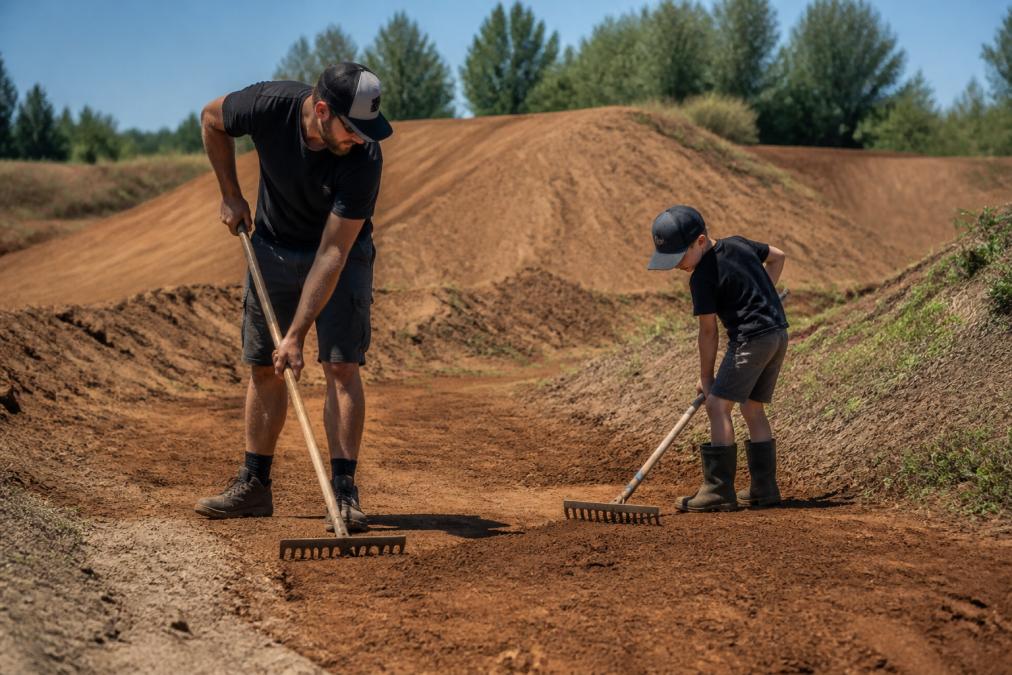
Maintaining a home track on a budget requires planning and sweat equity. The most cost-effective approach is preventive maintenance, addressing small issues before they become expensive problems.
Building Confidence Between Expensive Track Days
Young riders improve fastest with frequent, varied practice. When track days are expensive and infrequent, supplementary practice between sessions becomes critical for maintaining momentum and building skills.
Building a Sustainable Riding Budget
The most affordable approach combines multiple strategies. Start with home practice or community club access as your foundation. Add occasional public land riding for variety. Schedule formal track days strategically, perhaps monthly or quarterly, to test skills and get coaching feedback. Fill gaps with drills, training journals, and educational resources.
Frequently Asked Questions
How much does it cost to build a private motocross track on your own land?
A basic home motocross track typically costs $3,000 to $10,000 depending on land size, soil composition, and equipment used. Costs include excavation (if hiring equipment like a bobcat), topsoil and loamy soil for the riding surface, drainage materials, and initial shaping of berms and jumps. DIY approaches using hand tools cost less but require more labor. Professional design and installation can exceed $15,000. Ongoing maintenance adds $500-$2,000 annually.
What are the legal requirements for building a backyard dirt bike track?
Legal requirements vary by location and zoning ordinances. Most residential areas require conditional use permits or variance approval from local zoning boards. You'll need to verify land use restrictions, check noise ordinances (many areas limit off-road vehicle operation to specific hours), and confirm your property meets minimum acreage requirements. Liability insurance is essential for private tracks. Contact your county planning department or zoning office before construction begins.
Are there community-based alternatives to commercial motocross parks?
Yes. Local dirt bike riding clubs often offer membership options with day-pass rates lower than commercial facilities. Some clubs maintain private or semi-private tracks on member-owned land. BLM and Forest Service lands provide free or low-cost public access for off-road riding in many regions. Community riding events and group practice sessions through local clubs reduce per-rider costs. Ask your local motocross community about membership benefits and shared facility access.
How can young riders improve their skills without expensive track fees?
Home training drills build technique between track days. Set up simple practice obstacles using cones, small jumps, or natural terrain to work on body position, throttle control, and line selection. Training journals help riders track progress. Many riders use public land access or club memberships for affordable practice. Coaching from experienced local riders and structured drills at home, combined with occasional paid track time, create a balanced, cost-effective development plan.