 how-to
How to Rebuild Confidence After a Motocross Crash
Last Updated: October 27, 2026
Quick Summary
Rebuild confidence after a motocross crash by getting medical clearance, inspecting your bike and gear, then riding a familiar easy track with short sessions and no timing pressure. Add one new element per session and bring a riding buddy who will not push your pace. Treat fear as information, not a verdict on your ability.
- Get medical clearance before you touch the bike, then do a full bike and gear inspection.
- Keep sessions short and end them while you still feel good.
- Add one new element per session, not five, and bring a buddy who will not push your pace.
- Decide your session length and exit criteria at home, not at the track.
- Some riders return to race conditions in six weeks, others in six months; both are normal.
Table of Contents
- Why Confidence Drops After a Motocross Crash
- How to Get Back on a Dirt Bike After a Crash
- Separating Injury Recovery From Psychological Readiness
- Dealing With Fear of Crashing Again on a Motorcycle
- Dirt Bike Riding Confidence Exercises You Can Do This Week
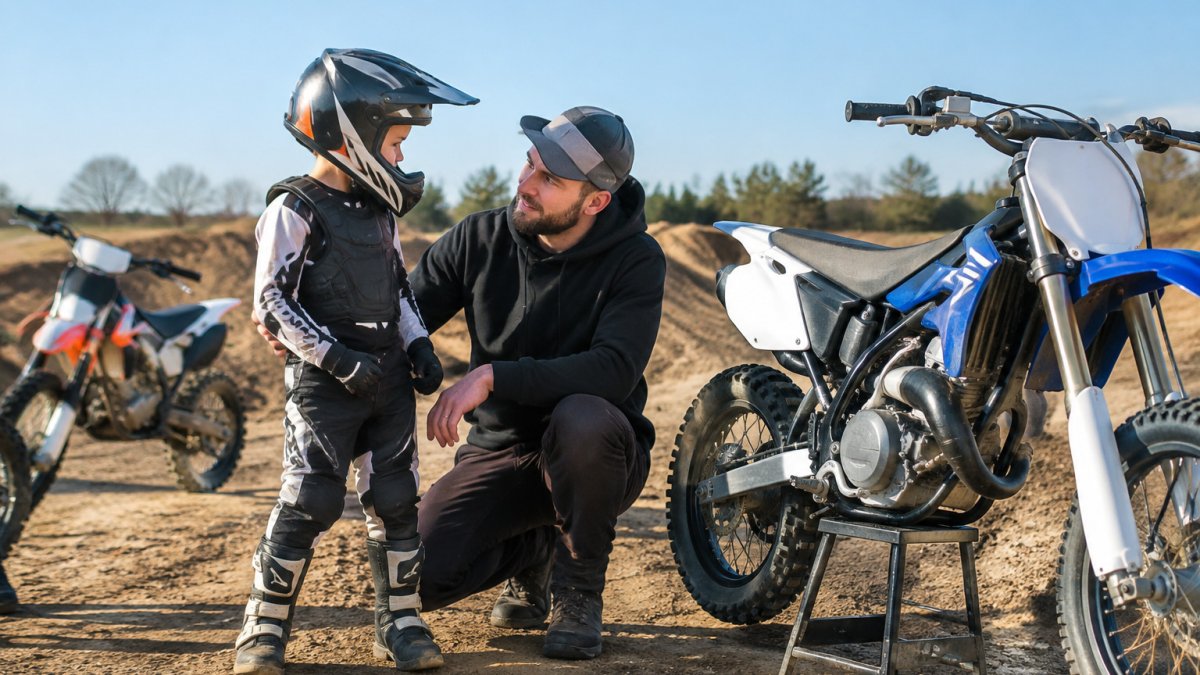
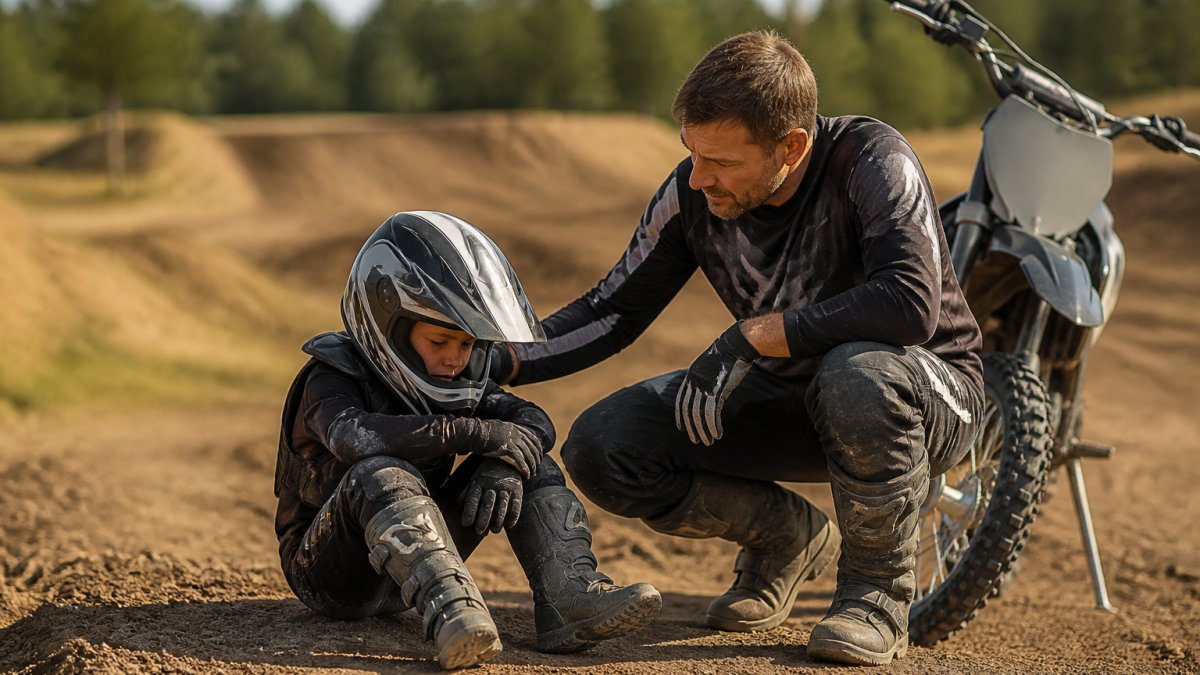
- Helping a Child Overcome Fear After a Dirt Bike Crash
- Your First Ride Back: Planning the Return to the Track
- Track Your Comeback With a Rider Training Journal
- Frequently Asked Questions
Why Confidence Drops After a Motocross Crash
Here's why, and a staged plan for getting back to speed.
Fear Is a Normal Response, Not a Flaw
You cannot delete the memory. You can retrain the response. Riders who recover fastest treat fear as information, not as a verdict on their ability.
Physical Recovery and Mental Recovery Are Two Different Timelines
A common mistake is reading physical clearance as mental readiness. Your doctor says you can ride, so you assume you should feel fine, you don't. That gap isn't weakness; it's the normal cost of a crash. True recovery requires patience with the lingering trauma of the impact, just as treating physical injuries demands a methodical approach to restoring the skin's integrity before you return to the track.
How to Get Back on a Dirt Bike After a Crash
- Get medical clearance before you touch the bike
- Do a full bike and gear inspection
- Ride a familiar, easy track with no timing pressure
- Keep sessions short and end them while you still feel good
- Add one new element per session, not five
- Bring a riding buddy who will not push your pace
The article lays out a six-step return sequence for getting back on the bike after a crash.
| Step | What to do |
|---|---|
| 1 | Get medical clearance before you touch the bike |
| 2 | Do a full bike and gear inspection |
| 3 | Ride a familiar, easy track with no timing pressure |
| 4 | Keep sessions short and end them while you still feel good |
| 5 | Add one new element per session, not five |
| 6 | Bring a riding buddy who will not push your pace |
Separating Injury Recovery From Psychological Readiness
Treat them as two lists: your doctor signs off on the body, you sign off on the head. Both must be true before you line up at a gate.
Get a Medical Evaluation Before You Ride
The CDC guidance on concussion safety is clear that returning to risky activity too soon raises the risk of a second, worse injury. Ask your doctor specific questions:
- Can I take a hard landing on this limb?
- Are there restrictions on impact or twisting?
- What warning signs mean I stop immediately?
Write the answers down. You will forget them the moment you smell race fuel.
Check In With Your Body and Your Head
Before each ride, run a two-part check. Body first, then head.
Body check:
- Any pain at rest or under load?
- Full range of motion on both sides?
- Sleep and energy normal?
Head check:
- Does thinking about the track make your stomach drop?
- Are you picturing the crash on repeat?
- Would you ride this same track alone, at your own pace?
Dealing With Fear of Crashing Again on a Motorcycle
For structured mental work you can start this week, our guide to motocross mental preparation exercises for beginners walks through breathing, visualization, and pre-ride routines step by step.
Nelmgerian MX Training Journal →
Dirt Bike Riding Confidence Exercises You Can Do This Week
Pick two or three drills that match the obstacle that scares you most and run them in your next few sessions, not all at once.
Stage 1: Control Drills (No Jump Risk)
- Rut laps at half speed. Choose one rutted corner and ride it ten times in a row. Count clean passes. Progress when eight of ten feel controlled.
Stage 2: Cornering and Line Drills
- Outside-inside-outside walk-through. At walking pace, walk the corner and pick your reference points (braking marker, apex, exit). Then ride it at half speed using those exact points.
Stage 3: Obstacle-Specific Drills for Fear Triggers
If any step produces a fear spike, tight chest, death grip, braking early, drop back one step and repeat it next session. That is not failure; it is the drill working.
Stage 4: Start and Gate Simulation
- Two-rider start. Add one training partner only when solo starts feel routine. Progress to a small group only when two-rider starts feel calm.
Progression Rules That Apply to Every Drill
When you want a wider set of beginner-friendly work to pair with these, our dirt bike riding drills for beginners guide covers the fundamentals in more depth.
Helping a Child Overcome Fear After a Dirt Bike Crash
For parents who want a structured way to rebuild a young rider's skills and nerve, our motocross training journals for kids guide explains how journaling helps children track progress and see their own improvement in writing.
Your First Ride Back: Planning the Return to the Track
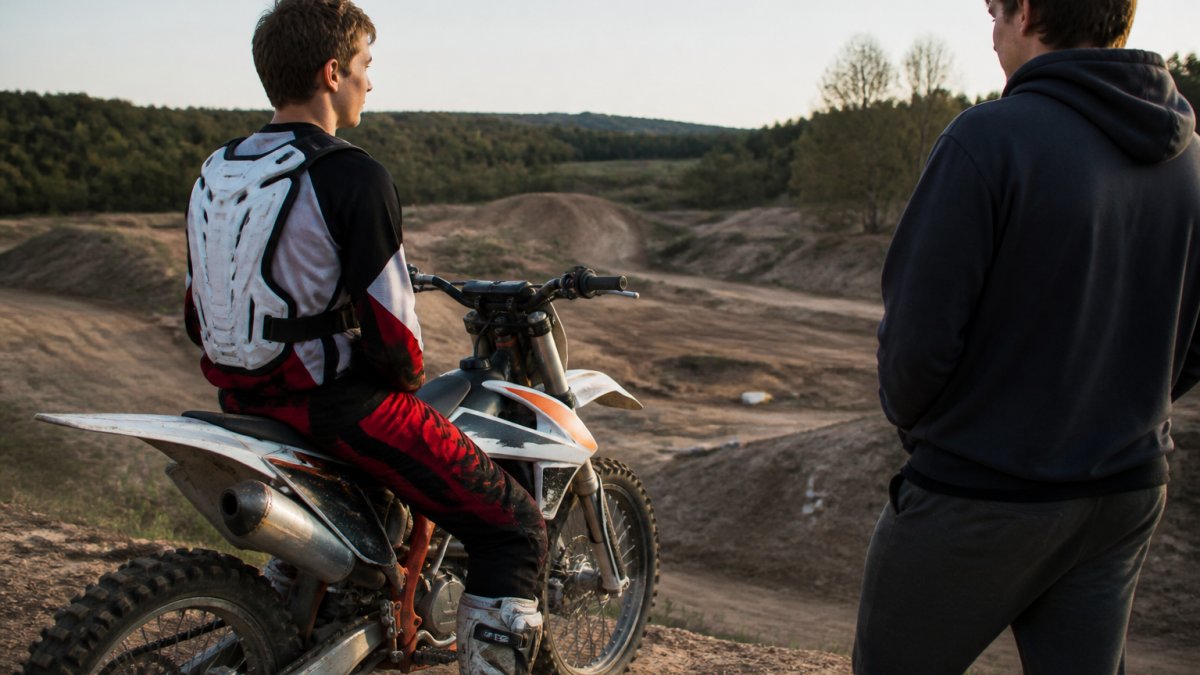
That last point is the whole game. Ending early with confidence left in the tank sets up ride two. Emptying the tank and scaring yourself sets you back.
The Staged Return-to-Riding Plan
Stage 6, Race conditions (only when you choose to). Line up at a local race or organized practice only when you can honestly say you are excited rather than dreading it. There is no calendar deadline. Some riders take six weeks; some take six months. Both are normal.
Set a Hard Stop Before You Leave
Decide your session length and exit criteria at home, not at the track. Stop when you notice death grip on the bars, braking earlier than planned, or a jump you keep rolling that you meant to jump. Those are signs your nervous system is done for the day, even if your body feels fine.
Pre-Ride Gear and Bike Check
Before you ride, do a full gear and bike check. Loose bolts, worn tires, and a bad lever angle all add risk you do not need right now. The Motorcycle Safety Foundation recommends a pre-ride inspection every time you ride, and it matters most on the day you are already nervous.
Track Your Comeback With a Rider Training Journal
We built the Nelmgerian MX Training Journal for young riders and their families to track practice, goals, and race progress.
Frequently Asked Questions
How soon should I ride again after a motocross crash?
There is no fixed timeline. Get a medical evaluation first, then let pain, swelling, and range of motion guide you back to light activity. Most riders benefit from a few low-pressure sessions on flat, familiar ground before returning to jumps or race pace. If you feel anxious, that is a signal to slow down, not to push through. Rushing back after a motocross crash often lengthens the recovery because it erodes trust in your own riding.
How can parents help a child overcome fear after a dirt bike crash?
Start by listening without minimizing. Let your child tell the story of the crash in their own words, then rebuild confidence through short, easy rides on flat ground with no stopwatch and no pressure. Praise effort and control rather than speed. Keep sessions short enough to end on a win. Off the bike, journals and motocross storybooks give young riders a screen-free way to process fear and track small goals between practice days.
What should I do if I panic when I get back on my dirt bike?
Pull over, breathe, and reset. Panic is a normal fear response, and fighting it usually makes it worse. Slow your pace, pick one simple skill to focus on, such as looking ahead or standing tall on the pegs, and ride a short loop you know well. Repeat until the loop feels boring. If panic keeps showing up ride after ride, a sports psychologist or counselor can teach you practical tools for managing fear of crashing again on a motorcycle.
Should I return to the track or practice on easier terrain first?
Easier terrain first, almost always. Flat practice areas, wide-open fields, and low-pressure trail loops let you rebuild bike control and balance without the consequences of a track feature. Once short rides feel steady, add one familiar track day at a slower pace, ideally with riding buddies who will not push you. Save jumps and race pace for the end of your progression, not the start.
Rebuilding confidence after a crash is slow, unglamorous work, and most riders quit the sport in the gap between physical healing and mental readiness. You do not have to. At Nelmgerian MX, we make tools that help riders track the small wins, from training journals that log every practice session to storybooks that keep young riders connected to the sport on rest days. Get started with Nelmgerian MX and give your rider a way to see their progress, one session at a time.