 how-to
How to Motivate Young Riders to Read: 7 Proven Steps
Table of Contents
- How to Motivate Young Riders to Read: Start With Their World
- Ways to Motivate Reluctant Readers Using Dirt Bike Passions
- Dirt Bike Books for Kids: Choosing Stories That Click
- Reading Activities for Kids That Feel Like Play, Not Homework
- Build a Daily Reading Routine for Children Around Barn Schedules
- Support Reading Difficulties Without Pressure
- Measure Progress Beyond Pages and Minutes
- Frequently Asked Questions
Last Updated: October 20, 2026
How to Motivate Young Riders to Read: Start With Their World
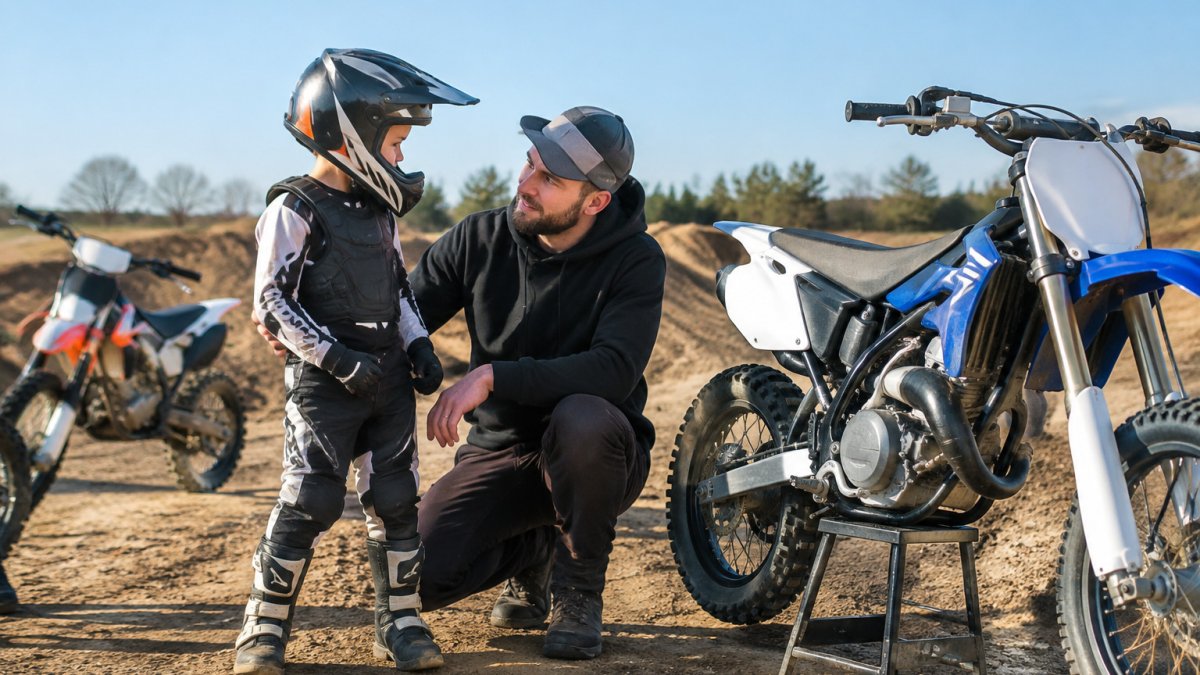
The fastest way to motivate young riders to read is to make books feel like part of riding, not a break from it. A child who groans at a reading log will happily tear through a story about dirt bikes, crashes, and checkered flags.
Reading motivation is the drive a child feels to pick up a book on their own. For young riders, that drive grows when reading links to the thing they already love: motocross.
Below, we will show you exactly how to build that link, step by step. Here is what most guides get wrong: they treat reading and riding as separate worlds. Kids do not split their lives that way.
Ways to Motivate Reluctant Readers Using Dirt Bike Passions
A reluctant reader is a child who avoids reading, not a child who cannot read. Many parents find that the fastest fix is matching books to a kid's existing obsession. For a rider, that means dirt bikes, races, and track days.
Try these approaches:
- Let your child pick from rider-themed books, magazines, and graphic novels
- Keep a small stack in the truck or gear bag for track days
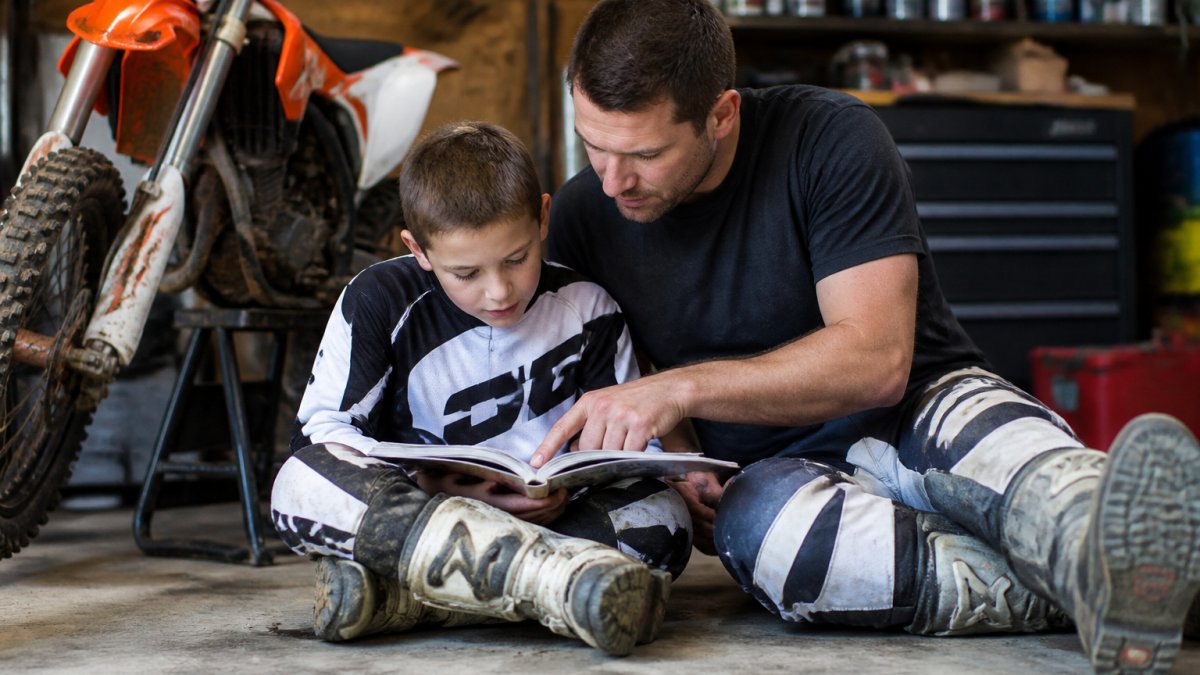
- Pair reading with riding: read a chapter after practice
- Use audio versions during the drive to the track
- Ask questions about the story like you would about a race
The goal is simple. Reading should feel like part of the sport, not homework.
Match Reading to Age, Skill Level, and Riding Experience
Not every young rider needs the same book. A 4-year-old on a 50cc needs pictures and short words. A 9-year-old racing weekly can handle chapter books and journals.
Use this quick guide:
| Age / Level | Reading Focus | Riding Tie-In |
|---|---|---|
| Ages 3-5, just starting | Picture books, read-aloud | Stories about first rides |
| Ages 5-7, beginner reader | Simple sentences, phonics | Learn-to-read rider books |
| Ages 7-9, growing reader | Short chapters, journals | Practice logs, goal tracking |
| Ages 9+, experienced | Longer stories, magazines | Race recaps, skill notes |
Match the book to the reader, not to the rider's age alone. A confident young reader can handle more. A struggling one needs easier text, even if they rip on the track.
Dirt Bike Books for Kids: Choosing Stories That Click
Dirt bike books for kids work when the story feels real to a rider. Look for books with characters who ride, learn, and sometimes fall. Kids connect to that.
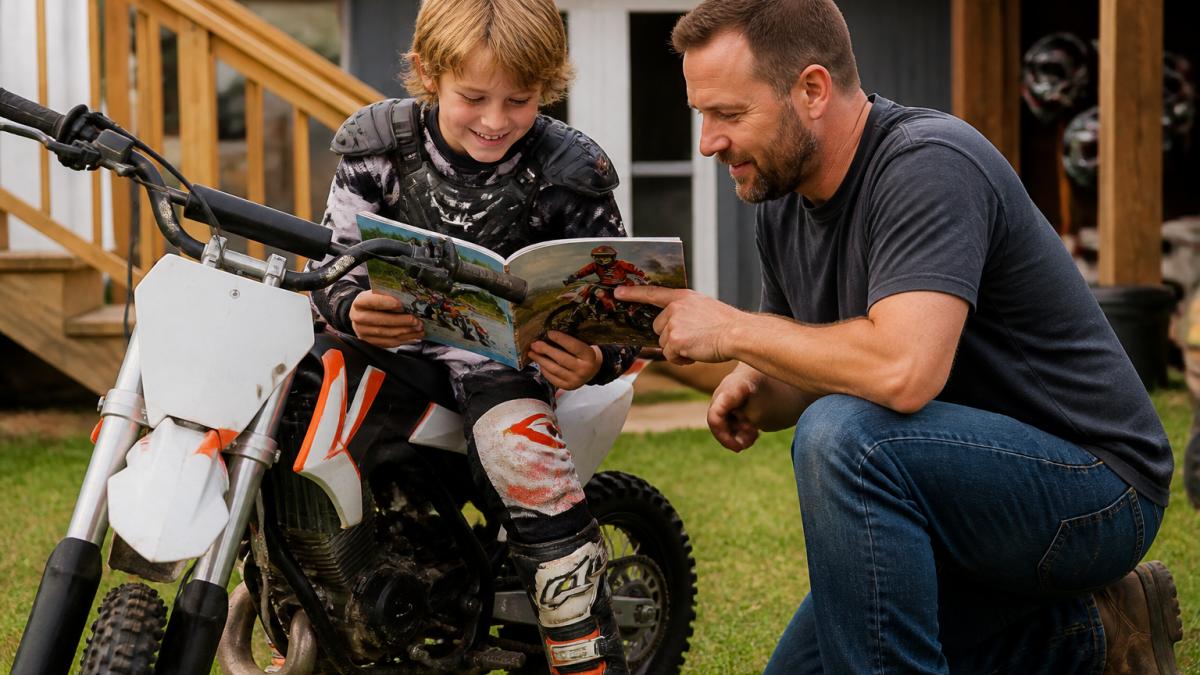
Our own series follows Ryder, Pepper, and Wheelie through first races, big rides, and hard lessons. Each story pairs the thrill of motocross with lessons about confidence, responsibility, and sportsmanship. Titles like Ryder's First Motocross Race and Ryder Meets Pepper give beginning readers a familiar world to return to.
What to look for:
- Characters your child can see themselves in
- Short chapters or simple sentences for newer readers
- Real riding details that feel true
- A lesson that does not preach
Reading Activities for Kids That Feel Like Play, Not Homework
Reading activities for kids work best when they feel like a game. A rider who will not sit for a worksheet will gladly act out a race scene or draw a track map.
Try these:
- Act out a chapter with toy bikes
- Draw the track from a story
- Keep a sticker chart for finished books
- Let your child "announce" a story like a race commentator
- Build a mini book club with a riding buddy
Build a Daily Reading Routine for Children Around Barn Schedules
A daily reading routine for children sticks when it fits the family's real week, not an idealized one. Motocross families juggle practices, race weekends, bike maintenance, and travel. A routine that ignores those constraints collapses by the second week.
Start by auditing one ordinary week. Write down every fixed commitment: practice nights, gate-drop times, the drive to the track, gear-washing sessions, and homework blocks. Most families find two or three reliable windows they did not notice. Those windows become reading anchors.
Pick anchors that survive busy days:
- Ten minutes before bed, every night, regardless of what happened at the track
- One chapter in the truck after practice while gear is still being packed
- Reading during the drive to the track, with a parent or sibling listening
- A book while gear dries after washing
- Five minutes at the gate before a moto, when nerves need a calm focus
Keep sessions short. Ten focused minutes beat a forced half hour, and a short session is easier to repeat on a bad day. The routine matters more than the length.
A Realistic Weekly Reading Plan for Motocross Families
Here is a plan built around lessons and races. Adjust the days to match your schedule, but keep the anchors fixed:
| Day | Reading Time | What to Do | Why It Fits |
|---|---|---|---|
| Monday | 10 min | Read aloud together | Low-energy start to the week |
| Tuesday | 10 min | Child reads to you | Practice night, short session |
| Wednesday | 15 min | Library or book pick | Midweek reset, no track time |
| Thursday | 10 min | Audiobook in the car | Drive to practice |
| Friday | 10 min | Free choice reading | Pre-race calm |
| Saturday (race day) | 5 min | Read before the gate drops | Focus ritual at the track |
| Sunday | 15 min | Journal about the weekend | Reflection after the race |
Plan ahead for race weekends. Pack a book with the gear bag so reading still happens on the road. Keep a spare paperback in the glove box and a downloaded audiobook on the phone for dead time between motos. If a race is rained out, the reading anchor still holds because it was tied to the trip, not the result.
Two trade-offs are worth naming. First, reading in the truck works only if the driver is not the one reading aloud; use audiobooks or let a passenger listen. Second, a race-day five-minute session should never become a quiz about the story. The goal is a calm ritual, not comprehension testing before a moto.
Support Reading Difficulties Without Pressure
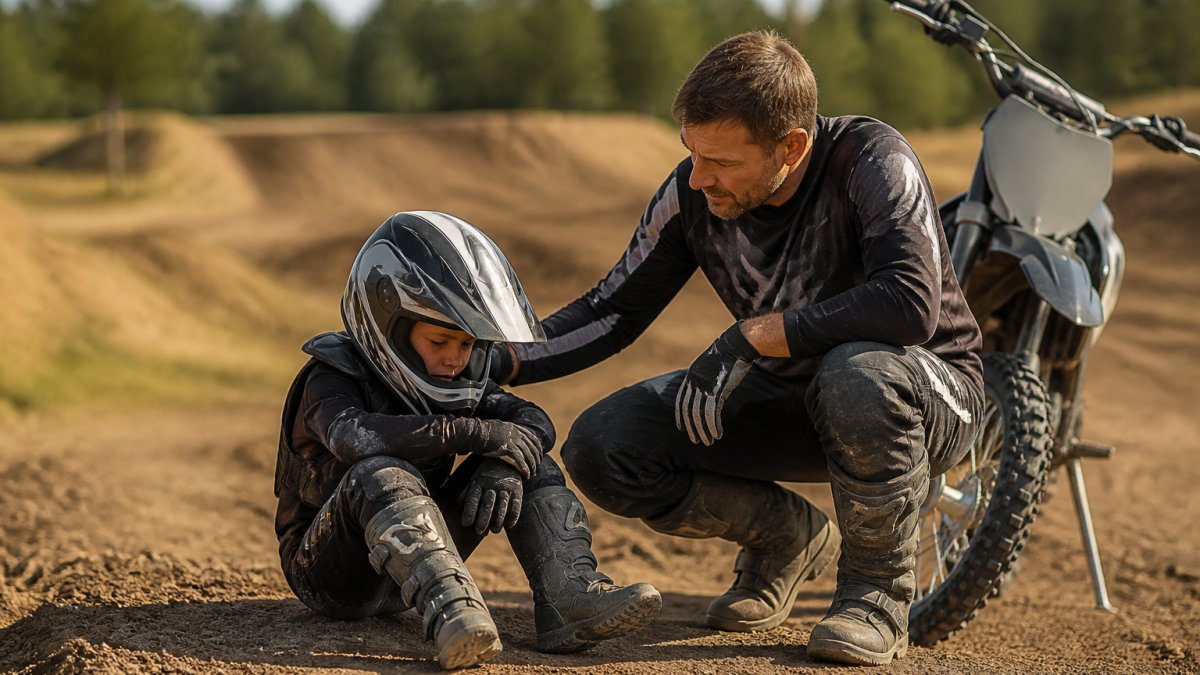
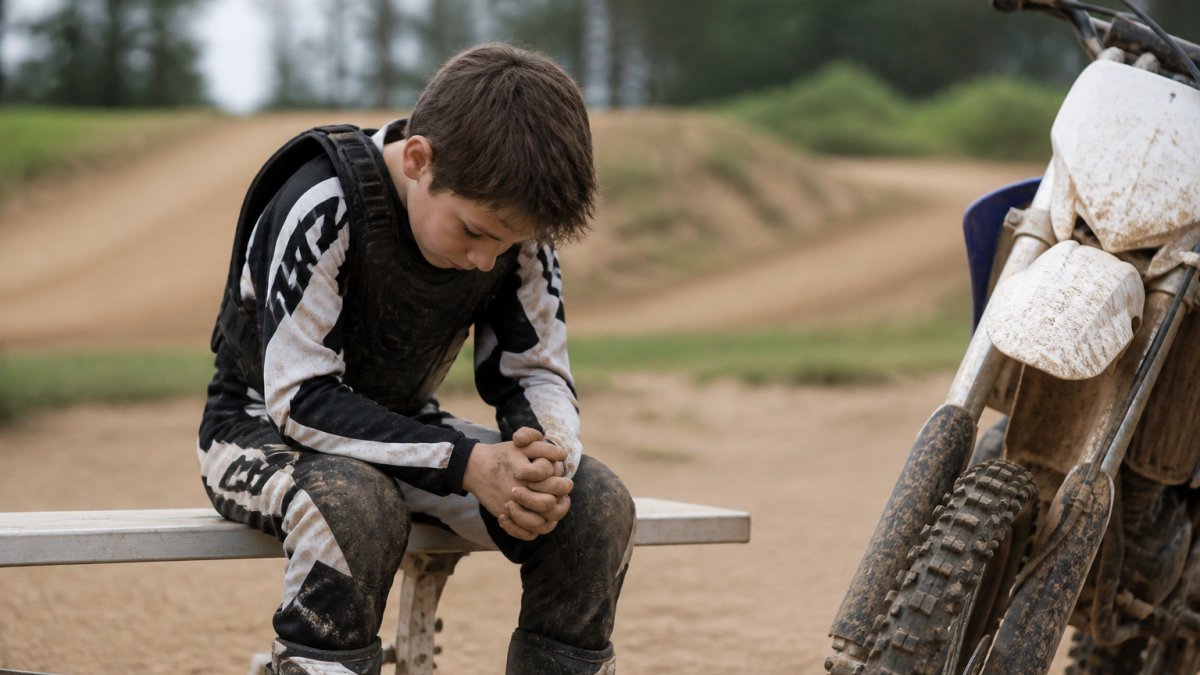
Some young readers struggle with phonics, fluency, or comprehension, and the three are not the same problem. Pressure makes all three worse. Patience, the right books, and knowing when to bring in qualified help make them better.
Here is how the three common difficulties differ:
- Phonics: the child struggles to connect letters to sounds, guesses at words, or avoids sounding out unfamiliar words. This is a decoding issue.
- Fluency: the child reads accurately but slowly and laboriously, so comprehension suffers because all effort goes to word recognition. This is a speed and smoothness issue.
- Comprehension: the child reads smoothly but cannot retell what happened or answer why questions. This is a meaning issue.
A common mistake is turning reading into a test. Skip the quizzing. Instead:
- Let them reread favorites, because rereading builds fluency without pressure
- Use audiobooks alongside print so the child hears fluent reading while following along
- Choose easier books without shame, since a confident reader on easy text is still a reader
- Praise effort, not speed
- Keep sessions short and end on a positive note Focusing on these small, consistent victories fosters a sense of competence that helps build girls' self-esteem as they navigate the challenges of becoming independent readers.
If reading is hard, keep the sport connection alive. A rider who loves the topic will push through tougher text over time because the subject gives them a reason to keep going. A book about a rider who also struggles with something is often more motivating than a book about a rider who never does.
When to Seek Qualified Support
Watch for patterns that persist for several months despite low-pressure practice. A qualified reading specialist, school psychologist, or pediatric professional can assess whether a learning difference is present. Signs worth raising with a teacher or specialist include:
- Persistent difficulty sounding out words well past the age when peers have moved on
- Avoidance of reading that is intense and consistent, not just occasional reluctance
- A large gap between listening comprehension and reading comprehension
- Family history of reading difficulties
A teacher or school reading specialist is usually the first stop. Ask specifically about a phonics-based assessment and about the school's process for screening reading difficulties. If the school cannot assess, ask for a referral. Do not wait for a child to "outgrow" a persistent struggle; early support is generally easier than later remediation.
Measure Progress Beyond Pages and Minutes
Pages and minutes tell only part of the story. Real progress shows up in confidence and habit.
Watch for these signs:
- Your child picks up a book without being asked
- They talk about characters like friends
- They ask for the next book in a series
- They read in the truck without a reminder
- They connect stories to their own rides
Track these wins in a simple rider journal. Progress you can see keeps kids going.
Frequently Asked Questions
What kinds of books are best for reluctant young readers who love dirt bikes?
Books that mirror their riding world work best. Look for motocross storybooks with characters who face the same challenges young riders do, like nervous first races or learning to fall and get back up. Nelmgerian MX titles such as Ryder Meets Pepper and Ryder's First Motocross Race are built around those moments. Short chapters, bold illustrations, and familiar dirt bike terms keep attention high, and a learn-to-read book like Ryder's Digraph Dirt Track supports phonics while staying on topic.
How can I build a daily reading routine for children when our schedule is full of practices and races?
Anchor reading to an existing habit instead of adding a separate block. Ten minutes in the truck before practice, a chapter after gear is washed, or a story during the drive home works better than a rigid evening slot. Keep a book in the gear bag so it is always available. The goal is frequency, not duration. Short, consistent sessions build the reading habit faster than one long weekly session that feels like a chore.
Should children choose their own books, and what if they pick something too easy or too hard?
Choice drives motivation, so let young readers pick within a range you have already approved. Use the five-finger rule: open to a middle page, and if they stumble on more than five words, the book is likely too hard for independent reading. Too-easy books still build fluency and confidence, so do not ban them. Offer two or three options that match their reading level and interests, and let them make the final call.
How can motocross activities support reading practice for kids who would rather be outside?
Connect the two directly. Have your rider read a training journal entry before practice, write one sentence about what they want to improve, or read a motocross storybook after a ride. Reading activities for kids work when they feel tied to the sport, not separate from it. A rider training journal from Nelmgerian MX turns goal setting into reading and writing practice, and a coloring or activity book keeps the sport present on rest days without a screen.
Reading and riding share the same core skill: showing up, trying, and getting a little better each time. That is the challenge we build for at Nelmgerian MX. Our motocross storybooks, learn-to-read titles, and rider training journals turn a child's love of dirt bikes into a reason to read. Explore the Nelmgerian MX books and find the story that clicks with your young rider. Start with one book, one chapter, one night, and watch the habit grow.