 how-to
How Do You Improve Balance for Motocross Riding?
Quick Summary
Improve motocross balance by practicing standing still on a stationary bike, then doing off-bike balance exercises like single-leg stands. Progress to slow-speed drills such as walking-pace circles and figure eights, keeping your eyes up and elbows bent throughout.
- Hold a standing position on a stationary bike for 10 seconds, building up to 30 seconds.
- Do single-leg stands for 20 to 30 seconds, then switch legs.
- Repeat each slow-speed drill until it is clean three sessions in a row before advancing.
- Keep slow-speed practice to 20 to 25 minutes, since small muscles tire quickly.
- Keep your head level and lean the bike, not your torso, when cornering.
Table of Contents
- Why Balance Decides How Well You Ride Motocross
- Start With Static Balance Practice on a Stationary Bike
- Off-Bike Balance Exercises for Motocross Riders
- Dirt Bike Balance Drills for Slow-Speed Control
- Body Position and Weight Distribution in Turns, Ruts and Jumps
- Building Motocross Strength and Conditioning for Balance
- Building Your Child's Balance Practice Plan Week by Week
- Frequently Asked Questions
Why Balance Decides How Well You Ride Motocross
Motocross balance is the skill that ties every other motocross skill together. A rider with good balance can corner smoothly, absorb bumps, and recover from mistakes without panicking.
That is why this guide focuses on how to build motocross balance on purpose. We cover drills that start on the ground, practice on the bike at slow speeds, and strength work that supports balance in turns, ruts, and jumps.
Start With Static Balance Practice on a Stationary Bike
Static balance is the ability to hold the bike upright while not moving. It is the easiest place to start because there is no speed to manage.
How to practice it:
- Sit on the bike with both feet on the pegs and the bike held steady by a helper or a stand.
- Hold the bars loosely and keep your eyes up, looking where you want to go.
- Stand up on the pegs and hold the position for 10 seconds.
- Gradually increase to 30 seconds as you get comfortable.
A common mistake is staring at the front wheel. Looking down throws off your posture. Keep your eyes forward and your elbows bent.
Once standing still feels easy, try small weight shifts left and right while the bike stays put. This builds the same muscle memory you will need in corners.
Off-Bike Balance Exercises for Motocross Riders
Motocross balance work does not have to happen on the bike. You can find a ready-made list of balance training exercises you can do without a bike in our guide.
- Single-leg stands: Stand on one leg for 20 to 30 seconds, then switch.
- Balance board or wobble board: Practice standing with small knee bends to keep the board level.
- Heel-to-toe walks: Walk a straight line with one foot directly in front of the other.
- Standing rides: Stand in a riding stance and rock side to side while keeping your feet planted.
Watch out: Do these on a soft surface like grass or a mat. A slip on hard floors can cause an easy fall.
Pair these with a short cool-down. Balance work can tire small muscles fast, so keep sessions to 10 to 15 minutes.
Dirt Bike Balance Drills for Slow-Speed Control
Slow-speed riding is where balance really gets tested. For more structured drills for kids, see our kids' slow-speed control drills.
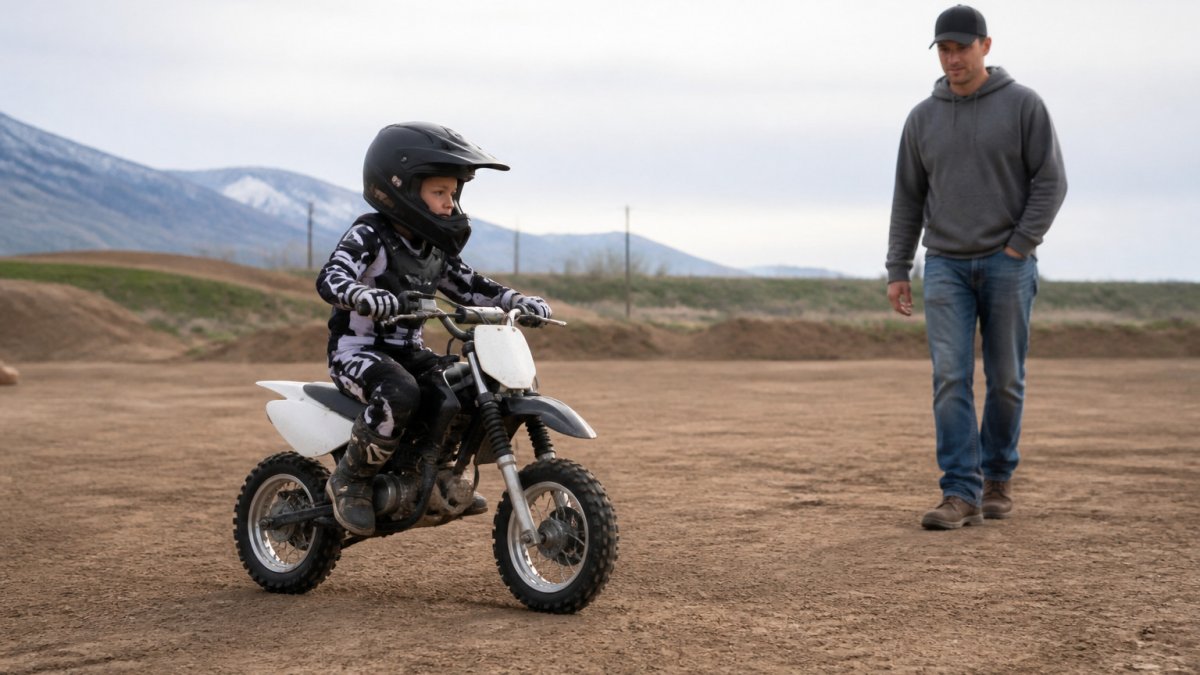
Core slow-speed drills, in order:
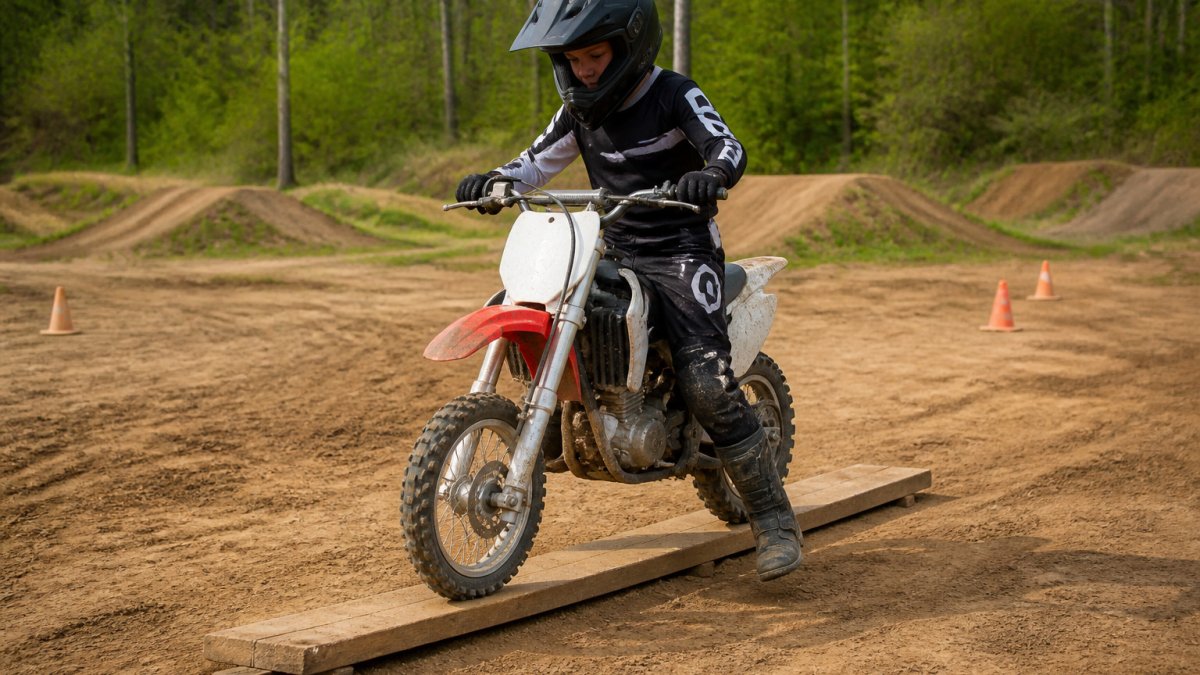
- Walking-pace straight line: Ride a 50-foot straight line at walking speed, feet on the pegs, eyes up. Stay seated and keep the throttle steady. Goal: complete the line three times without putting a foot down.
- Walking-pace circles: Ride a large circle (about 30 feet in diameter) at walking speed, keeping your weight centered and your outside elbow up. Goal: five clean laps in each direction.
- Figure eights: Link two circles together. Lean the bike into each turn without putting a foot down. Goal: three clean figure eights before moving on.
- Clutch feathering start-stop: From a stop, slip the clutch to roll forward 10 feet, stop under control, and repeat. Do not stab the throttle. Goal: 10 smooth start-stops in a row.
- Cone weave: Set five cones 10 feet apart and weave through them at walking speed. Goal: two clean passes without dabbing.
- Tight turn box: Ride between two cones set 10 feet apart, turning as sharply as you can while keeping your weight over the bike. Goal: three clean turns in each direction.
How to structure a session:
- Warm up with 5 minutes of the straight-line drill.
- Spend 10 to 15 minutes on the current drill in your progression.
- Finish with 5 minutes of figure eights or cone weave as a cool-down.
- Keep total slow-speed practice to 20 to 25 minutes. Small muscles tire fast, and tired riders wobble.
When to move to the next drill: Complete the goal three sessions in a row without dabbing or stalling. If you dab a foot, repeat the same drill next session rather than pushing ahead.
Troubleshooting common problems:
- Stalling or lurching: You are using too much throttle and not enough clutch slip. Feather the clutch smoothly and keep the throttle steady.
- Dabbing a foot: You are looking down or leaning your body instead of the bike. Keep your eyes up and let the bike lean under you.
- Wobbling at walking pace: You are gripping the bars too tightly. Loosen your grip and bend your elbows.
Use a small or lightweight bike for early practice, since a smaller machine is easier to balance. Check your bike's manual before changing tire pressures.
The slow-speed drills build in layers, and each one has a clear goal before moving on.
| Drill | Goal | Notes |
|---|---|---|
| Walking-pace straight line | Three clean runs | 50-foot line, no foot down |
| Walking-pace circles | Five clean laps each way | About 30 feet across |
| Figure eights | Three clean figure eights | Lean into each turn |
| Clutch feathering start-stop | 10 smooth start-stops | Feather the clutch, no throttle stabs |
| Cone weave | Two clean passes | Cones 10 feet apart |
| Tight turn box | Three clean turns each way | Cones 10 feet apart |
Body Position and Weight Distribution in Turns, Ruts and Jumps
Motocross balance on a bike is not only about staying upright. Mastering these physical inputs provides the necessary control to effectively manage dirt bike performance upgrades when navigating technical terrain.
Base standing position:
- Head: Eyes up and level, looking at the exit of the turn or the landing zone. Looking down at the front wheel throws off your posture and pushes weight forward.
- Elbows: Bent and up, not locked. Bent elbows absorb bumps and let you steer without fighting the bars.
- Knees: Bent and gripping the bike lightly. Your knees act as a second suspension.
- Feet: Balls of the feet on the pegs, toes pointed slightly inward. This keeps your weight centered and protects your ankles.
In turns:
- Keep your weight over the bike and let the bike lean under you. Your head should stay level. For deeper guidance, read our cornering technique and body position guide.
- Shift your weight to the outside peg as you lean the bike in. This presses the tires into the ground and improves traction.
- Keep your inside elbow up and your outside elbow down. This rotates your shoulders into the turn.
- A frequent error is leaning your body too far in the turn while the bike stays upright. That pushes the bike wide. Lean the bike, not your torso.
In ruts:
- Stay loose in the arms and legs. Let the bike track in the groove while your body absorbs the bumps.
- Look ahead to where the rut exits, not at the front wheel.
- Keep your weight centered and avoid abrupt throttle or brake inputs. Smooth inputs keep the front wheel planted in the rut.
Over jumps:
- Stand on the pegs, keep your knees bent, and keep your weight centered as you take off and land.
- On takeoff, stay neutral. Leaning back too far lifts the front wheel; leaning forward too far drops it. For step-by-step help getting comfortable over jumps, try our jump progression drills for nervous riders.
- In the air, use small body movements to correct the bike's attitude. Pull the bars slightly to raise the front, push them to lower it.
- On landing, absorb the impact with bent knees and elbows, and keep your weight centered over the bike.
Seated versus standing:
- Stand when you need to absorb bumps, control the bike in rough terrain, or prepare for a jump.
- Sit when you need traction on a smooth surface or when you are turning sharply at low speed.
- Transition smoothly between the two. Jerky sit-to-stand movements upset the bike's balance.
Practice these positions at slow speed first. Once they feel natural, add speed in small steps. A spotter or coach can watch from the side and point out when your head drops or your weight shifts too far.
Building Motocross Strength and Conditioning for Balance
Strong legs, a stable core, and steady arms all help balance. Conditioning also matters, because a tired rider loses control faster. For specific fitness exercises for kids, see our motocross fitness exercises for kids.
Simple strength exercises:
- Squats: Build leg strength for standing on the pegs. Aim for 2 sets of 10.
- Planks: Strengthen the core. Hold for 20 to 30 seconds, building up over time.
- Lunges: Improve single-leg stability. Do 8 to 10 per leg.
- Grip work: Squeeze a tennis ball or use a hand gripper to build hand strength for control.
For young riders, keep the focus on fun and movement. Games like hopping, balancing on one foot, and obstacle courses build the same skills in a playful way.
Building Your Child's Balance Practice Plan Week by Week
A steady plan helps kids build balance without burning out or getting hurt. Here is a simple progression for a child beginning motocross.
Week 1:
- Off-bike balance games for 10 minutes, three days a week
- Standing practice on a stationary bike for 5 minutes
Week 2:
- Add single-leg stands and heel-to-toe walks
- Begin walking-pace circles on a small bike
Week 3:
- Increase to figure eights and clutch feathering
- Add short slow-speed turns between cones
Week 4:
- Introduce body position practice in gentle turns
- Review what felt easy and what needs more work
Track progress in a simple notebook. Note the date, the drill, and how long the child stayed balanced.
Keep sessions short, celebrate small wins, and always wear proper protective gear. Balance grows fastest when a rider feels confident, relaxed, and safe.
Frequently Asked Questions
How can I improve my balance while riding a dirt bike?
Practice slow-speed control first: walk the bike, then ride in a straight line at walking pace while standing on the pegs. Add small turns and stops, keeping your head up and elbows bent. Short, frequent sessions of 10 to 15 minutes build balance faster than one long session. Stop when fatigue makes your posture slip, since tired riders lose balance and control first. Reviewing these drills before each ride keeps practice focused and safe.
What off-bike exercises help motocross riders improve balance?
Single-leg standing, balance board work, squats and lunges all train the stabilizing muscles motocross uses. Practice holding a standing position with knees and hips soft, the way you would stand on the pegs. Core work like planks and controlled rotations supports the body position needed in turns and over bumps. Pair these with a few minutes of stretching for hips and hamstrings. Consistency matters more than intensity, so three to four short sessions per week works well.
How do you practice static balance on a dirt bike?
Sit on a stationary bike with the engine off, feet on the pegs, and both hands on the bars. Stand up on the pegs with knees bent and hold the position for 10 to 30 seconds, then sit back down. Repeat several times, gradually extending the hold. Keep your weight centered and your eyes forward. Practicing this on a flat, level surface with a helmet on reduces the risk of a fall while you learn the feel of the bike under you.
How often should motocross riders practice balance drills?
Most riders benefit from balance practice two to four times per week, alongside regular riding. Keep sessions short, around 15 to 20 minutes of focused drills, so quality stays high. Beginners should spend more time on static and slow-speed work before adding speed. Rest days help muscles recover and prevent the sloppy posture that comes from fatigue. Track your progress in a notebook to see how your control improves over several weeks.