 how-to
How to Improve Cornering Speed With Confidence
Last Updated: October 23, 2026
Quick Summary
Improve cornering speed by building control through repetition instead of bravery: look at the exit, relax your upper body, brake before the turn, and drill the basics until they feel automatic. Speed is a byproduct of control, so raise it little by little as each skill becomes boring.
- Pick one corner skill to focus on before every practice session.
- Press down on the outside peg to push the tires into the ground and boost grip.
- Release the brakes fully before you lean in, never brake mid-turn.
- Run figure-eights for 5 minutes with markers about 20 feet apart.
- Rate each session 1 to 5 for control, not speed, in a simple log.
Table of Contents
- Why Confidence, Not Bravery, Builds Cornering Speed
- Where to Look When Cornering on a Dirt Bike
- Motocross Cornering Body Position That Keeps You Relaxed
- How to Brake Before a Corner on a Dirt Bike
- Countersteering and Steering Input: The Part Most Riders Skip
- Dirt Bike Cornering Drills for Beginners
- How Surface and Corner Type Change Your Technique
- Common Cornering Mistakes and How to Fix Them
- Frequently Asked Questions
Why Confidence, Not Bravery, Builds Cornering Speed
Cornering speed is the amount of speed a rider can carry through a turn while staying in control, and most riders confuse it with bravery. These motocross mental preparation exercises for beginners help build that confidence.
That distinction matters more than any single tip below. We see the same pattern on practice days: the kids who improve fastest are rarely the boldest.
Here's the honest truth about how to improve cornering speed with confidence: speed is a byproduct of control, not a substitute for it.
- Confidence comes from repetition, not risk
- Small, repeatable gains beat one big push
- Fear of crashing shrinks when skills feel automatic
One rider in a community discussion put it plainly: start slowly and raise speed little by little.
Where to Look When Cornering on a Dirt Bike
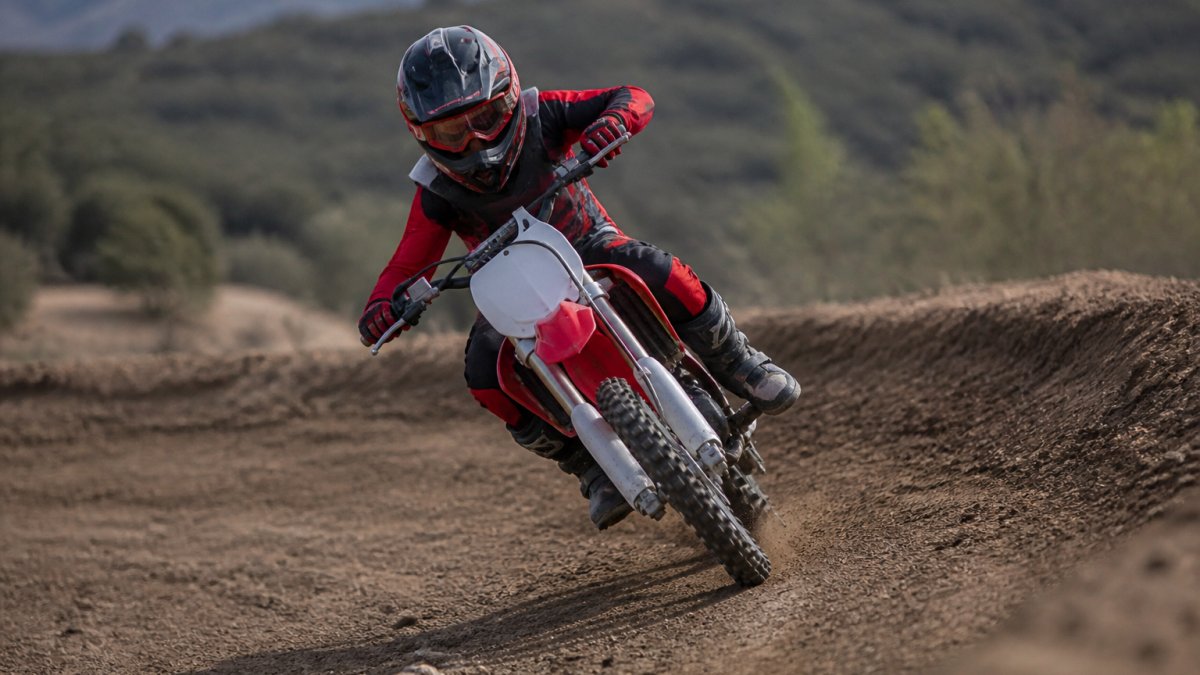
Your eyes decide your line. Look at the exit, not the front fender. Where your eyes go, the bike follows.
This is the single fastest fix for most riders. Vision leads, hands follow. If you stare at the rut, you'll ride into the rut. If you look through the corner toward where you want to end up, your steering input smooths out on its own.
Beating Target Fixation
Target fixation is the tendency to steer toward whatever you're staring at, even when you don't want to go there. It's why riders hit the exact rock they were trying to avoid.
The fix is simple to say and hard to practice:
- Pick your exit point before you reach the corner
- Keep your eyes moving, scanning ahead
- Never stare at an obstacle you want to miss
Look through the corner, toward the apex and beyond it. Your hands will do the rest.
Motocross Cornering Body Position That Keeps You Relaxed
A relaxed rider is a fast rider. Tension in your arms and shoulders fights the bike instead of working with it.
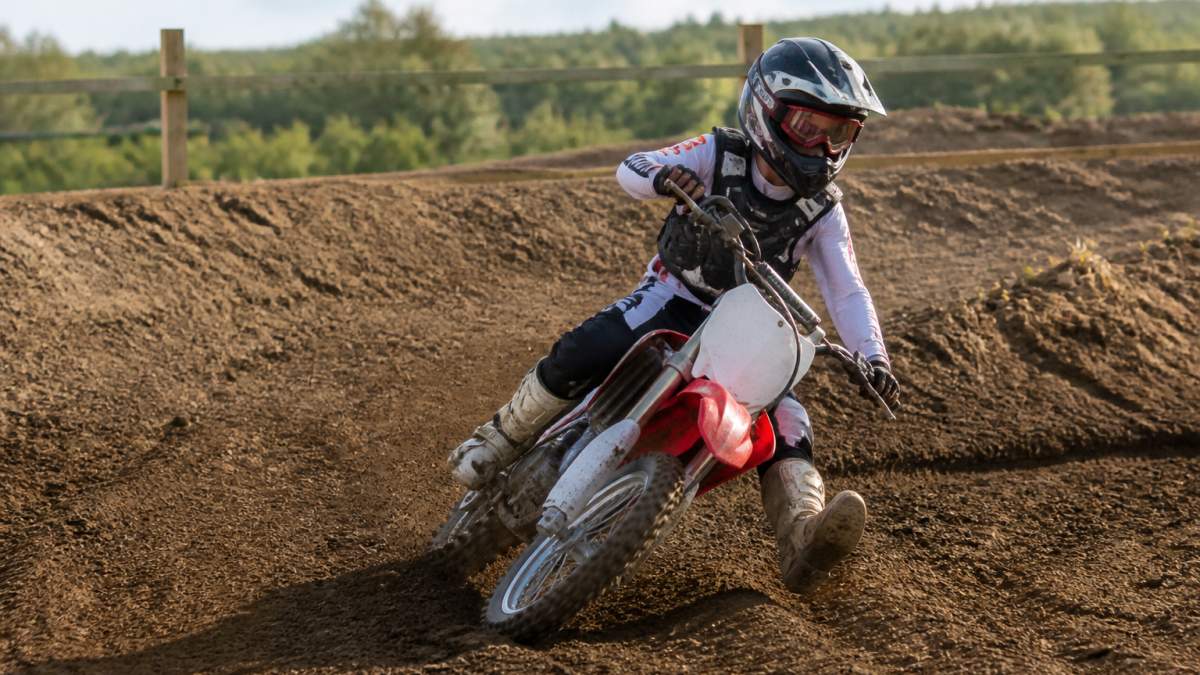
Sit forward on the tank as you enter, then shift your weight as the bike leans. Keep your elbows up and out, grip the bars like you're holding a pair of small birds, and let the bike move underneath you.
Bike Lean vs. Body Lean
Bike lean is how far the motorcycle tips into the turn. Body lean is how you position your own weight. They work together, but they're not the same thing.
- Bike lean: the machine tips into the corner
- Body lean: you shift weight to the outside peg and lean your upper body
- Keep your body more upright than the bike in most corners
Leaning your body too far can cost traction. Let the bike do the leaning while you stay balanced and centered.
Outside Pedal and Weighting the Bike
Press down on the outside peg as you corner. This pushes the tires into the ground and boosts grip. It also keeps your body stable.
Weighting the bike this way does more for cornering confidence than most riders realize. It's a small move with a big payoff. These motocross training exercises for balance build the stability this section describes.
How to Brake Before a Corner on a Dirt Bike
Brake before the turn, not in it. Get your speed set on the straight, then release the brakes as you tip in.
Here's the sequence that works:
- Brake firmly while the bike is upright
- Ease off brake pressure as you approach the entry
- Release the brakes fully before you lean in
- Carry smooth speed through the corner
Grabbing brakes mid-turn upsets the bike and kills grip. If you find yourself braking in the corner, you entered too fast. Slow down a touch earlier next lap.
Countersteering and Steering Input: The Part Most Riders Skip
Countersteering, also called opposite steering, is the technique of pushing the handlebar in the opposite direction of the turn to start the lean.
Most riders do it without thinking at speed. The problem is they don't practice it deliberately, so their steering input stays jerky.
Practice it at low speed in a flat area. Push the bar gently and feel the bike lean.
Dirt Bike Cornering Drills for Beginners
Drills build the repetition that confidence needs. Run them in a safe, open area before you take them to a track. The goal is not to ride fast; it is to make each input feel automatic so that speed becomes a choice rather than a reaction.
Start with these dirt bike cornering drills for beginners:
- Figure-eights: slow, controlled turns to build steering feel. Set two markers about 20 feet apart and ride a steady figure-eight for 5 minutes. Focus on looking through each turn, not at the markers.
- Cone weaves: practice looking ahead and smooth inputs. Space cones 15 to 20 feet apart and weave at a walking-pace first, then increase speed only when the line feels boring.
- Single-corner repeats: ride one corner ten times, focusing on one skill per set. For example, ride ten laps thinking only about releasing the brakes before tip-in, then ten laps thinking only about eyes on the exit.
- Brake-and-release drills: set speed on a straight, release the brakes fully before turning, and carry smooth speed through. Mark a braking point with a cone and move it one bike length later only after five clean repetitions.
A Progressive Practice Plan You Can Measure
Progress needs a scoreboard. A common pattern among riders who improve quickly is that they track one variable per session and leave the rest alone. For the bigger picture, follow this step-by-step motocross training plan for beginners.
Session structure (every session):
- Warm-up (10 minutes): easy laps or figure-eights to loosen up and check bike feel.
- Drill block (20 minutes): one drill from the list above, repeated with short breaks.
- Single-corner focus (15 minutes): ride the same corner repeatedly, working on the week's focus skill.
- Cool-down (5 minutes): slow, smooth laps to finish with clean inputs.
Four-week progression:
| Week | Focus skill | Drill | Success measure |
|---|---|---|---|
| 1 | Vision and looking through corners | Figure-eights and single-corner repeats | Eyes on the exit before the apex on every repetition; no looking at the front fender |
| 2 | Relaxed body position | Cone weaves and figure-eights | No arm pump after 20 minutes; grip light enough to wiggle fingers on straights |
| 3 | Braking before entry | Brake-and-release drills | No mid-corner braking for an entire session; braking point consistent within one bike length |
| 4 | Smooth countersteering and tip-in | Single-corner repeats | Lean angle builds progressively with no sudden steering corrections; entry speed consistent lap to lap |
How to track it: Keep a simple log after each session with three lines: what you worked on, what felt smooth, and what felt rushed. Rate each session 1 to 5 for control, not speed. If control ratings climb while speed stays the same, you are building the foundation for speed. If speed climbs but control ratings fall, back off.
A common mistake is changing too many variables at once. If you are working on vision in week 1, do not also chase braking points. One focus per session keeps the feedback loop clean.
How Surface and Corner Type Change Your Technique
The same corner demands different skills on different ground. Loose surface needs gentler inputs.
Reading the surface before you commit: Look at the corner entry as you approach.
- Hardpack: more grip, so you can lean and brake harder. The trade-off is that hardpack can be unforgiving if you overload the front tire abruptly. Brake firmly but progressively, and release smoothly.
- Loose or sandy: sit forward, stay smooth, avoid sudden throttle. The front tire tends to push in loose material, so keep steering inputs gentle and let the bike find its line rather than forcing it.
- Wet surface: brake earlier, ease off the brakes gently. Wet ground reduces grip and can hide slick patches. Increase your following distance and avoid leaning beyond what the surface can support.
- Ruts: commit to the line and look through it. Ruts reward commitment; hesitating or changing line mid-rut upsets the bike. Pick the rut early and stay with it.
Tight versus sweeping turns: Tight corners reward late braking and a tight line, with the bike more upright at the apex.
Discipline matters here. The advice above applies to dirt bikes and motorcycles on unpaved surfaces.
Tire pressure and tread matter here too. Check them before you ride.
Common Cornering Mistakes and How to Fix Them
The fastest riders aren't mistake-free. For a wider catalog of common dirt bike riding mistakes and their fixes, keep a list handy between sessions.
- Staring at the front wheel: look through the corner
- Braking mid-turn: set speed before entry
- Death-gripping the bars: relax your grip and elbows
- Entering too fast: slow down a touch earlier
- Sitting too far back: shift forward on entry
A common mistake is trying to fix speed before fixing vision. Fix your eyes first. Speed follows.
Cornering speed rewards patience, and the riders who build skills slowly are the ones still riding years from now.
Frequently Asked Questions
Should you brake while cornering on a dirt bike?
Most of your braking should happen before you tip into the corner, while the bike is still upright and the front tire has full grip. Trail braking, where you gradually release pressure as you lean in, can work on some surfaces, but grabbing the front brake mid-corner on loose dirt usually causes the front end to wash out. Practice braking in a straight line, then releasing smoothly right before your turn-in point.
How can a beginner build confidence in corners?
Start slower than you think you need to and increase speed little by little, as riders in online forums often suggest. Pick one corner you know well and ride it ten times at a comfortable pace, focusing on looking through the exit and staying relaxed. Add speed only when you finish the corner feeling calm rather than relieved. A rider training journal helps you track each session so progress is visible instead of guessed.
Where should you look when approaching a corner?
Look toward the corner exit, not at the front fender or the dirt directly ahead. Your eyes lead the bike, so fix your vision on where you want to end up and let your hands follow. Scanning too close causes target fixation, where you ride toward whatever you stare at. On a dirt bike, pick up your head, turn your chin toward the exit, and keep your eyes two to three bike lengths ahead of where you are.
How do track conditions affect cornering speed?
Wet or loose surfaces reduce traction, so entry speed and lean angle both need to come down. On hardpack you can carry more speed and lean further; on sand or mud, sit forward, stay smooth on the throttle, and avoid abrupt brake or steering inputs. Check tire pressure before every session, since a few PSI too high or low changes how the contact patch grips in corners.