 how-to
7 Reasons Motocross Teaches Sportsmanship to Kids
Last Updated: October 26, 2026
Quick Summary
Motocross sportsmanship is racing hard while treating every competitor, official, and family on the gate line with respect. The sport teaches it because kids copy what adults model, and race day offers seven clear moments to practice fair play, from the gate drop to the results board.
- University of Kansas research on parenting and motocross found that kids copy what the adults around them model.
- Race day offers kids seven chances to practice fair play, including the first pass and a bad call.
- Keep coaching in the pits and talk about the race on the drive home, not at the gate.
- For ages 7 to 9, introduce the handshake and the good race line before the moto.
- Coaches can run a two-minute pre-moto huddle naming one sportsmanship behavior for the day.
Table of Contents
- Why Motocross Is a Sportsmanship Classroom on Two Wheels
- The Benefits of Motocross for Kids Go Far Beyond Riding Skill
- Teaching Kids Good Sportsmanship Starts in the Pits, Not at the Finish Line
- 7 Race-Day Moments Where Sportsmanship Gets Tested
- How to Get Kids Started in Motocross Without Skipping the Character Lessons
- A Parent and Coach Playbook for Building Young Sports
- Measuring Progress Beyond the Podium
- Pick Up a Rider Journal and Turn Race Day Into a Character Lesson
- Frequently Asked Questions
Why Motocross Is a Sportsmanship Classroom on Two Wheels
Motocross sportsmanship is the practice of racing hard while treating every competitor, official, and family on the gate line with respect. At Nelmgerian MX, we believe that lesson starts long before the gate drops. A dirt bike hands a kid something rare: a machine that responds only to their own hands, on a track where every rider follows the same rules. Win or lose, the sport asks the same question after every moto. How will you act?
There is no bench to hide on. There is no teammate to blame.
University of Kansas research on parenting and motocross looked at how parents shape young racers' behavior in the sport. The takeaway is simple: kids copy what the adults around them model.
Below are seven race-day moments where character can be practiced, plus a playbook parents and coaches can use all season.
The Benefits of Motocross for Kids Go Far Beyond Riding Skill
The benefits of motocross for kids stretch well past lap times. The sport can involve fitness, coordination, and confidence. And it does it in a setting where kids feel every result in their own hands.
Physical Fitness, Stamina, and Motor Skills
Riding demands full-body effort. Young riders learn to stand on the pegs, grip with their knees, and absorb bumps with their arms and legs.
Kids can learn throttle control, clutch feel, and front brake pressure. They can learn how body position changes bike control.
Confidence, Discipline, and Mental Resilience
Discipline can show up in small habits. Checking tire pressure. Cleaning gear. Warming up before a moto.
For a deeper look at how the sport shapes young minds, read our guide on how motocross develops young riders' minds.
Teaching Kids Good Sportsmanship Starts in the Pits, Not at the Finish Line
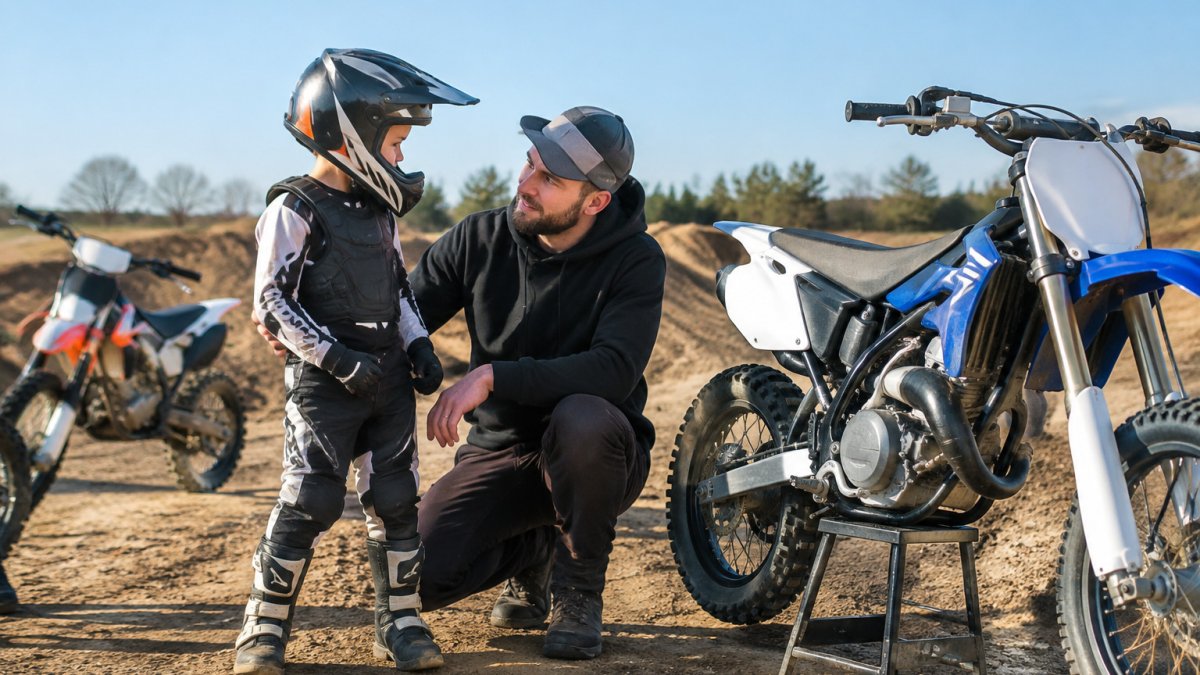
Teaching kids good sportsmanship works best away from the crowd. The pits are one place kids may watch parents talk to other families.
Here is how we would set the tone before the first moto:
- Greet the family parked next to you, every race day
- Help a rider who is struggling with a stuck bike or lost gear
- Thank the officials at sign-up, by name if you can
- Talk about the race on the drive home, not at the gate
One tip: keep the ride home calm.
7 Race-Day Moments Where Sportsmanship Gets Tested
Race day offers kids seven chances to practice fair play. Coaches and parents can prepare for each in advance.
- The gate drop. Riders line up side by side. No one gets a head start, and everyone waits for the signal.
- The first pass. Passing clean matters more than passing fast. Riders learn to hold their line and give room.
- Getting passed. A kid who gets passed cleanly can practice accepting it without a fight.
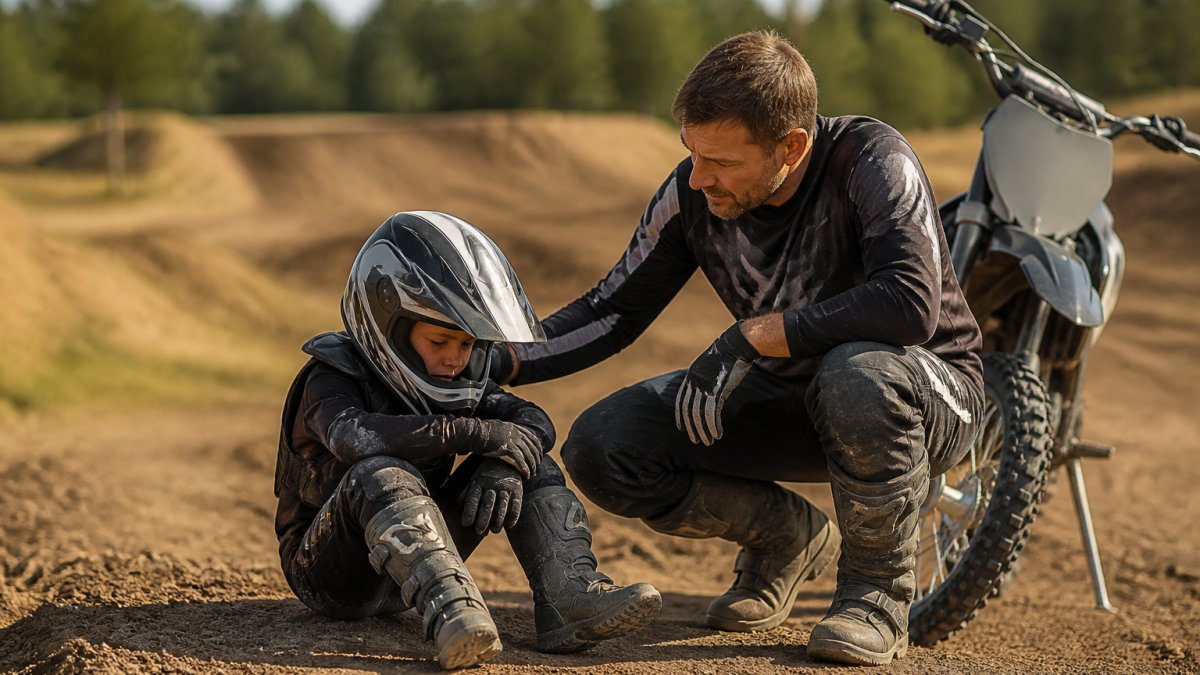
- A crash ahead. Slowing down or checking on a fallen rider is a choice kids remember.
- A bad call. Officials make decisions riders may not like. Riders can choose to accept a call and move on.
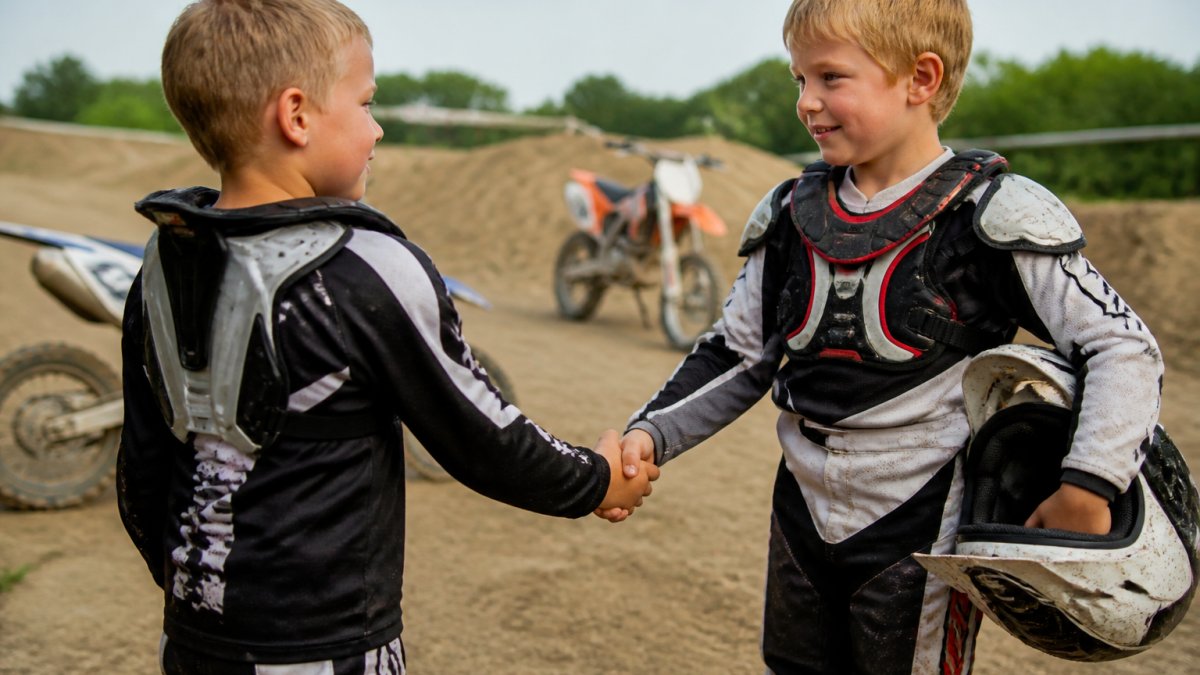
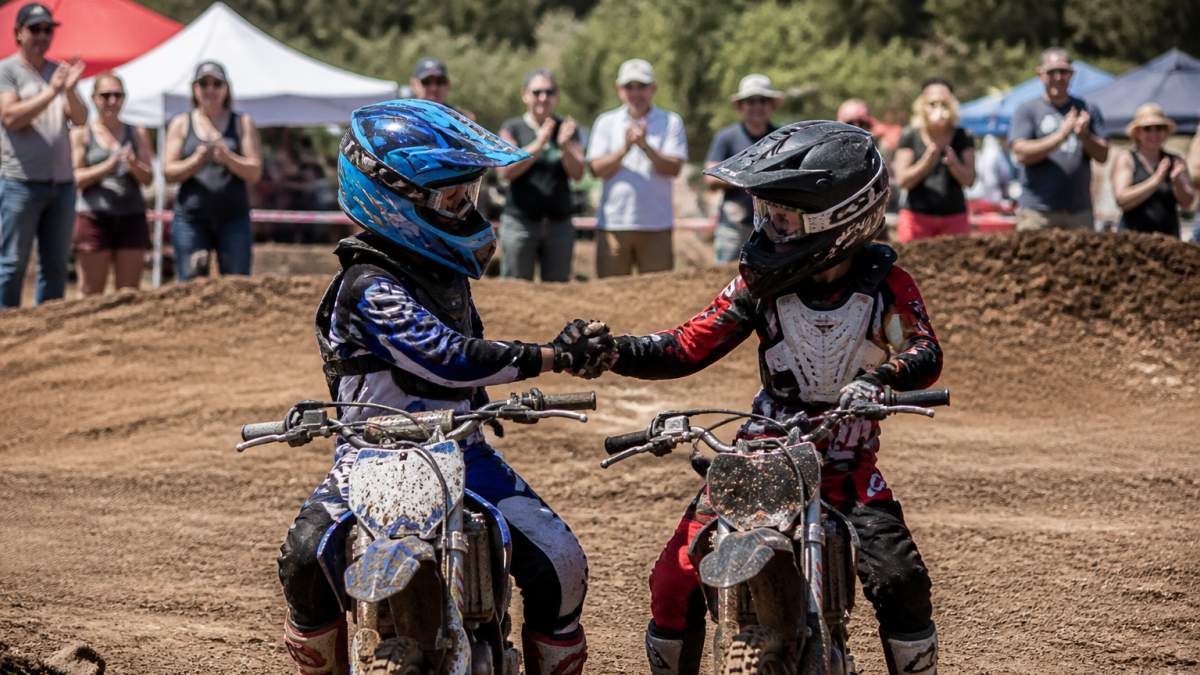
- The finish line. Win or lose, the handshake and the "good race" matter.
- The results board. Kids can practice congratulating the winner and moving on from their own finish.
After a Win, a Loss, and a Crash
Good sportsmanship after a win can include a quick celebration, then a handshake with the second-place rider. No bragging on the drive home.
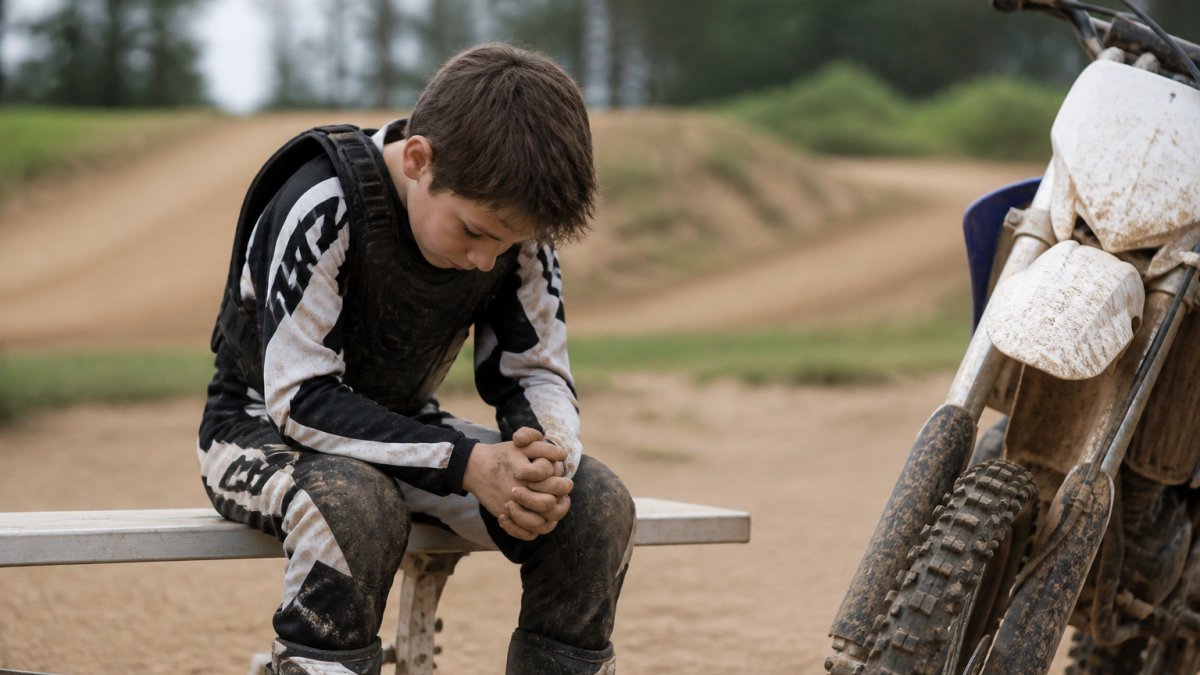
After a loss, it can look like a helmet off, a nod to the winner, and a question: what can I work on this week?
After a crash, checking on the other rider is one possible response. If your kid caused it, a quick apology can be appropriate.
Respect for Competitors and Officials
Respect for competitors starts with language. Children may hear how parents talk about competitors.
Ryder's First Motocross Race →
Respect for officials is harder and more important. A rider can choose how to respond to officials' calls.
Race day gives kids seven clear chances to practice fair play, each one a moment parents and coaches can prepare for.
| Race-day moment | What sportsmanship looks like |
|---|---|
| The gate drop | Everyone waits for the signal; no head starts |
| The first pass | Hold your line and give room |
| Getting passed | Accept a clean pass without a fight |
| A crash ahead | Slow down or check on the fallen rider |
| A bad call | Accept the call and move on |
| The finish line | Handshake and a "good race," win or lose |
| The results board | Congratulate the winner and move on |
How to Get Kids Started in Motocross Without Skipping the Character Lessons
Getting a kid into motocross takes gear, a bike, and a plan.
Start with the right age and the right first bike. Our guide on the good age to start motocross covers readiness signs, while our step-by-step walkthrough on how to teach kids motocross basics covers first rides, braking, and body position.
Then build the habits:
- Set one practice goal before every ride
- Ask your kid to name one thing they did well and one thing to improve
- Praise effort and fair play first, results second
- Keep a simple log of practice days and race days
A Parent and Coach Playbook for Building Young Sports
A parent and coach playbook makes sportsmanship concrete. Vague advice like "be a good sport" means little to a seven-year-old. Specific words, specific behaviors, and a few rehearsed scripts do.
Age-Appropriate Scripts and Behaviors
Sportsmanship lessons land differently at different ages. Use these stages as a guide, not a rigid rule.
- Ages 4-6 (first bikes, first gates): Keep it to one behavior per race day. Script: "We cheer for everyone, and we say thank you to the flagger." Model it yourself out loud so your child hears it.
- Ages 7-9 (first real races): Introduce the handshake and the "good race" line. Script before the moto: "Win or lose, you shake hands at the finish." After the moto, ask: "Did you thank the officials?" Keep the question short and specific.
- Ages 10-12 (competitive classes): Add the pass-and-be-passed conversation. Script: "If you get passed clean, you let it go and race back. If you pass, you give room." This is also the age to talk about bad calls: "You can disagree with a call, but you accept it and line up for the next moto."
- Ages 13+ (traveling and higher-level racing): Shift from scripts to reflection. Ask the rider to name one sportsmanship choice they made and one they would change. Let peers and coaches carry more of the modeling load.
Sideline Behaviors That Teach the Right Lesson
Kids watch the fence line as closely as they watch the track. A few concrete do's and don'ts:
- Do cheer for every rider in your child's class, not just your child. Kids hear the difference between a cheer for the pack and a cheer only for them.
- Do keep coaching to the pits. Yelling instructions from the fence can distract from a rider's own race.
- Do model calm after a bad call. Complaining loudly about an official models a response to disappointment.
- Don't critique another family's rider within earshot. Children may hear how adults talk about other families.
- Don't make the drive home a debrief. A common pattern is that kids remember a parent's silence or lecture after a bad moto longer than any single result.
A Four-Part Race-Day Routine
Use the same short routine every race day:
- Before the moto: "Ride your own race. Give room on passes. Thank the officials." One sentence, three behaviors.
- During the moto: Cheer for the class, not just your rider. Keep instructions out of it.
- After the moto: Handshake first, then a question about effort or attitude, not position.
- At home: Ask about one thing the rider did well and one thing to improve. Praise fair play before results.
A Coach's Pre-Moto Huddle
Coaches can run a two-minute huddle before each moto. Name one sportsmanship behavior for the day, such as "check on a fallen rider" or "thank the flagger." Then ask riders to spot that behavior in each other during the moto and report back.
Measuring Progress Beyond the Podium
Measuring progress beyond the podium is one way to reflect on a season. Race results can depend on who shows up, track conditions, and luck.
Track these instead:
- Practice days logged per month
- New skills mastered, like a clean start or a confident pass
- Times a rider helped another rider
- How quickly a rider bounces back after a bad moto
- Attitude after a loss, rated honestly by parent and rider together
Pick Up a Rider Journal and Turn Race Day Into a Character Lesson
A rider journal can be used to reflect on race day. Kids can write down goals, wins, losses, and lessons.
Nelmgerian MX creates rider-development tools. You can read more about motocross training journals for kids. For younger readers, our storybook Ryder's First Motocross Race follows a young rider through nerves, effort, and fair play on race day.
Families who want both can pair a journal with a storybook.
Frequently Asked Questions
How does motocross teach kids sportsmanship?
Motocross can give kids opportunities to practice sportsmanship, such as lining up next to competitors and congratulating someone who beat them. Parents and coaches can encourage effort and respect.
What are the benefits of motocross for kids beyond racing?
The benefits of motocross for kids reach well past the track. Riding builds physical fitness, stamina, and coordination through constant balance, braking, and throttle control. It also develops confidence, discipline, and mental resilience, since young riders learn to practice, set goals, and recover from setbacks. Many families find the sport strengthens the parent-child relationship through shared weekends and honest conversations about effort. These character gains often show up at home and in school long before a child ever stands on a podium.
How do I get my child started in motocross safely?
Nelmgerian MX offers books, educational resources, activities, and rider-development tools for young riders and racing families. Its rider training journals are for tracking practice, goals, and race progress.
What can kids learn from winning and losing a motocross race?
Winning teaches humility and gratitude: a young rider learns to thank competitors, officials, and the family who got them to the gate. Losing teaches resilience and perspective, especially when a parent helps the child separate self-worth from a single result. Crashes add another layer, showing kids how to check on others, accept help, and get back on the bike when ready. Handled well, both outcomes build the kind of grit and respect that outlast any trophy.
Racing season is short, but the lessons last. Nelmgerian MX creates children's motocross books, rider journals, and screen-free activities that keep young riders learning between practice days and races. Our journals help kids set goals and reflect on every moto, our stories model confidence and perseverance, and our activity books keep the sport alive on rainy weekends. Get started with Nelmgerian MX and give your young rider tools that build character on and off the track.