 how-to
7 Steps to Plan a Family Dirt Bike Weekend Getaway
Last Updated: October 28, 2026
Quick Summary
To plan a family dirt bike weekend getaway, pick a destination within about three hours of home with beginner trails, kid-friendly track sections, and lodging on site. Run a Friday-to-Sunday itinerary with Saturday as the main ride day, and cap seat time for riders under 10 at roughly three to four hours per day.
- Look for beginner loops under 5 miles with packed dirt, gentle grades, and wide trails parents can ride alongside kids.
- Walk the trail map and beginner loop on foot Friday evening and set out riding gear before bed.
- Schedule a 10-minute water break every 30 to 40 minutes during the Saturday morning ride block.
- Keep Sunday's ride to one or two hours on familiar terrain so breakdowns happen close to camp.
- Confirm permits, OHV registration, spark arrestor rules, and youth rider requirements with the land manager the week before you go.
Table of Contents
- Step 1: Pick a Destination That Fits the Whole Family
- Step 2: Find Dirt Bike Trails for Beginners and Kids
- Step 3: Build a Dirt Bike Weekend Itinerary With Drive Times and Rest Blocks
- Step 4: Learn How to Transport Dirt Bikes for a Trip
- Step 5: Use a Dirt Bike Trip Packing Checklist
- Step 6: Plan the Budget, Permits, and Contingencies
- Step 7: Keep the Whole Crew Riding, Including Non-Riders
- Get Young Riders Ready Between Trips
- Frequently Asked Questions
Step 1: Pick a Destination That Fits the Whole Family
Planning a family dirt bike weekend getaway starts with one decision: where you ride. Get that wrong and no amount of packing saves the trip.
Start with these family-specific criteria:
- Skill spread: Does the area offer beginner trails and kid-friendly track sections, not just expert routes?
- Drive time: Under three hours each way keeps young riders from melting down.
- Lodging on site: Camping or a cabin near the trails cuts daily driving to zero.
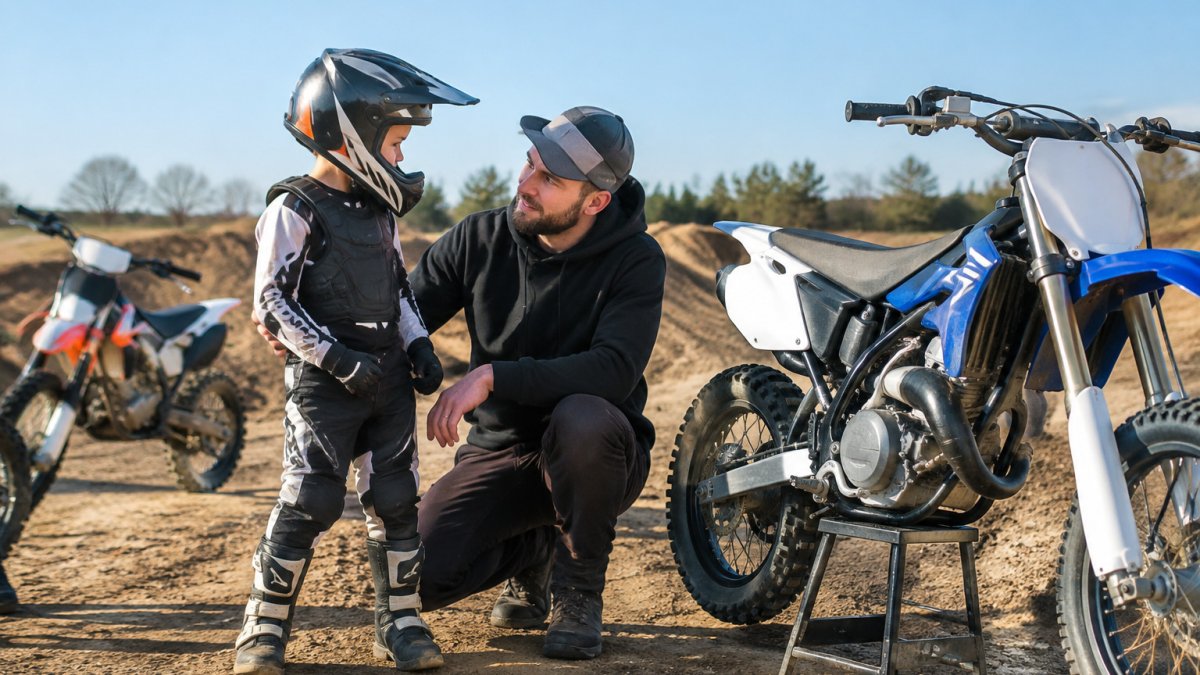
Before you commit, decide what kind of riding your family wants. Our guide on motocross vs enduro for family hobby breaks down the trade-offs.
Step 2: Find Dirt Bike Trails for Beginners and Kids
Finding beginner-friendly dirt bike trails for beginners and kids is the step families rush, and it's the one that ruins weekends.
Use this filter before you load the truck:
- Trail length: Look for loops under 5 miles for young riders.
- Surface: Packed dirt and gentle grades beat loose sand and rock gardens.
- Width: Wide trails let parents ride alongside beginners.
Call ahead or check the managing agency's site for current trail conditions, closures, and young-rider requirements before you go.
If you're still choosing a first destination, our list of beginner dirt bike riding spots covers places with kid-appropriate trails so you can pick one with confidence.
Step 3: Build a Dirt Bike Weekend Itinerary With Drive Times and Rest Blocks
A workable dirt bike weekend itinerary is built backward from Sunday afternoon. A Friday-to-Sunday trip works best: the long drive happens Friday after school or work, Saturday carries the bulk of the seat time, and Sunday is a short ride plus pack-out.
Here's a clock-based plan you can copy and adjust:
- Friday, 4:00-7:00 p.m.: Load and drive. Eat dinner on the road or at camp, not at the trailhead. Set up camp or check in before dark so kids aren't rigging tents with headlamps.
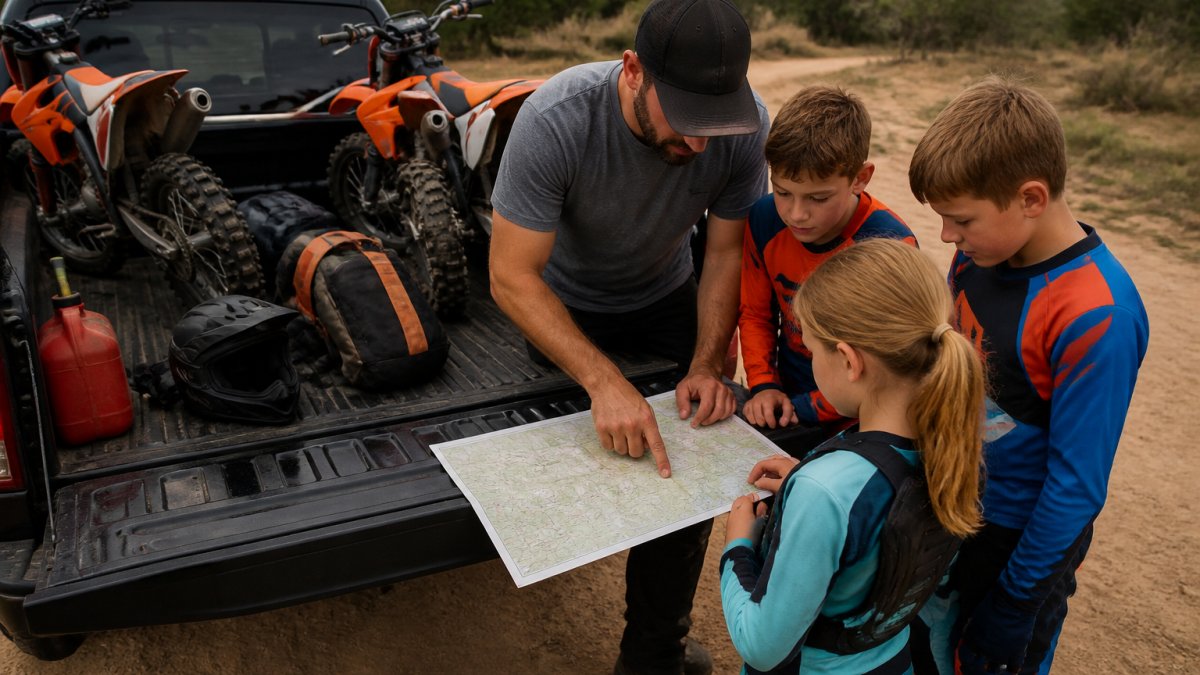
- Friday, 7:00-8:00 p.m.: Walk the trail map and beginner loop on foot. Identify the restroom, water spigot, first-aid station, and nearest ranger or camp host. Set out riding gear for the morning.
- Friday, 8:30 p.m.: Lights out for young riders. Sleep is the single biggest performance variable for kids on Saturday.
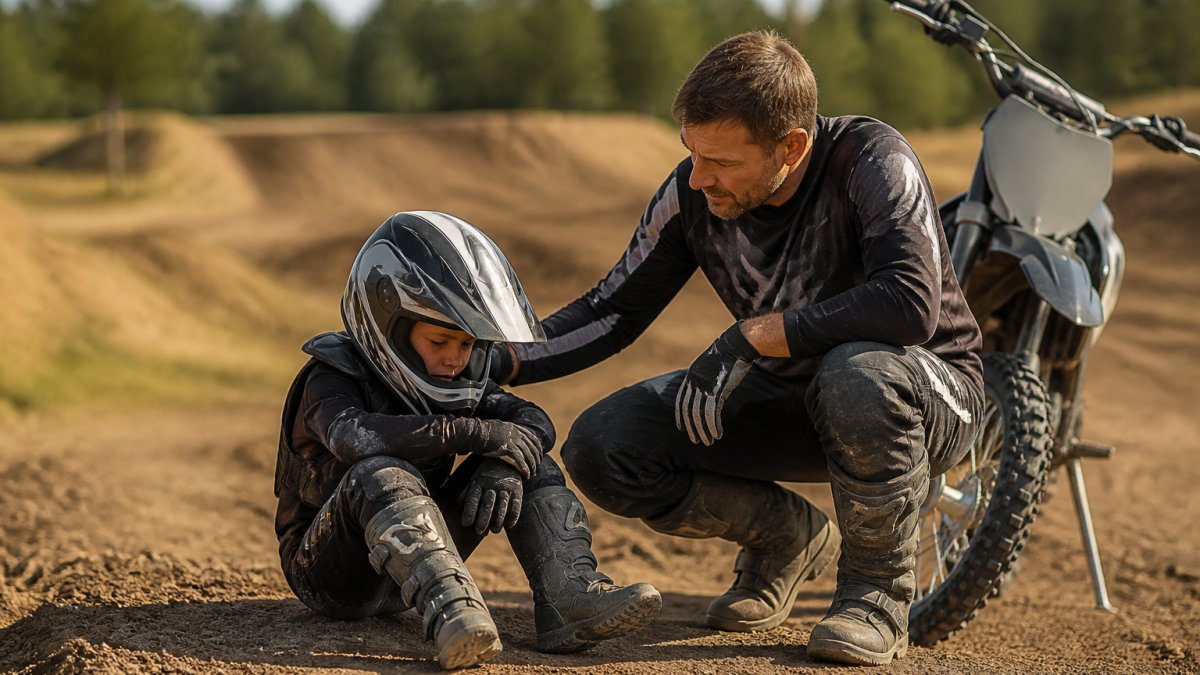
Two adjustments matter more than the clock times. Cap total seat time for riders under 10 at roughly three to four hours per day; fatigue shows up as sloppy cornering and dropped bikes before kids admit they're tired. Keep Sunday's ride on terrain the family already rode on Saturday, so a breakdown or fall happens close to camp.
If rain is in the forecast, swap Saturday's second ride block for a shorter morning session and use the afternoon for a non-riding activity near camp. The itinerary should bend, not break.
Here is the weekend schedule the article lays out, from Friday load-up to Sunday pack-out.
| Time | What to do |
|---|---|
| Friday, 4:00-7:00 p.m. | Load and drive; set up camp before dark |
| Friday, 7:00-8:00 p.m. | Walk trail map and beginner loop on foot |
| Friday, 8:30 p.m. | Lights out for young riders |
| Saturday, 7:00-8:00 a.m. | Breakfast, hydration, gear fit check |
| Saturday, 8:30-11:30 a.m. | Ride block one with water breaks every 30-40 minutes |
| Saturday, 11:30 a.m.-1:30 p.m. | Long lunch and shade rest |
| Saturday, 1:30-3:30 p.m. | Ride block two, shorter and easier |
| Sunday, 8:00-10:00 a.m. | Short ride block on familiar terrain only |
Step 4: Learn How to Transport Dirt Bikes for a Trip
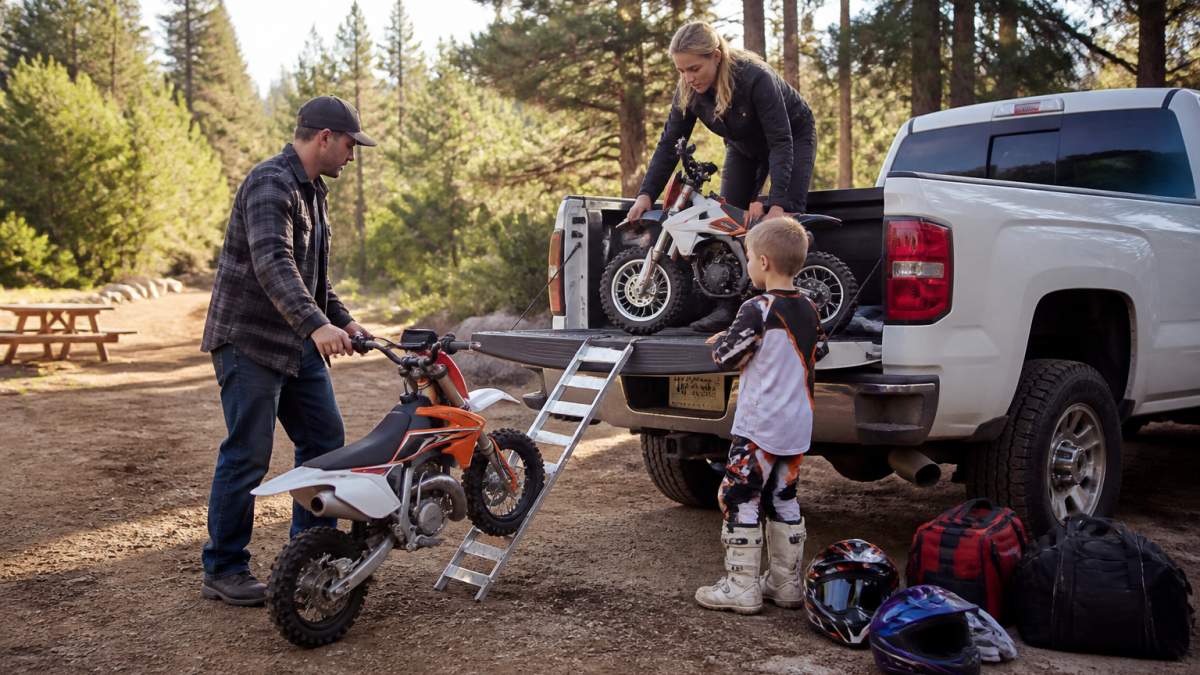
Learning how to transport dirt bikes for a trip comes down to three things: a vehicle rated for the load, a secure tie-down system, and a plan for gear and fuel. A loose bike on the highway is a disaster you don't want to explain. Packing the truck efficiently requires balancing the weight of your machines with the essential outdoor gear needed to keep everyone comfortable once you reach the trail.
Before you leave:
- Check the tow rating: Confirm your truck or trailer can handle the bikes, gear, and passengers.
- Use four tie-down points per bike: Two on the handlebars, two on the rear.
- Compress the suspension evenly: Don't crank one side tighter than the other.
Do a walk-around check before you pull out.
Step 5: Use a Dirt Bike Trip Packing Checklist
A dirt bike trip packing checklist prevents the two classic failures: a rider with no helmet and a camp with no food. Build it once, save it, and reuse it every trip.
Rider Gear and Protective Equipment
Every rider needs a helmet, goggles, gloves, boots, and a chest protector sized to fit. Kids outgrow gear fast, so check fit before each trip. Our guide on choosing the right motocross protective gear walks through fit and safety.
Camp Setup, Food, and Fuel
Pack the tent, sleeping bags, cooler, water, cooking gear, and a first-aid kit. Bring more water than you think you need. Fuel up bikes and the tow vehicle before you leave, and carry a spare gas can. For deeper overnight guidance, see our motocross family camping tips.
Step 6: Plan the Budget, Permits, and Contingencies
Budget, permits, and contingency planning decide whether a trip runs smoothly. The goal isn't a perfect spreadsheet, it's knowing the cost lines and legal boxes to check before you commit, so a surprise fee or missing sticker doesn't end the weekend at the gate.
Build the budget from these line items
Price each line for your own trip; costs vary widely by destination and season.
- Fuel for the tow vehicle: Estimate round-trip miles, divide by your real-world mpg while towing, and multiply by the current pump price. Towing cuts fuel economy substantially.
- Fuel for the bikes: Small displacement bikes sip fuel, but plan for a full tank per bike per riding day plus a spare can.
- Lodging or camping: Tent sites are usually cheapest; cabins, RV hookups, and motel rooms cost more and often require a deposit. Check cancellation policies before booking.
Confirm permits, rules, and legal requirements
Rules are set by the land manager, federal, state, or private track or ranch owners. Before you leave, verify each of the following with the specific area you're visiting:
- Land access and day-use rules: Is the area open to the public, permit-only, or club-member-only? Are there seasonal closures or fire restrictions?
- Vehicle registration and off-highway vehicle (OHV) requirements: Many states require OHV registration or a decal for dirt bikes on public land, and some honor out-of-state permits while others don't. Check both your home state and the destination state.
- Spark arrestor and noise rules: Public lands commonly require a spark arrestor, and sound limits vary by agency and site. Confirm before you load up.
Plan for what can go wrong
A short contingency plan turns a ruined weekend into an inconvenience. Write it down and share it with every adult.
- Bike breaks down on the trail: Carry basic tools, a spare spark plug, a tow strap, and a way to contact the group. Agree in advance that a broken bike gets towed back to camp, not repaired trailside with kids waiting.
- Weather turns: Have a rainy-day alternative, a shorter morning ride, a nearby indoor activity, or an early drive home. Lightning means off the bikes and away from exposed ridges immediately.
- Injury: Know the nearest hospital or clinic and the fastest route before you ride. Carry a charged phone, a first-aid kit, and a printed list of emergency contacts and allergies for each rider.
- Rider separated from the group: Set a meeting point at camp and a check-in time. Give older kids a whistle and teach them to stay put and signal rather than wander.
The families with the smoothest weekends aren't the ones who spent the most, they're the ones who confirmed the rules, priced the trip honestly, and wrote down what to do when something breaks.
Step 7: Keep the Whole Crew Riding, Including Non-Riders
Not everyone in the family rides, and that's fine. A good trip keeps non-riders busy and comfortable so riders aren't torn between the track and camp.
Ideas that work:
- Camp comfort: Shade, chairs, and good food make waiting enjoyable.
- Short rides: Let non-riders try a gentle loop on a small bike with supervision.
- Other activities: Hiking, fishing, or games near camp keep everyone engaged.
- Shared meals: The campfire dinner is often the best part of the trip.
The bonding side of motocross is real. Our guide on the benefits of motocross for family bonding explains why these weekends stick with kids long after the bikes are parked.
Get Young Riders Ready Between Trips
The gap between trips is where young riders either lose momentum or build it. That's where Nelmgerian MX helps. Our children's motocross books, activity and coloring books, and rider training journals keep kids engaged with the sport when they're not on the bike.
Get started with Nelmgerian MX and give your young rider tools for use between weekends on the trails.
Frequently Asked Questions
How many days should a family dirt bike trip last?
A Saturday-Sunday schedule leaves Friday for travel and setup. Plan rest blocks between rides and choose a drive time that works for your family.
What safety gear should kids wear when riding dirt bikes?
At minimum, every young rider needs a properly fitted helmet, goggles, gloves, long sleeves and pants, boots, and a chest protector. Knee and elbow guards are worth adding for beginners who fall often. Check that the helmet meets a current safety standard and fits snugly, not loosely. Bring a spare set of goggles because dust and mud ruin visibility fast. Adults should model the same gear, since kids copy what they see.
How do you transport dirt bikes on a family road trip?
You have three main options: a hitch-mounted carrier for one or two bikes, an open utility trailer for larger families, or a cargo van if you already own one. Use four-point tie-downs and compress the front suspension slightly so straps stay tight. Remove or drain fuel if your vehicle or trailer setup requires it, and check your hitch and trailer rating against the combined bike weight. Load bikes last and gear first so nothing heavy sits on top of helmets.
How can you keep kids entertained on a dirt bike camping trip?
Build in non-riding activities so the weekend does not hinge on seat time alone. Bring a rider training journal for goal-setting between rides, coloring or activity books for downtime, and plan short hikes, swimming, or campfire cooking.