 blog
Motocross Academy vs Home Practice: Which Path Fits Your Rider
Table of Contents
- Motocross Academy vs Home Practice: What's the Real Difference
- Structured Coaching: What a Motocross Academy Offers
- Building Skills Through Home Practice and Motocross Practice Drills for Beginners
- How Often to Practice Motocross: Finding Your Rhythm
- Online Motocross Training Programs: Remote Learning and Video Feedback
- Using a Motocross Training Journal to Track Progress
- Choosing the Right Path for Your Rider's Goals and Skill Level
- Frequently Asked Questions
Last Updated: October 14, 2026
Motocross Academy vs Home Practice: What's the Real Difference
When your young rider is ready to improve, you face a choice in motocross academy vs home practice: a structured academy, or a training program at home. Both develop skills and confidence, but they work very differently. Which fits depends on your rider's age, goals, access, and how much hands-on guidance they need.
The best approach isn't the most expensive or famous, it's the one that matches your rider's level and keeps them progressing without burnout.
This guide breaks down what each path offers, where each falls short, and how to combine both.
Structured Coaching: What a Motocross Academy Offers
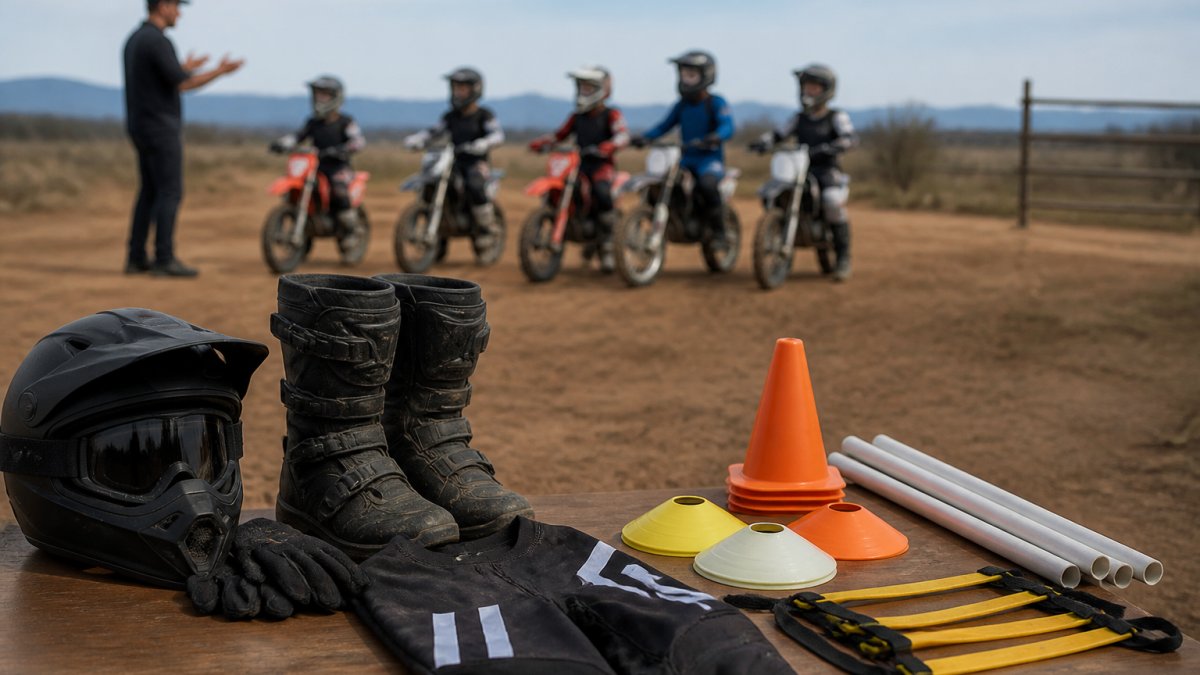
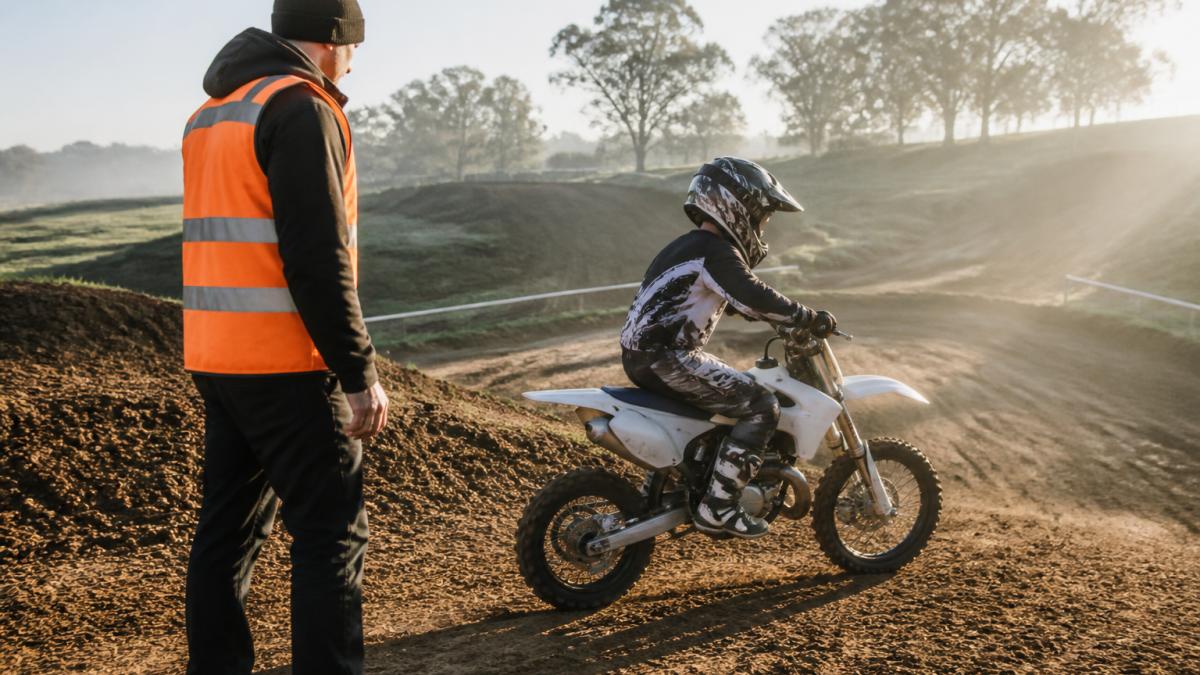
A motocross academy provides professional instruction, track access, and feedback from experienced coaches. Your rider gets consistent technique correction, proper form from day one, and confidence in a controlled environment.
What academy coaching includes:
- Professional feedback on riding position, throttle control, and line selection
- Access to maintained tracks with proper safety setup
- Structured progression from basics to advanced skills
- Group or private instruction options
- Exposure to other riders and competitive environments
- Safety oversight and proper protective equipment enforcement
The biggest advantage is immediate, expert correction: a coach fixes mistakes before they become habits.
Academies also provide track access. Not every family has a private practice area, and academy tracks are built for learning, proper drainage, maintained jumps, safe run-off zones.
However, academy training requires scheduling around class times, and group sessions mean less one-on-one attention. Cost varies widely, and you're dependent on the academy's schedule and location.
Building Skills Through Home Practice and Motocross Practice Drills for Beginners
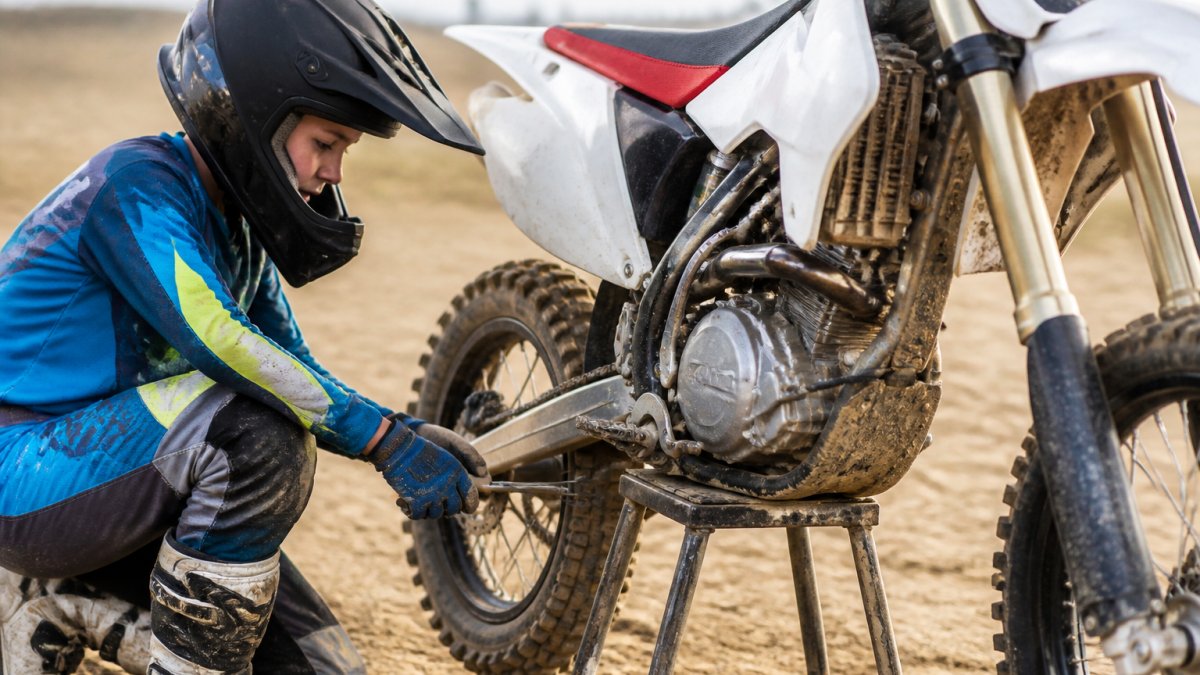
Home practice gives your rider unlimited repetition, freedom to progress at their own pace, and confidence without academy pressure.
Home practice works because repetition builds muscle memory: your rider repeats the same drill dozens of times without waiting for group instruction and gets back up immediately after a fall.
Effective home practice drills for beginners include:
- Slow-speed balance work: figure-eights, circles, and tight turns at walking pace
- Throttle control exercises: smooth acceleration and deceleration practice
- Line practice: riding the same path repeatedly to build consistency
- Jump approach drills: building confidence on small obstacles before bigger ones
- Braking practice: controlled stops from various speeds
- Cornering drills: leaning and body positioning on turns
The challenge with home practice is feedback. If you're not trained to spot errors, your rider can reinforce bad habits through repetition, and technique issues go unnoticed until they cause problems.
Home practice also requires proper space, a private area with good terrain, drainage, and safe boundaries. A small yard won't work.
The best home practice combines structured drills with video review. Record sessions and review footage together, looking for consistent body position, smooth throttle transitions, and good line choices.
How Often to Practice Motocross: Finding Your Rhythm
Consistency matters more than intensity, but "practice more" is not a plan. A rider who trains twice a week with a written focus improves faster than one who rides once a month, or daily with no structure, since riding without recovery erodes technique.
The practical question isn't how many days, but how to distribute skill work, conditioning, and recovery across a week.
A workable weekly structure by goal:
- Recreational riders (1-2 sessions per week): One skill-focused session and one free-ride session. Keep skill sessions short, 45 to 60 minutes of actual riding, and end while your rider still wants more.
- Competitive riders (2-3 sessions per week): Alternate a technique day, a speed or cornering day, and a light day. Never stack two high-intensity days back to back.
- Advanced racers (3-4 sessions per week): Use a hard-easy rhythm. A hard day is followed by an easy technical day or full rest. Sprint and gate-start work belongs on the hard days; balance and line drills belong on the easy ones.
What a single session should contain:
- Warm-up (10-15 minutes): Easy laps or figure-eights to loosen up and check the bike.
- One primary skill (20-30 minutes): A single drill with a single goal, for example, consistent braking points into one corner.
- Application (10-15 minutes): Ride a full lap or short loop applying that skill at speed.
- Cool-down and notes (5 minutes): Easy riding, then two or three lines in the training journal before gear comes off.
One hour of focused practice beats three hours of unfocused riding, and your rider should be able to name the session's goal before the engine starts.
Rest and recovery are part of the plan. Young riders need recovery; daily practice leads to fatigue, frustration, and injury risk.
How to tell if your frequency is right:
- Progress is visible in the journal over two to four weeks.
- Your rider finishes sessions wanting more, not dreading them.
- Technique holds up late in a session rather than falling apart in the last 15 minutes.
- Sleep, appetite, and mood are normal the day after a hard session.
If progress stalls for several weeks at the same frequency, the fix is usually better feedback, not more days, the point where video review, online coaching, or an academy session adds more than another practice day.
Track the frequency that keeps your rider excited and progressing. If they're bored, change drills before adding days; if frustrated, slow down.
Online Motocross Training Programs: Remote Learning and Video Feedback
An online motocross training program bridges home practice and academy coaching, giving you professional instruction, video feedback, and structured progression without traveling to a track.
Online instruction works through recorded lessons, live sessions, or video review: your rider watches technique videos, practices the drills, films their riding, and sends footage to a coach for corrections.
Benefits of online motocross training programs:
- Flexible scheduling that fits your family's calendar
- Professional feedback without academy costs
- Detailed video analysis of technique
- Ability to pause and rewatch instruction
- Progress tracking over weeks and months
- Access to coaches who may not be local
The limitation is that online coaching can't correct in real time. Your rider films a session, uploads it, waits for feedback, then applies corrections next session, a delay versus in-person coaching.
Online training also requires your rider to understand feedback and self-correct, which younger riders may struggle with. A coach watching in real time can stop and correct immediately.
Nelmgerian MX Training Journal →
For home riders who want professional guidance, online programs offer the best middle ground: expert feedback without academy overhead.
Using a Motocross Training Journal to Track Progress
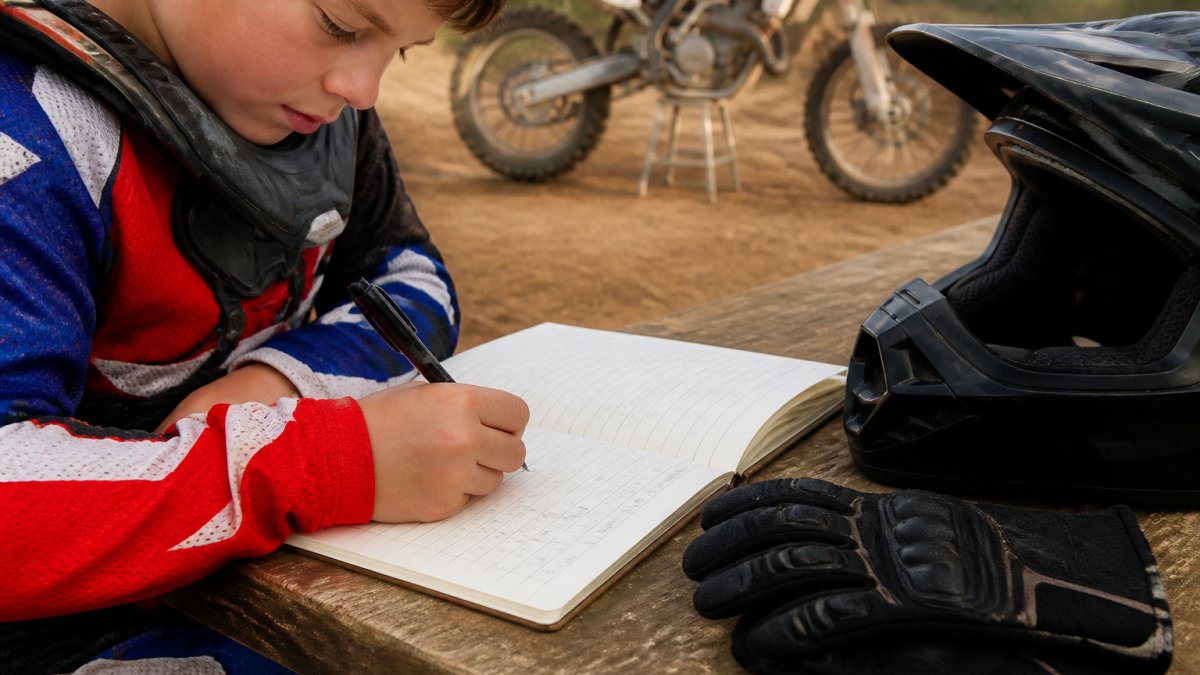
A training journal is only useful if it answers one question: is this approach working? Most riders log what they did. Fewer log what changed. The difference is whether the journal becomes a decision tool or a diary.
The four things worth measuring
You don't need sensors or software. Four simple measures, recorded consistently, tell you more than any single session feels like it did.
- Lap consistency. Time or count laps on a repeatable loop. The goal is not the fastest lap, it is a smaller spread between your rider's best and worst lap. A rider whose laps vary by two seconds is more skilled than one with a single fast lap and a five-second spread.
- Technique milestones. Define what "done" looks like for each skill. "Braking later" is not a milestone. "Brakes at the same marker into turn three for ten consecutive laps" is.
- Error count. Tally specific, named errors per session, missed braking point, foot off the peg, wrong line, stalled corner. Counting errors turns vague frustration into a number you can push down.
- Confidence rating. Have your rider rate each session 1-5 on how in control they felt. Confidence tracks with skill and predicts whether a rider will attempt the next progression.
What a useful entry looks like
- Date and duration: How long they actually rode, not how long you were at the track.
- Drills practiced: Which skills they worked on, named the same way every time.
- Performance notes: What felt smooth, what felt rough.
- One number: Best lap, error count, or confidence rating, pick one and stay consistent.
- One specific improvement: A single thing that got better.
- Goal for next session: What to focus on next time.
How to read the journal to make the academy-versus-home decision
This is where the journal earns its place. Review it every two to four weeks and look for one of three patterns:
- Steady improvement. Technique milestones are being hit, error counts are falling, confidence is stable or rising. Home practice is working. Keep going and add coaching only when you want to accelerate.
- Plateau. The same errors appear session after session, or a milestone has been "almost there" for a month. This is the clearest signal that feedback is the missing ingredient, not more repetitions. Add video review first, then online coaching or an academy session.
- Regression. Error counts rising, confidence falling, or a skill that was solid now breaking down. This usually points to fatigue, a bike or setup issue, or a drill that is too advanced. Reduce load and check the basics before adding instruction.
Why this matters for the academy-versus-home choice
Academy coaching and home practice fail in different ways. Home practice fails quietly, bad habits get reinforced through repetition with no one to catch them.
The Nelmgerian MX Training Journal is designed specifically for young riders and their families. It combines skill tracking with encouragement, helping riders build confidence while documenting real progress.
A training journal also helps you decide whether to add academy coaching. If home practice is showing steady improvement, continue. If progress stalls for several weeks, that is a signal to bring in professional instruction.
Choosing the Right Path for Your Rider's Goals and Skill Level
For riders ages 3-6 (just starting):
Home practice with parent involvement works well. Young beginners need repetition more than expert coaching.
For riders ages 7-9 (developing skills):
This is where the choice matters most.
For competitive young riders:
Academy training becomes more valuable. Technique matters more at competitive levels. Professional coaching prevents bad habits and builds race-specific skills.
For riders without private practice space:
Academy enrollment is your main option. You need track access and professional instruction. Online programs can supplement but can't replace actual riding.
For budget-conscious families:
Start with home practice. Invest in a training journal and video review. Add online coaching if progress slows.
The hybrid approach works best for most families. Use home practice for building foundational skills and consistency.
Every rider's path is different. Some thrive with academy structure from the start.
Start where you are. If you have space and time, begin with home practice drills. Use a training journal to document progress.
Frequently Asked Questions
Can you learn motocross skills by practicing at home?
Yes, home practice builds muscle memory and confidence, especially for beginners working on balance and throttle control on smaller bikes. However, progress depends on having access to safe riding space, consistent practice frequency, and honest feedback from experienced riders. Home practice works best when combined with occasional track time or video review to identify technique gaps that aren't obvious to the rider.
Is a motocross coach better than practicing on your own?
A coach accelerates improvement by catching bad habits early, providing real-time feedback, and tailoring drills to your rider's skill level. Independent practice alone is slower but still valuable for building consistency and confidence. Many riders benefit from a hybrid approach: structured coaching sessions for technique work, combined with frequent home practice to reinforce what they've learned.
How often should a young motocross rider practice?
Beginner riders improve fastest with 2-4 practice sessions per week, each 30-60 minutes, depending on age and fitness. Consistency matters more than intensity at the start. Younger riders (ages 3-9) benefit from shorter, more frequent sessions to maintain focus and avoid fatigue. A motocross training journal helps track practice frequency and spot patterns in skill improvement over time.
What should a beginner practice between motocross lessons?
Focus on fundamentals: throttle control, body positioning, and smooth turns on flat ground or gentle slopes. Motocross practice drills for beginners include figure-eights, slow-speed weaving, and stopping drills. Use a training journal to record what you worked on and how it felt, so your coach or experienced rider can review your progress and adjust future lessons.